


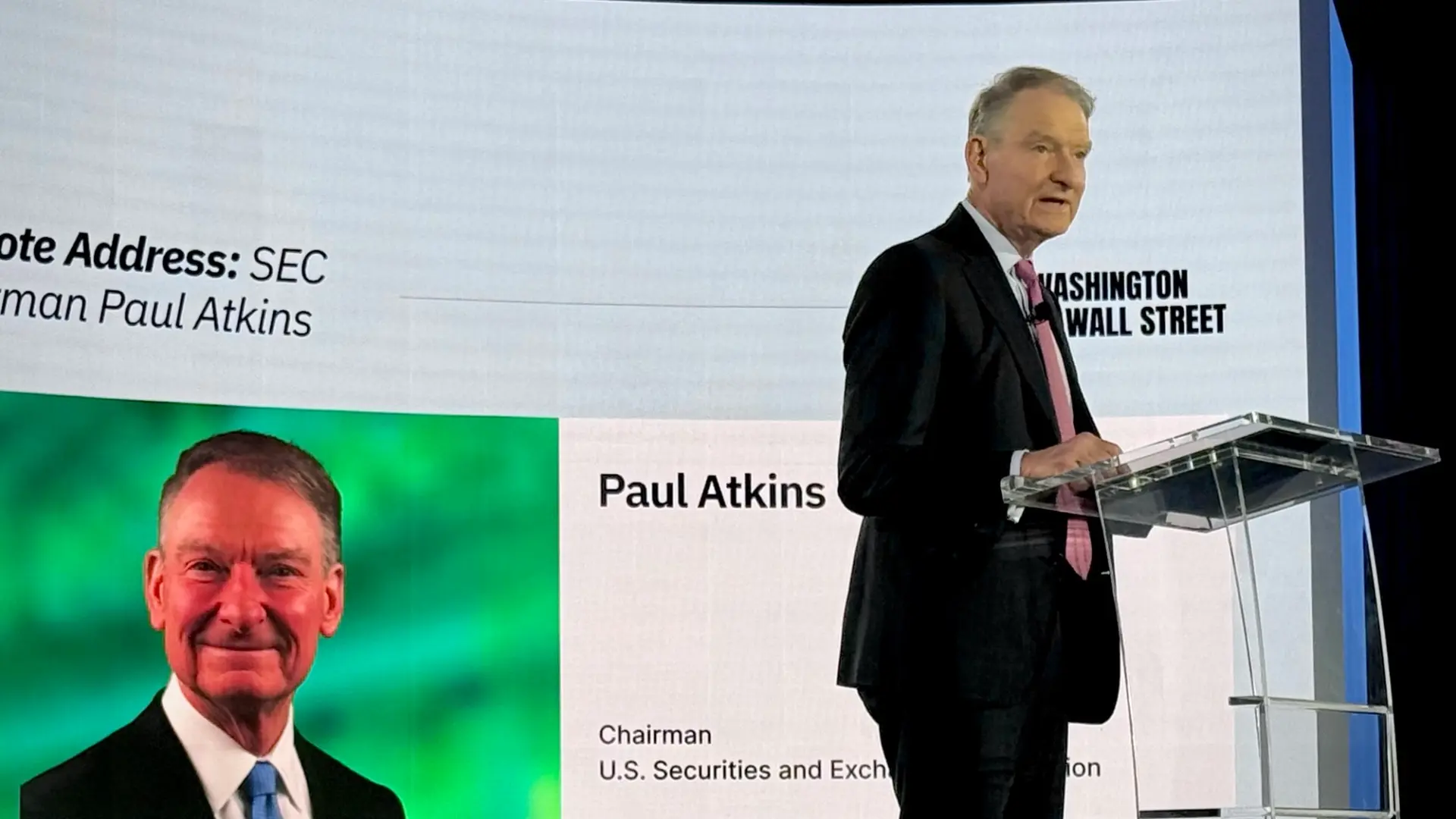
The regulator explicitly excluded synthetic security tokens that are derivatives and don’t provide ownership of the shares. The SEC only allows tokens that represent real ownership of the underlying stock, which Atkins said “must provide holders with the same rights and privileges as the traditional securities, including rights to receive dividends and exercise voting rights.”
That may exclude derivatives and debt instruments offered in many of the offshore products, such as from Robinhood.
The time-limited innovation exemption doesn’t require the SEC to formally designate the venues. Instead, any platform that believes it can meet the SEC’s definition and comply with the conditions only needs to provide notice before opening the doors of a tokenization operation, according to the agency.
5 years, to start
Atkins acknowledged the temporary nature of the policy, which he said lets firms operate “in a permissioned environment today while the commission considers the need for additional action to facilitate onchain trading.” He said the measure “must be followed by durable rulemaking to ensure that onchain markets remain a viable pathway as our capital markets continue to evolve.”
Tokenization has become one of Wall Street’s biggest blockchain experiments, giving major weight to the SEC’s opening move. The basic idea is to take familiar assets such as stocks, bonds or investment funds and represent ownership of them on a blockchain, potentially allowing them to move more easily between investors and financial platforms.
