


A Trump administration rule eviscerating widespread habitat protections for endangered species just went into effect.
First proposed in April, the rule rescinds the long-held definition for a single word—harm—under the Endangered Species Act, a landmark law enacted in 1973 to conserve the country’s imperiled animals and plants. This seemingly tiny tweak has profound consequences, clearing the way for relatively unchecked development on private land across the United States even if endangered and threatened species depend on it for survival.
But Americans who condemn the rule—from conservationists to tribes to political leaders—are fighting back.
Several legal challenges have been filed against the rescission of the harm definition, including a lawsuit filed last week by a coalition of 21 attorneys general. Pushback is coming from both sides of the aisle; at the end of August, a bipartisan contingent of former leaders of agencies once responsible for carrying out the Endangered Species Act sent a letter urging the administration to restore the longstanding definition of harm.
“The Administration is arguing that you can protect endangered animals without protecting the places they need to survive,” read the letter, signed by seven past leaders at the U.S. Fish and Wildlife Service and National Oceanic and Atmospheric Administration. “Fifty years of science—and common sense—say otherwise.”
Combined, the pushback marks a uniquely widespread rallying cry against the Trump administration’s attacks on conservation in the country, experts say.
Defining Harm
Understanding the magnitude of the Trump administration’s change to the harm rule requires me to dive into a bit of wonky legalese. (Just bear with me for one paragraph.)
The ESA prohibits the “take” of an endangered species, which includes actions “to harass, harm, pursue, hunt, shoot, wound, kill, trap, capture, or collect, or to attempt to engage in any such conduct.” Since the law was enacted, the “harm” part of this mandate has encompassed “any activity that can modify a species’ habitat.”
As environmental law expert Pat Parenteau told me in July, this statute has been the “single most important tool for protecting habitat on non-federal land.”
That’s particularly relevant for threatened and endangered species because research shows that habitat loss is the primary driver of extinction. And more than two-thirds of species listed under the Endangered Species Act depend at least in part on private lands. Ten percent of species on the list are only on private land.
But the Trump administration said that the longstanding definition of harm was an “unlawful regulatory intrusion that interfered with private property rights,” according to a July press release following the rule’s finalization.
“For years, federal agencies abused the ESA to obstruct lawful land use and burden American families and businesses,” Interior Secretary Doug Burgum said in that press release.
Now that the new rule is in effect, private landowners will need to make fewer accommodations for endangered species when they develop. So what might that look like—and why would it impact vulnerable plants and animals?
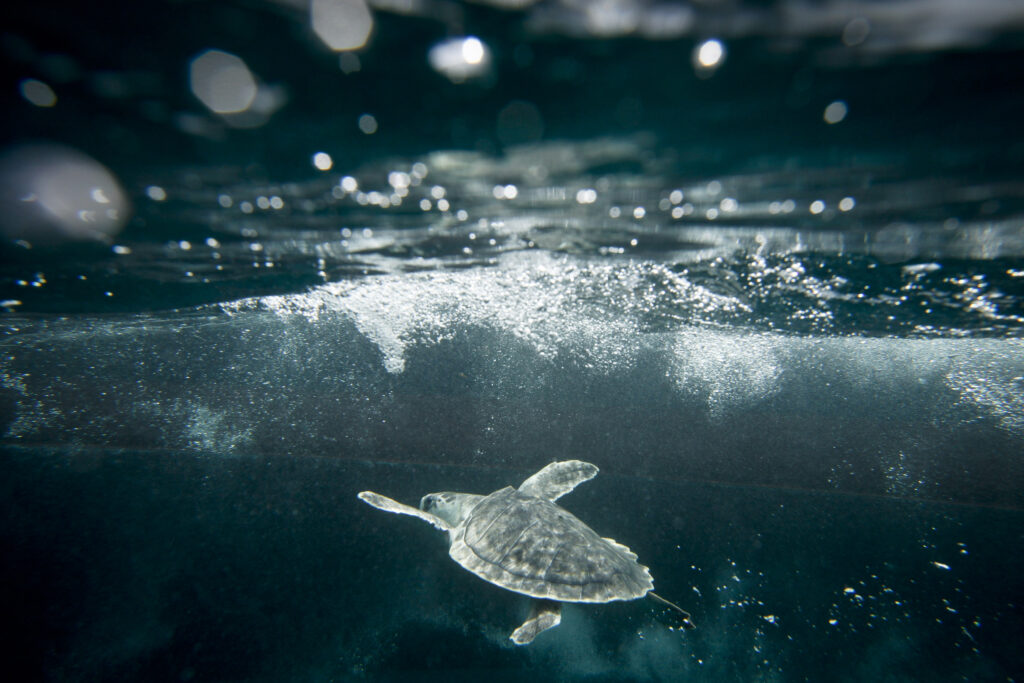
That depends on the species: Under the new rule, experts say trees with threatened or endangered bird nests may be cut by loggers if the animals are not in the nests, ponds that sensitive frogs depend on could be drained and sea turtle nesting grounds could be transformed into seaside resorts if the reptiles are still on their foraging journeys thousands of miles away.
A Conservation Counterattack
The fundamental legal basis for the Trump administration’s rule is that the previous definition of harm is “inconsistent with the structure of the ESA,” according to the Federal Register.
A number of legal experts, conservation groups and political leaders argue the exact opposite.
“I think [the Trump administration’s interpretation] is wrong, and I think that many courts will find [it] to be wrong,” Andrew Mergen, the faculty director of Harvard Law School’s Emmett Environmental Law and Policy Clinic, told me. “There’s just no question that the drafters of the act understood that habitat loss directly impacts a species’ ability to survive or reproduce. … It’s completely baked into the act.”
Representatives from industries such as mining and forestry celebrated the proposed rule after it was announced. However, critics of the rule echo Mergen’s sentiments, reflected by the negative feedback in the vast majority of the roughly 358,000 public comments filed after the change was announced.
Some of these complaints have been channeled into official legal actions: Most recently, a coalition of 21 attorneys general announced by Washington state and California filed suits challenging the new rule and a separate series of changes proposed by Trump earlier this year that could further dismantle the ESA’s protections, which I reported on in December. Several of the attorneys general pointed to the unique and vulnerable species in their states—from sockeye salmon in Washington to bog turtles in Maryland (the tiniest turtle species in North America).
“I think we all recognize that if someone destroyed or looted your home, it would be difficult for them to argue that they had not harmed you,” said Washington Attorney General Nick Brown in a press conference last week. “And yet that is exactly what the administration is arguing here when it comes to our most precious species.”
When asked about these mounting legal challenges, a spokesperson from the Fish and Wildlife Service said: “These lawsuits seek to preserve a decades-old regulatory overreach that expanded the Endangered Species Act beyond the authority granted by Congress. The Department will vigorously defend its authority to implement the law according to its plain text.”
A spokesperson from the National Oceanic and Atmospheric Administration said the agency is unable to comment on matters of litigation.
It’s not surprising that the ESA is a prime target for the Trump administration. Many past Republican leaders—including President Donald Trump in his first term—have made moves to weaken the conservation law in favor of development, only for the next administration to reverse changes.
But the rescission of the harm rule has united some leaders across party lines. The recent letter condemning the harm reinterpretation sent by five former directors of the Fish and Wildlife Service and two top NOAA officials spanned the Bush, Obama, Biden and Clinton administrations.
“We have disagreed professionally about many aspects of implementing the law over time, but not this … because it’s so fundamental to the conservation of species: the ability to protect the habitat that they need to survive,” Daniel Ashe, the director of the Fish and Wildlife Service from 2011 to 2017, told me. He is currently the president and CEO of the nonprofit Association of Zoos and Aquariums. “All of us agree that this is a stake through the heart of endangered species conservation.”
A Note From Kiley
Readers, today is my last installment of “Today’s Climate.” But it’s not a goodbye: I will be diving more deeply into wildlife and conservation reporting (covering stories like the one you just read!) and co-hosting our recently launched podcast, “Inside Climate.” You can find Inside Climate wherever you get your podcasts, including YouTube, Spotify, Apple Podcasts, Amazon Music and iHeart.
As I said last week, it’s difficult to express just how much I have appreciated your readership, feedback and support of our work since I wrote my first newsletter more than two-and-a-half years ago. I can’t wait to keep bringing you stories, and for you to join us over at the Inside Climate podcast!
You can stay up to date with Inside Climate News by subscribing to our other newsletters: ICN Weekly on Saturdays, Inside Clean Energy on Thursdays and Breaking News daily.
More Top Climate News
New research tapping into satellite data suggests that air pollution increased in many cities worldwide after the Trump administration halted a Department of State program that monitored air quality in those places, Jonathan Lambert reports for NPR. Since 2008, the U.S. had been operating an air-quality monitoring initiative that grew to cover more than 80 embassies and consulates, which experts say contributed to sustained improvements. Though scientists are still investigating why pollution rose after the surveillance stopped, the authors say the lack of U.S. oversight could be part of it.
According to a new report, states that voted for President Donald Trump are some of the fastest adopters of solar in the U.S. The authors say this accelerated uptake is helping fuel solar expansion despite difficulties the industry has faced since Trump returned to office, Austin Corona reports for Grist. However, the future is murky: Congress’ decision to prematurely end federal solar credits for companies and homeowners is impacting uptake this year, and the Trump administration has been outspoken about its opposition to renewable energy.
As wildfires continue to rage through Indonesia, park rangers are scrambling to rescue critically endangered Bornean orangutans, Tim Swanston and Ari Wu report for the Australian Broadcasting Corp. Worsened by an El Niño drought, flames have burned through large swaths of the apes’ habitat, while smoke poses major air-quality risks to humans and animals alike. One conservation group in the country said it has rescued at least 15 orangutans in this fire season alone, though not every animal has survived treatment.
About This Story
Perhaps you noticed: This story, like all the news we publish, is free to read. That’s because Inside Climate News is a 501c3 nonprofit organization. We do not charge a subscription fee, lock our news behind a paywall, or clutter our website with ads. We make our news on climate and the environment freely available to you and anyone who wants it.
That’s not all. We also share our news for free with scores of other media organizations around the country. Many of them can’t afford to do environmental journalism of their own. We’ve built bureaus from coast to coast to report local stories, collaborate with local newsrooms and co-publish articles so that this vital work is shared as widely as possible.
Two of us launched ICN in 2007. Six years later we earned a Pulitzer Prize for National Reporting, and now we run the oldest and largest dedicated climate newsroom in the nation. We tell the story in all its complexity. We hold polluters accountable. We expose environmental injustice. We debunk misinformation. We scrutinize solutions and inspire action.
Donations from readers like you fund every aspect of what we do. If you don’t already, will you support our ongoing work, our reporting on the biggest crisis facing our planet, and help us reach even more readers in more places?
Please take a moment to make a tax-deductible donation. Every one of them makes a difference.
Thank you,

Reporter
Kiley Price is a reporter at Inside Climate News, with a particular interest in wildlife, ocean health, food systems and climate change. She writes ICN’s “Today’s Climate” newsletter, which covers the most pressing environmental news each week.
She earned her master’s degree in science journalism at New York University, and her bachelor’s degree in biology at Wake Forest University. Her work has appeared in National Geographic, Time, Scientific American and more. She is a former Pulitzer Reporting Fellow, during which she spent a month in Thailand covering the intersection between Buddhism and the country’s environmental movement.
