


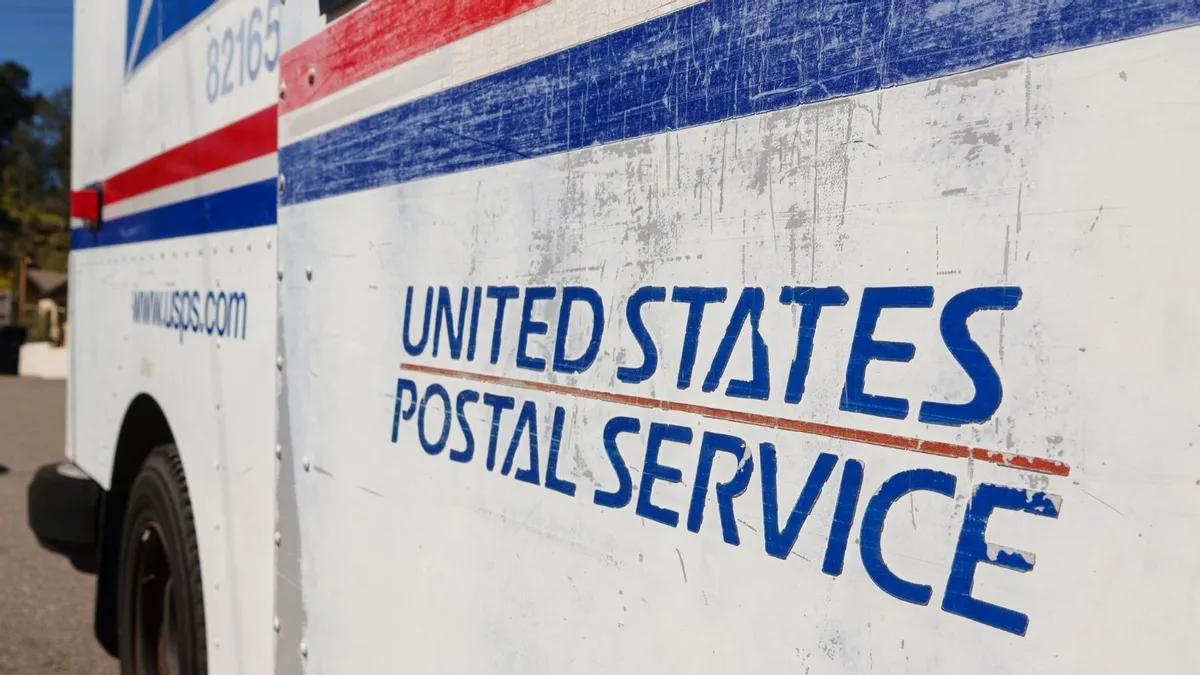
Ahead of the November 2026 U.S. midterm elections, Postmaster General David Steiner said there are ways he’d block mail-in ballots. As a result, voters should skip the mail and instead deliver completed ballots in designated drop boxes.
During a June 2026 congressional hearing, Steiner said a proposed rule would mean the Postal Service would not mail out ballots in states that failed to hand their absentee voter lists to the federal government. The service created the rule to comply with an executive order President Donald Trump signed in March, supposedly to ensure “citizenship verification and integrity in federal elections.” Stipulations in the order included the use of secure envelopes with barcodes and a demand that states send their voter rolls to the service for eligibility verification purposes. However …
… The Postal Service confirmed the new rule pertained only to determining voter eligibility in the mailing out of blank ballots, not returning completed ballots. Also, Steiner didn’t appear to provide multiple “ways” (plural) to block the delivery of mail-in ballots, as users alleged.
As of this writing, the rule was in legal limbo, meaning its effectiveness and implementation was still in question for the upcoming elections.
In early September 2026, people alleged the U.S. postmaster general, David Steiner, said there were ways he’d block mail-in ballots for the upcoming midterm elections. As a result, posts sharing the claim said voters should skip the mail and instead deliver completed ballots to designated drop boxes.
Snopes readers emailed us to ask about this rumor, with some of them attaching a screenshot of a Threads post. The screenshot, showing a partial profile image, read:
Postmaster General has already said there are ways he WILL block mail-in ballots, so… The minute you get your ballot, fill it our and take it to the nearest drop box, usually near libraries. Do NOT mail your ballot through USPS!
Find a BALLOT DROP BOX only !!!!
Please copy this and share on your feed.

(Received via Snopes reader email)
A reverse image search for the same screenshot located users sharing the same image on Facebook, Threads and X.
A Threads search found the original post (archived) matching the partial profile image from the above screenshot. That user presented the claim and the advice to avoid mailing completed ballots on Sept. 2:

(@kirkanthonyb2020 via Threads)
A search on X for similar text located a popular post (archived) from June 25 that contained a version of the claim about the postmaster general, without the advice to use designated drop boxes. That post read, “JUST IN: U.S. Postmaster General CONFIRMS he’ll BLOCK mail-in ballots to states refusing to share citizenship and voter data with the Trump administration”:

(@jackunheard via X)
On June 24, one day before that X post, Steiner was a witness in a televised hearing before the Senate Homeland Security Committee. During the hearing, Sen. Gary Peters, D-Mich., asked Steiner, “Yes or no: If a state refuses to turn their absentee voter list over to the federal government, will the Postal Service still mail their ballots under this proposed rule?”
Steiner answered, in part, “Under our proposed regulation, no.” (The full hearing is available on YouTube, with pertinent remarks beginning at the 30:37 mark.)
In sum, this rumor about the postmaster general’s alleged statements and guidance on voters delivering their completed ballots mixed truth and falsehood, as well as undetermined elements.
It’s true that, during the June hearing, Steiner confirmed one way the Postal Service might block, or decline, the delivery of mail-in ballots. At the time, Steiner was referencing a proposed rule. The rule
That rule, which may restrict mail-in voting, stemmed from an executive order President Donald Trump — who has repeatedly promoted false claims of massive voter fraud — signed in March. Part of that order mentions of the use of secure envelopes with barcodes. It also stipulates that states that intend to use the Postal Service to deliver mail-in or absentee ballots should send their voter rolls to the service so that it can verify voters’ citizenship and eligibility to vote in federal elections.
However, the claim that voters should avoid mailing their completed ballots through the Postal Service and instead directly deposit them into designated ballot drop boxes doesn’t accurately reflect what the new rule means in practice. The Postal Service confirmed the new rule pertained only to determining voter eligibility before mailing out blank ballots — not when completed ballots are mailed back in — meaning that while there’s nothing wrong with using drop boxes to ensure delivery of completed ballots, the reason some users recommended them was not reflected in the rule.
Additionally, Steiner didn’t appear to provide multiple “ways” (plural) to block delivery of ballots, as users alleged.
As of this writing,
Snopes contacted the Postal Service to request comment about the rumor, and spokesperson Nikolaj Hagen shared the following statement in an email:
The Postal Service is committed to fulfilling our role in the electoral process when public policy makers choose to utilize us as a part of their election system. We rely on longstanding, robust and tested policies and procedures, which have proven successful in the secure and timely delivery of Election Mail. Through August 28, the Postal Service has delivered 233.3 million pieces of Election Mail nationwide during Fiscal Year 2026, with an on-time score of 97.94%.
White House spokesperson
‘Misinformation and speculation’
In a Sept. 4 news release, Steiner addressed what he called “misinformation and speculation” about the issuance of the Postal Service rule and defended the service’s duty to comply with Trump’s executive order.
The release also featured a recent whistleblower complaint that warned of “potentially catastrophic problems in the development of the United States Postal Service’s new system for handling federal election ballot mail.” The complaint specifically referenced the service’s new rule establishing a voter verification system that officials would use to determine which voters receive blank ballots via mail.
One part of the complaint alleged that if one barcode on a single ballot in a bulk mailing of 10,000 blank ballots failed to properly scan during the verification process, the entire batch would be rejected and sent back to the state, meaning none of those voters would receive their ballots.
Steiner said the Postal Service “takes these concerns seriously,” as well as that, “Regardless of political party or perspective, we share a common goal: ensuring that Americans can have confidence that their election mail will be handled securely and delivered reliably should their election officials choose to use the mail for ballot delivery.”
For further reading, we previously reported about the many details of the new Postal Service rule, Trump’s executive order and the beginning of the many legal challenges associated with the matter.
Sources
“Ballot Mail for Federal Elections.” U.S. Federal Register, 26 Aug. 2026, https://www.federalregister.gov/documents/2026/08/26/2026-17238/ballot-mail-for-federal-elections.
Brown, Bridget, et al. “Second Federal Judge Freezes Trump Mail Ballot Order with Supreme Court Poised to Weigh In.” NBC News, The Associated Press, 14 Sept. 2026, https://www.nbcnews.com/politics/2026-election/second-federal-judge-freezes-trump-mail-ballot-order-supreme-court-rcna597633.
“Ensuring Citizenship Verification and Integrity in Federal Elections.” The White House, 31 Mar. 2026, https://www.whitehouse.gov/presidential-actions/2026/03/ensuring-citizenship-verification-and-integrity-in-federal-elections/.
Howe, Amy. “Trump Administration Again Appeals Mail-in Ballot Dispute to the Supreme Court.” SCOTUSblog, 6 Sept. 2026, https://www.scotusblog.com/2026/09/trump-administration-again-appeals-mail-in-ballot-dispute-to-the-supreme-court/.
“JUST IN: Trump’s Postmaster General David Steiner Gets Grilled In Senate Homeland Security Committee.” YouTube, Forbes Breaking News, 24 June 2026, https://www.youtube.com/watch?v=B4dAsvxBnq8.
Kim, Seung Min, et al. “Trump Signs Order Directing Creation of a National Voter List, a Move Already Facing Lawsuit Threats.” The Associated Press, 31 Mar. 2026, https://apnews.com/article/donald-trump-mail-voting-elections-47cc334b1fb7742244a9c4f176b355cd.
Riccardi, Nicholas. “Postal Service Work to Comply with Trump’s Executive Order Is Rushed and Sloppy, a Whistleblower Contends.” The Associated Press, 6 Sept. 2026, https://apnews.com/article/midterm-elections-postal-service-mail-voting-7f7cf4fdf2e9cf369ae96f96fbda03f2.
Sella, Adam. “Postmaster General Confirms Plan to Hold Back Mail Ballots Under Proposed Rule.” The New York Times, 24 June 2026, https://www.nytimes.com/2026/06/24/us/politics/postmaster-mail-ballot-rule-trump-elections.html.
Steiner, David. “Statement from USPS Postmaster General David Steiner Regarding Concerns about Ballot Mail for Federal Elections.” U.S. Postal Service, 4 Sept. 2026, https://about.usps.com/newsroom/statements/090426-statement-from-usps-pmg-david-steiner-regarding-concerns-about-ballot-mail-for-federal-elections.htm.
U.S. Postal Service. “Frequently Asked Questions: USPS Final Rule on Ballot Mail for Federal Elections.” 27 Aug. 2026, https://about.usps.com/what/government-services/election-mail/pdf/faq-usps-final-rule-ballot-mail-federal-elections.pdf.
“U.S. Postal Service Whistleblower Disclosure.” U.S. Sen. Richard Blumenthal, 31 Aug. 2026, https://www.blumenthal.senate.gov/imo/media/doc/2026-08-31_final_letter-disclosure.pdf.
