


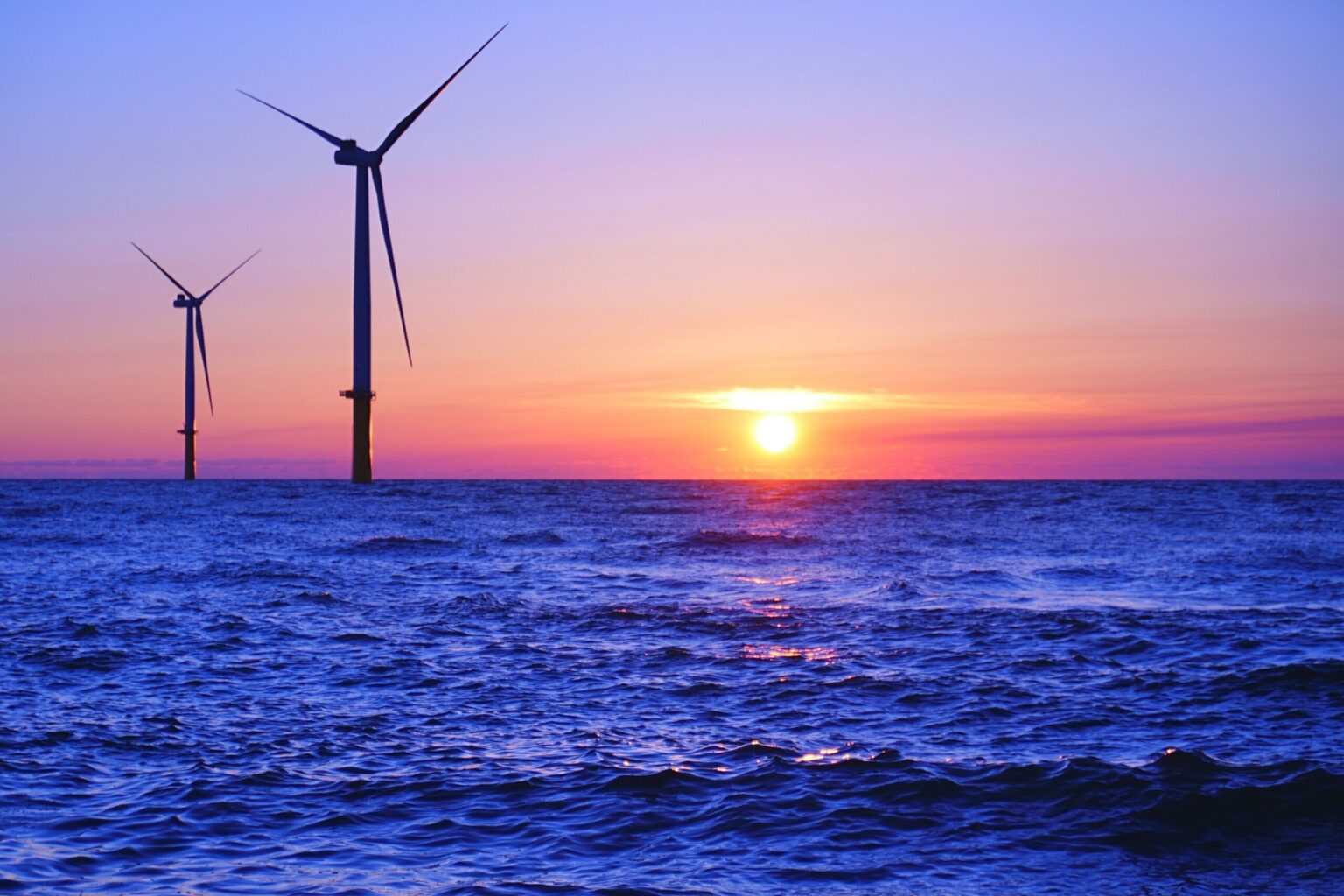
- Offshore wind is expanding as an important renewable energy source that many experts say is essential to meeting climate goals.
- Ensuring wind farms limit environmental harm and work with nature is vital, experts say.
- Several measures can be taken to limit negative impacts on the environment throughout the lifespan of turbines and wind farms, from construction to decommissioning. These range from technical solutions to policy interventions.
- Continued innovation and research is important to ensure measures are backed by monitoring data and science, experts say.
Read the stories in Mongabay’s series on offshore wind energy: Part One, Part Two and Part Three.
Offshore wind has enormous potential as a source of renewable energy and is tipped to greatly expand in the next few decades. As this clean energy drive gathers pace, experts underline that new wind farms must be developed responsibly to minimize harm to ecosystems and support biodiversity. Mongabay spoke to experts to identify promising solutions that can make offshore wind farms work with nature, rather than against it.
1. Marine spatial planning during site selection
The best way to avoid negative impacts of offshore wind farms is to carefully select sites using marine spatial planning.
“That’s step one,” Marjolein Kelder, senior project manager at The Rich North Sea, a Netherlands-based nonprofit, told Mongabay in an interview. “Don’t put wind farms in your ecologically most valuable areas or in bird migration corridors.”
Spatial planning can ensure ecosystems are preserved, account for the needs of coastal communities, and reduce conflicts with other uses of marine areas, like fisheries and shipping. Organizations are also developing “sensitivity” maps for species of birds and bats to aid planning.

2. Nature-friendly structures
Research shows that wind farms can act as refuges for some marine species. Modifying wind farm structures can provide additional important habitat for fish and other marine life. Strategies include deploying artificial reefs, installing or using existing intentional gaps called water replenishment holes that are built into turbine foundations to allow the flow of water, deploying steel habitat cages that imitate a nursery environment or modifying rocks used for scour protection.

3. Habitat restoration
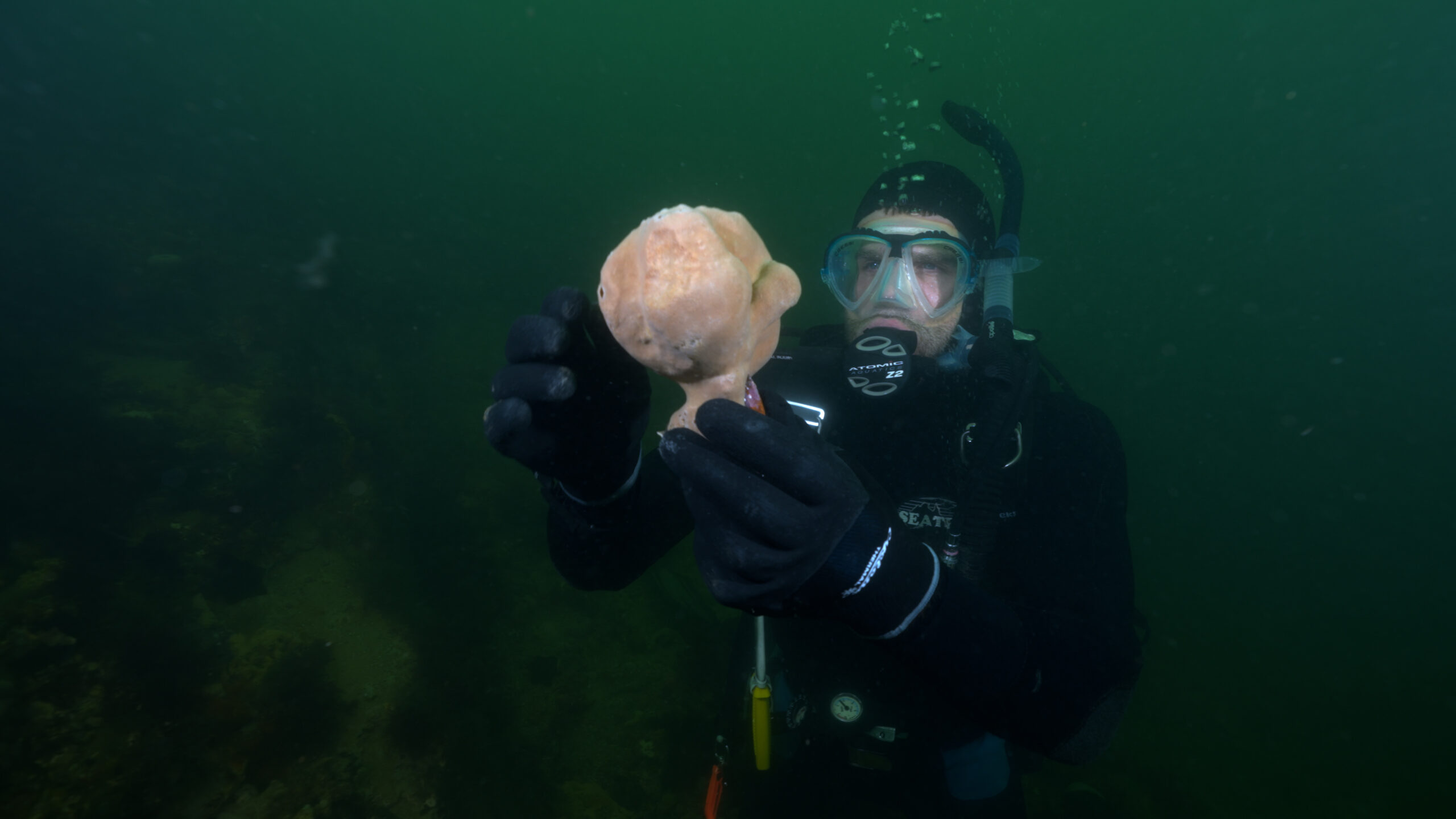
Artificial reefs and other interventions could help restore heavily disturbed or depleted areas. Pilot projects are underway to seed oyster larvae onto rocks used for scour protection at wind farms in the North Sea. If successful, that could help the ecosystem’s depleted oyster reefs recover. Sea sponges could potentially be distributed in a similar way to help restore ecosystems.
“Seeding substrates with marine life makes sense,” Chris Gillies, a marine biologist and founder of Offshore Biotechnologies, a consultancy based in Australia, told Mongabay in an interview. “Where these pilots need to go is start to work in with construction as opposed to post construction.”
4. Reducing noise
Noise during construction can harm marine species. New construction techniques, such as jetting, which uses a stream of high-pressure water to enable a turbine’s monopile foundation to sink into the seabed, can reduce noise compared to traditional methods like pile driving. Other solutions include using bubble curtains, devices that jet air to block soundwaves during construction, or sound dampeners that have a similar effect using gas-filled balloons.
5. Non-price criteria
Building on marine spatial planning, experts point to policy interventions like considering so-called “non-price criteria” during the wind-farm auction and permitting process. This adds an environmental or social dimension to decision-making that encourages developers to include actions to mitigate harm or benefit biodiversity in their plans. Selecting projects based on these criteria, and not just price alone, can drive innovation; some European countries like France and the Netherlands are already doing so.
“We see this as a key lever to accelerate innovation around nature inclusive design,” Louise Combret, renewable energy policy associate at The Nature Conservancy, told Mongabay in an interview.

6. Design and circular innovations
Applying circular economy principles could cut material use and costs, and improve wind turbines’ environmental footprint. Some companies are deploying recyclable blades to reduce waste.
Other interventions include extending the lifespan of turbine foundations by innovating with materials and reusing them when turbines reach the end of their life or leaving scour protection in place after decommissioning to avoid disturbing habitat.
Meanwhile, a newly developed fixed foundation eliminates the need for a so-called “transition piece” that joins the turbine tower to the monopile in current designs. This reduces the amount of steel used and cuts construction and maintenance costs.
“It’s like a really disruptive solution that saves cost, and is also an environmental improvement,” Anne Velenturf, a circular economy researcher at the University of Leeds in the U.K., told Mongabay.
7. Using ‘green’ materials
Like all renewable energy infrastructure, offshore wind turbines have a carbon footprint. This is highest for steel and concrete, which are among the most carbon-intensive materials. Using “green” or low-carbon steel and other strategies such as carefully selecting foundation types to use less material can reduce associated emissions.
8. Warding off collisions
Birds and bats colliding with wind turbines is a major environmental concern. Painting blades so they are easily visible is one potential solution, but research on its impact is mixed. Experts also recommend conservation compensation — when project developers support habitat protection or other conservation action — in cases where offshore wind farms negatively affect bird or bat populations.

9. Monitoring offshore wind impacts
Many of the potential impacts of offshore wind farms remain unknown and long-term studies are still lacking. Experts have called for consistent assessment and monitoring of impacts to fill knowledge gaps, particularly as farms expand across the globe. Studies should span a minimum of three to five years and monitoring efforts should be in place for the entirety of a wind farm’s lifespan, experts say.
“If you really want to understand how these structures might influence ecosystems, including fish, then these studies need to be done over much longer periods,” Anthony Bicknell, a senior research fellow at the University of Exeter in the U.K., told Mongabay.
10. Floating wind
Floating wind turbines remain a nascent technology with only a few small-scale projects in place. By sidestepping installed foundations, they potentially have lower environmental impacts from noise and seafloor disturbances compared to traditional fixed-bottom turbines, but studies are limited.
Floating wind presents its own challenges, with potential for marine species such as sharks, turtles and whales to become entangled on anchor lines and cables. Steps to mitigate this include avoiding siting floating wind farms in migration corridors, configuring cable design to reduce entanglement risk, and installing continuous monitoring technology.
Banner image: Offshore wind turbines at Noshiro Port, Japan. Image by 掬茶 via Wikimedia Commons (CC BY-SA 4.0).
Offshore wind may be good for the climate but can it be good for the ocean, too?
Scaling up offshore wind requires overcoming global and local challenges
Offshore wind’s clean energy potential remains largely untapped, say experts
Citations:
Fitkov-Norris, B., Witt, M. J., … Simmons, B. I. (2025). Offshore wind farms act as de facto marine reserves. Science of The Total Environment, 994, 179973. doi:10.1016/j.scitotenv.2025.179973
Bolson, N., Pryce, L., … Cha, W. (2026). Material and carbon intensity of offshore wind foundations for sustainable infrastructure. Journal of Cleaner Production, 547, 147836. doi:10.1016/j.jclepro.2026.147836
Methratta, E. T. (2025). Ecological indicators to monitor offshore wind interactions with fisheries resources. ICES Journal of Marine Science, 82(3), fsae017. doi:10.1093/icesjms/fsae017
