


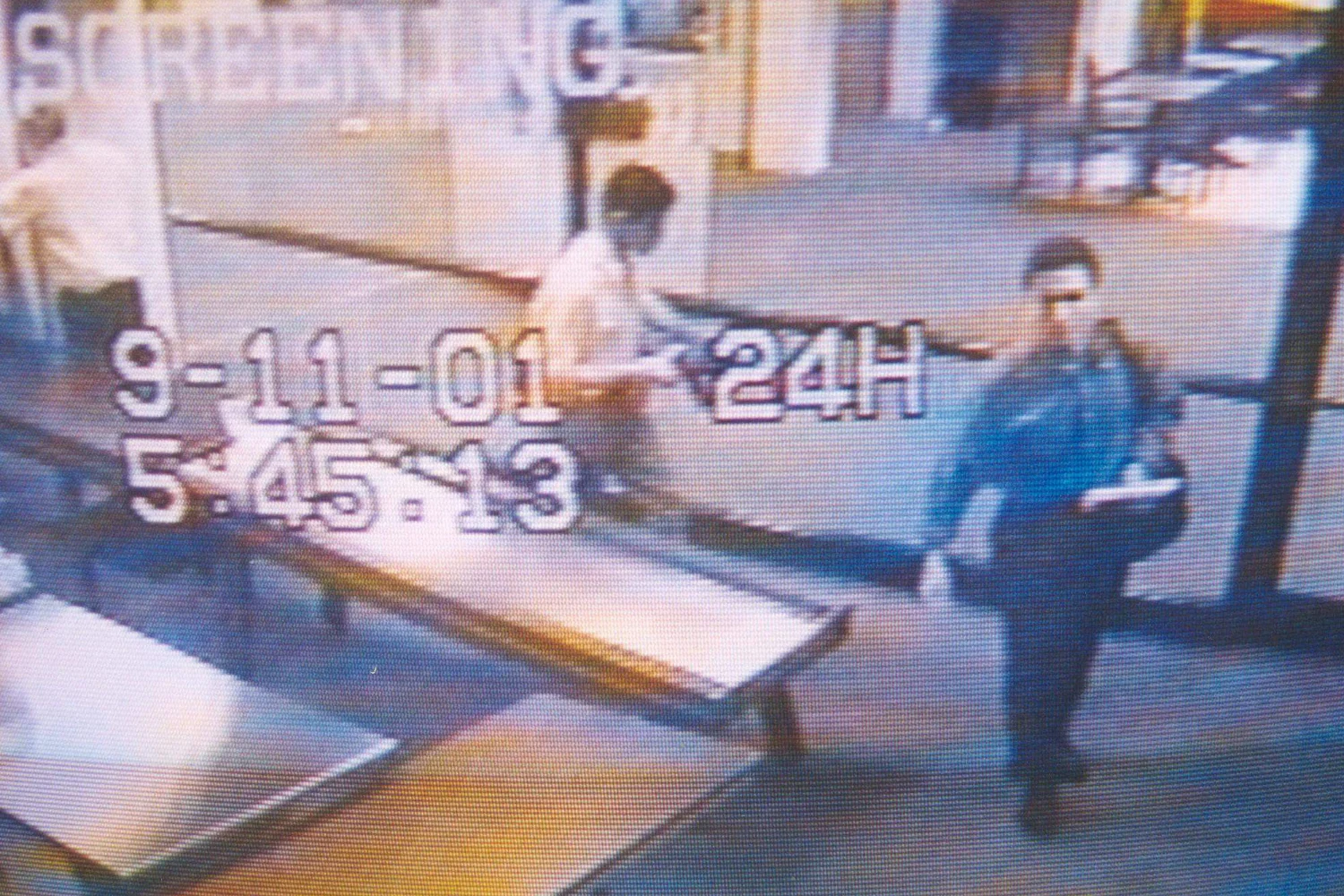
In the aftermath of the al Qaeda terrorist attacks that killed nearly 3,000 on Sept. 11, 2001, the 9/11 Commission Report lamented a “failure of imagination” on the part of the U.S. government and intelligence community. After all, the primary weapons used in the simultaneous attacks were boxcutters, knives, and ultimately, passenger jets.
Terrorists hijacking planes was certainly conceivable. Between 1968 and 1972, there were more than 130 attempted hijackings in the United States, most bound for Havana. Abroad, there were spectacular hijackings across Europe and the Middle East, often conducted by Palestinian terror groups primarily motivated by nationalism. And while these hijackings did not result in terrorists flying planes into buildings, the idea that they could had been discussed at length for decades. In fact, legendary terrorism scholar Brian Michael Jenkins warned about exactly that in 1989 at an international conference on aviation security in Israel: “The nightmare of governments is that suicidal terrorists will hijack a commercial airliner and, by killing or replacing its crew, crash into a city or some vital facility.”
In the aftermath of the al Qaeda terrorist attacks that killed nearly 3,000 on Sept. 11, 2001, the 9/11 Commission Report lamented a “failure of imagination” on the part of the U.S. government and intelligence community. After all, the primary weapons used in the simultaneous attacks were boxcutters, knives, and ultimately, passenger jets.
Terrorists hijacking planes was certainly conceivable. Between 1968 and 1972, there were more than 130 attempted hijackings in the United States, most bound for Havana. Abroad, there were spectacular hijackings across Europe and the Middle East, often conducted by Palestinian terror groups primarily motivated by nationalism. And while these hijackings did not result in terrorists flying planes into buildings, the idea that they could had been discussed at length for decades. In fact, legendary terrorism scholar Brian Michael Jenkins warned about exactly that in 1989 at an international conference on aviation security in Israel: “The nightmare of governments is that suicidal terrorists will hijack a commercial airliner and, by killing or replacing its crew, crash into a city or some vital facility.”
U.S. Representative Tim Roemer (left) and Carie Lemack hold copies of The 9/11 Commission Report during a news conference on Dec. 6, 2004. Lemack also holds a photo of her mother, Judy Larocque, who died in the terror attacks.Getty Images/Joe Raedle
Twenty-five years after 9/11, airports can no longer be considered soft targets for terrorists. However, terrorists and violent extremists have access to a range of technologies today that either didn’t exist or were in their infancy two and a half decades ago. The internet has been most consequential for terrorists, allowing them, through websites and social media platforms, to spread their message widely; to make contact with aggrieved individuals; and to radicalize and recruit. But advances in encrypted communications, 3D printing, unmanned aerial systems (drones), virtual currencies, and artificial intelligence (AI) also can serve as force multipliers for lone actors and terrorist organizations planning attacks. Over the last decade, barriers to entry for engaging with these technologies have been appreciably lowered, and access has been commercialized, meaning everyday citizens can now acquire and master tools once obtainable only by states.
In late 2026, a failure of imagination persists, though its form has evolved. While the counterterrorism community today is aware of emerging technologies in the hands of terrorists, it continues to struggle with creatively thinking through how these can be combined or applied to novel use cases. While it is beyond the scope of this essay to assess every possible tool terrorist groups could misuse, it makes sense to consider what adoption and use patterns can tell us about the potential misuse of current technologies. We tend to avoid publishing terror-attack scenarios—we’re not in the business of giving bad people good ideas. Our intent is instead to describe existing vulnerabilities so that policymakers, intelligence officials, and law enforcement agencies might pay attention and prepare accordingly, and never again suffer such a consequential failure of imagination as in the lead-up to 9/11.

Smoke from a forest fire near the southern Lebanese village of Shebaa, close to the northern border of Israel, after the Israeli army shot down a Hezbollah drone on July 4, 2024.Getty Images/Rabih Daher
Terrorist groups have already used drones successfully in combat and to commit attacks on the battlefield. Twenty years ago, in 2006, Hezbollah launched multiple drones into Israeli airspace, loaded with explosives. Although most of the drones were shot down, the combination of capability and intent was foreboding. Since then, a number of terrorist groups have weaponized drones, including Hamas, the Houthis, the Islamic State, al Qaeda in the Arabian Peninsula, the Kurdistan Workers’ Party, Iraqi Shia militias, and violent non-state actors in Pakistan, Syria, and Venezuela.
Drones are now used not just in sporadic attacks, but in combined arms warfare and maneuvers by a range of violent non-state actors. However, though there have been several high-profile plots that have been disrupted, there has yet to be a spectacular terrorist attack in the West perpetrated by a group using drones. Upon closer inspection, some of these plots were nearing fruition and would likely have struck their intended targets if they had proceeded as planned. Individuals, acting independently (rather than as part of the rank-and-file of designated terrorist groups), have been experimenting with drones too. Instructional guides by Islamic State supporters have given detailed, incremental instructions to others on how to weaponize drones; these resources also make clear that drone weaponization is seen as more accessible following the advent of widely available generative AI tools. Conflicts where drones loom large—such as the Russia-Ukraine War—have also expanded the boundaries of what is possible.
Although only recently commercialized, generative AI has featured in several recent terrorist plots and attacks, including on U.S. soil. AI has also been used at the organizational level by terrorist groups, including for propaganda purposes (as the Islamic State Khorasan Province has demonstrated over the past several years) and operational purposes (as seen with Boko Haram). There have been myriad examples of AI being used by lone terrorists for operational purposes as well, including assisting extremists with instructions to build bombs; providing tips on practicing exquisite operational security; and red teaming (that is, simulating the actions of adversaries looking for weaknesses) by prompting AI chatbots to have back-and-forth conversations about how to refine tactics, techniques, and procedures. While the AI safety community predominantly focuses on existential risks, violent non-state actors’ exploitation deserves serious resources and interventions too—especially as open-weight AI models become more capable and can be used by terrorists and violent extremists with no leakage. In general, agentic and generative AI may let terrorists execute organizational and operational tasks more efficiently, providing additional uplift with minimal effort.
When we think about terrorists’ using emerging technologies, the reality is not “either/or”—it’s “and.” In other words, terrorists can use encrypted platforms to communicate and fund their operations with virtual currencies, and use 3D-printed components that will augment drones, and have AI assist with target selection and even pre-program the drone’s attack route. Back in 2018, conflict analyst Daveed Gartenstein-Ross openly mused about this possibility in an op-ed for Defense One, writing: “What of the next generation of terror drones? Will they use AI-enabled swarming to become more powerful and deadlier? Or think bigger: will terrorists use self-driving vehicles for their next car bombs and ramming attacks? How about assassinations?”
Orchestrating a terror attack using a drone targeting a dense urban environment in the West is not a difficult feat. Indeed, it is surprising we have not yet seen a successful attack along these lines. Whether an outdoor farmer’s market or a summer concert in a park, crashing an explosive-laden drone into a crowd of civilians would be a devastating attack that, in addition to killing and injuring people, would have immense psychological impact.
The internet is the pervasive facilitator that allows these technologies to be adopted by terrorist groups, their supporters, and acolytes. Without ecosystems of social media platforms, websites, self-hosted servers, messaging applications, and forums in which individuals are presented with engaging media from terrorists and violent extremists—ranging from propaganda, doctrinal essays, lifestyle content, and instructional manuals on everything from drones to operations security to AI—many of these technologies would not be readily used.
Not only has the internet democratized access to information about technology, but it has also facilitated connections between terrorists and their supporters separated by vast distances. At the peak of the Islamic State’s caliphate, British hacker turned Islamic State member Junaid Hussain became the group’s “chief terror cybercoach,” remotely directing jihadist recruits in other countries on how to carry out violent attacks. Today, the Salafi jihadist terrorist threat landscape in the West is largely driven by individuals who have never set foot in a conflict theater. Nor have they received sustained guidance from terrorist rank-and-file in attack planning.
Virtual currencies are used as terrorist groups solicit donations in propaganda magazines distributed online; drone weaponization manuals can be accessed in supporter forums. Even the benign internet—from online hobbyist communities to the social platforms and AI models we all use—can be misused to engineer explosives. Terrorist use of the internet is the leitmotif in terrorists adopting technology. Without access to information online, terrorists would have little choice but to travel directly to training camps, as the al Qaeda militants who perpetrated the 9/11 attacks did, congregating under the protection of the Taliban in Afghanistan.
But in 2026, particularly after the foreign fighter phenomenon that saw tens of thousands of militants from dozens of countries travel to Iraq and Syria, there are far more counterterrorism measures in place to detect and disrupt terrorist travel. Perhaps most effectively, a technical infrastructure has integrated different data streams to significantly narrow the mobility of any terrorist: Fingerprinting and iris scans, forensic innovations able to identify latent prints on bomb fragments, machine-readable passports, and harmonized passenger name records have proven effective in denying travel to terrorists. Engineering marvels, specifically precision guidance, have made ultra-precise strikes possible. Perceptual hashing has made it harder for terrorists to propagate their propaganda online and has been cheap to implement.
Disrupting terrorists’ use of the internet is not about preventing it entirely—which is rather unrealistic—and more about raising the costs and effort of using it to finance, recruit, radicalize, spread propaganda, and plot attacks. This requires robust cooperation between the public and private sector, with governments, law enforcement, and tech platforms working hand in glove to identify threats and prevent terrorists from exploiting the internet.
Advances in artificial intelligence could prove promising for improving content moderation and removal. Machine learning has been used to identify potential terrorist propaganda for hashing. Text, speech, and vision classifiers filter millions of posts across languages, and ranking models can demote borderline content. AIs are also used to apply content policy directly. This infrastructure has been used across counterterrorism—for object detection in CCTV footage, to spot anomalies in financial flows, or to rapidly search freshly seized documents from terrorist groups.

Police checkpoints on and around Bourbon Street after a vehicle plowed into a crowd in New Orleans on January 1, 2025.Getty Images/Patt Little/Anadolu
Beware shiny object syndrome, though. While terrorists openly discuss how new technologies and modes of war can be used for their purposes, attacks and disrupted plots in the West in recent years reveal reliance on simple methods. As terrorism and political violence have atomized—and perhaps because they primarily feature lone actors—stabbings, vehicle ramming, and shootings have become the most commonly executed attacks. These are predominantly perpetrated by individuals who are largely radicalized through online pathways.
This does not mean that these simple methods cannot be optimized through tech-facilitated operational planning. The man who attacked New Orleans on New Year’s Day 2025 used smart glasses for reconnaissance months earlier but used vehicle ramming and a firearm during his attack; recent Islamic State-inspired individuals in Italy used a chatbot to gain information on where to strike someone optimally to paralyze them. Shiny object syndrome also plagues the counterterrorism apparatus at times: While technology has demonstrably been useful in counterterrorism, community interventions and deep human cultural knowledge have proven effective as well and should not be supplanted by technology when not appropriate.

A second plane approaches the World Trade Center before crashing into the second tower on Sept. 11, 2001.Getty Images/Seth McAllister
Twenty-five years after 9/11, the day that planes, the all-American invention of the Wright brothers, were turned into a weapon against Americans, a similar affliction befalls the West: Its innovations are continuously misused by terrorists against it. To prevent the next strategic surprise, serious consideration must be given to how technologies can be used in new creative ways by terrorists in order to optimize casualties, and—as is always a consideration for such actors—cause a violent spectacle.
And technology is a two-way street. While it provides some advantages to terrorists and violent extremists, technology can also be harnessed by actors combating them to recognize patterns in large volumes of data and to enhance structured analytic techniques that fuse myriad streams of intelligence. Moreover, it appears that terrorists’ use of chatbots for operational planning has already become a method of intelligence gathering and, ultimately, plot disruption by law enforcement.
Governments are not destined to suffer from a failure of imagination. But to ensure that the past is not prologue, it is crucial to avoid a creeping sense of complacency 25 years after the most devastating attack on U.S. soil.
