


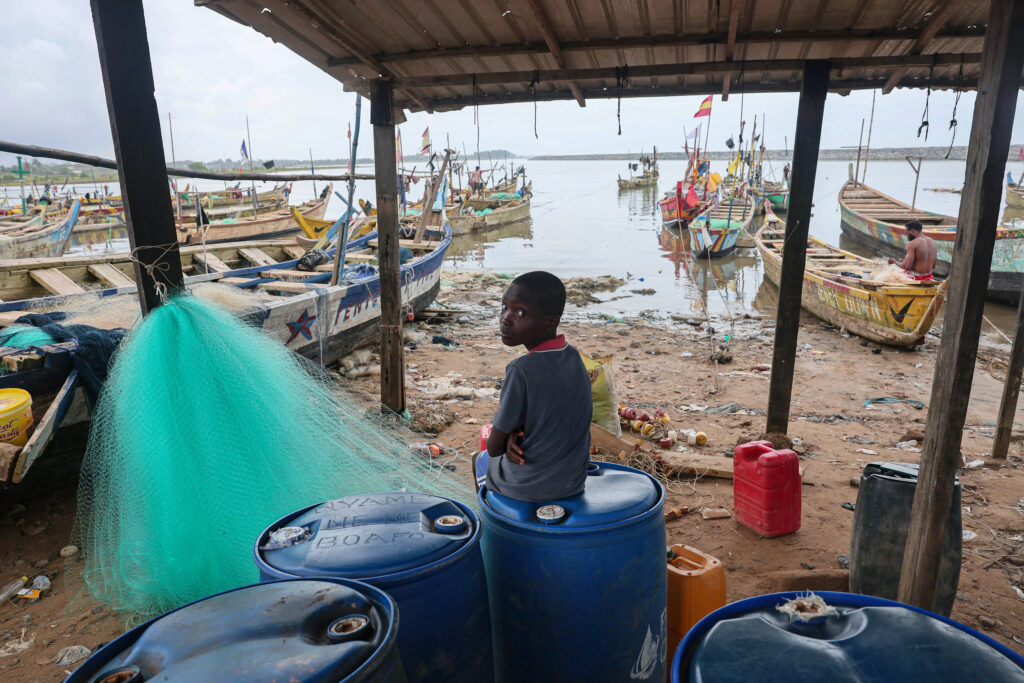
When ocean temperatures soar, the consequences reverberate beyond the water. In coastal communities, marine heat waves threaten livelihoods, food security and human health—particularly the well-being of children.
New research from the University of North Carolina at Chapel Hill found that greater exposure to marine heat waves increases the odds of children dying, suffering stunted growth or experiencing a life-threatening form of malnutrition called wasting that causes a child to become dangerously underweight.
Marine heat waves occur when ocean temperatures rise above what is normal for a certain region at a particular time of year. They also persist for at least five days, sometimes extending for weeks or months. As human-caused climate change warms the world’s oceans, these events are becoming increasingly common, said Sally Dowd, an interdisciplinary fisheries scientist who co-authored the study, published last week in the scientific journal PNAS.
“We are seeing that marine heat waves are increasing in their frequency, in their intensity and in their duration across the world,” Dowd said. These events can have cascading effects both beneath the water’s surface and on land.
Underwater, marine heat waves can cause widespread dieoffs of fish populations and the key ecosystems that support healthy fisheries, such as coral reefs, kelp forests and seagrass meadows. They can also drive fish away from traditional fishing grounds as they search for colder waters and reduce the nutritional value of the fish that remain, Dowd said.
According to the latest research, these ecological disruptions can lead to both economic and health problems among fishing-dependent communities in low- and middle-income countries. Declining catches may lead to fishery closures and lost income.
In Ghana, for example, artisanal fishers report species once caught easily near shore are moving into deeper waters as sea surface temperatures rise. In Indonesia, marine heat waves have reportedly depleted fish stocks. In some cases, Dowd said, people may be forced to move in search of alternative work.
But marine heat waves do not impact all people equally. Children are especially vulnerable.
“Children are generally susceptible to climate change-related health impacts as they are still developing and this process can be disrupted by alterations to food availability, nutrition, disease exposure or community stability,” said Laura Falkenberg, a marine biologist and lecturer at Adelaide University in Australia, who was not affiliated with the new study but recently published a paper on marine heat waves and health.
When marine heat waves disrupt fisheries, the UNC study suggests reduced access to fish can deprive children of an important source of protein and micronutrients in utero and during their first five years of life.
“These extreme ocean temperature events do undermine child health,” said Clark Gray, professor of geography and environment at the University of North Carolina at Chapel Hill and lead author of the study.
To come to this conclusion, Gray and other researchers overlayed data from national surveys of child and maternal health with satellite measurements of nearby ocean temperatures to assess links between extreme ocean heat and child health.
They found that an increase in the number of marine heat waves over a two-year period was associated with a 5.4 percent increase in the odds of child mortality, a 6.5 percent increase in wasting and an 8.8 percent increase in stunting. The health impacts were greatest in urban communities and in countries where people rely heavily on small-scale fisheries.
This study adds to growing evidence that marine heat waves don’t pose only ecological threats, Falkenberg said in an email. To date, she said, most research related to marine heat waves has focused on the damage they cause to ocean ecosystems, such as coral reefs. Their implications for people remain relatively understudied.
Marine heat waves should be seriously considered as a public health concern by government agencies, emergency managers and policymakers, Falkenberg said. And knowing who may be most impacted, including children, is critical.
“Understanding who is most affected is essential if we are to develop effective public health responses as marine heat waves become more frequent and intense under climate change,” Falkenberg said.
About This Story
Perhaps you noticed: This story, like all the news we publish, is free to read. That’s because Inside Climate News is a 501c3 nonprofit organization. We do not charge a subscription fee, lock our news behind a paywall, or clutter our website with ads. We make our news on climate and the environment freely available to you and anyone who wants it.
That’s not all. We also share our news for free with scores of other media organizations around the country. Many of them can’t afford to do environmental journalism of their own. We’ve built bureaus from coast to coast to report local stories, collaborate with local newsrooms and co-publish articles so that this vital work is shared as widely as possible.
Two of us launched ICN in 2007. Six years later we earned a Pulitzer Prize for National Reporting, and now we run the oldest and largest dedicated climate newsroom in the nation. We tell the story in all its complexity. We hold polluters accountable. We expose environmental injustice. We debunk misinformation. We scrutinize solutions and inspire action.
Donations from readers like you fund every aspect of what we do. If you don’t already, will you support our ongoing work, our reporting on the biggest crisis facing our planet, and help us reach even more readers in more places?
Please take a moment to make a tax-deductible donation. Every one of them makes a difference.
Thank you,
