


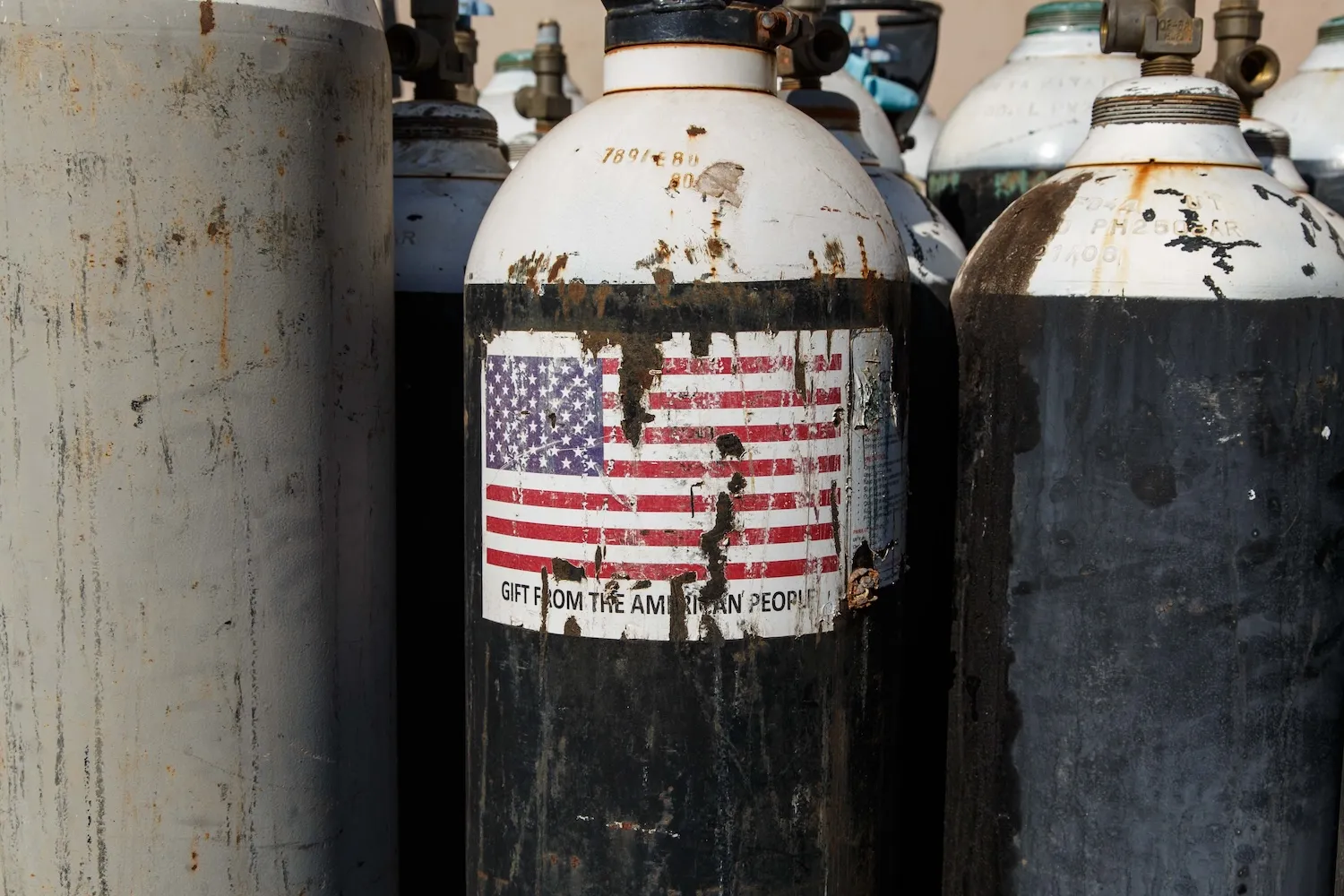
Much of the debate over the future of foreign aid rests on a core assumption: that Americans have lost their appetite for it. U.S. Secretary of State Marco Rubio put it plainly last year when he told officials at the U.S. Embassy in Guatemala that foreign aid is “the least popular thing government spends money on.” This perception of unpopularity is shaping the debate over foreign aid’s future in Washington. The prevailing assumption is that any successor to the now-shuttered U.S. Agency for International Development (USAID) must be smaller, more transactional, and more narrowly tied to U.S. interests to survive politically. But that assumption rests on a misreading of what Americans actually want.
The stakes extend well beyond U.S. policy. When the United States dismantled USAID at the start of the second Trump administration, other leading donors pulled back in step. Analysts found that the sudden retraction of U.S. aid contributed to the political conditions driving aid budget cuts in the United Kingdom, France, Germany, and elsewhere. This produced the largest single-year decline in foreign aid ever recorded: Official development assistance from the Organization for Economic Cooperation and Development’s (OECD) Development Assistance Committee fell by 23.1 percent in 2025.
Much of the debate over the future of foreign aid rests on a core assumption: that Americans have lost their appetite for it. U.S. Secretary of State Marco Rubio put it plainly last year when he told officials at the U.S. Embassy in Guatemala that foreign aid is “the least popular thing government spends money on.” This perception of unpopularity is shaping the debate over foreign aid’s future in Washington. The prevailing assumption is that any successor to the now-shuttered U.S. Agency for International Development (USAID) must be smaller, more transactional, and more narrowly tied to U.S. interests to survive politically. But that assumption rests on a misreading of what Americans actually want.
The stakes extend well beyond U.S. policy. When the United States dismantled USAID at the start of the second Trump administration, other leading donors pulled back in step. Analysts found that the sudden retraction of U.S. aid contributed to the political conditions driving aid budget cuts in the United Kingdom, France, Germany, and elsewhere. This produced the largest single-year decline in foreign aid ever recorded: Official development assistance from the Organization for Economic Cooperation and Development’s (OECD) Development Assistance Committee fell by 23.1 percent in 2025.
National polling consistently finds that while “foreign aid” is an unpopular label, Americans widely support many of the programs that it has long funded: humanitarian relief, global health, food security, and disaster response, among others. While Democrats and Republicans differ on detail, bipartisan majorities support maintaining current aid spending levels and giving medicine and food aid to developing countries. For years, polls found that while Americans often overestimate how much the United States spends on foreign aid, their support for aid rises substantially when they learn that it accounts for roughly 1 percent of the federal budget. In 2025, in the wake of USAID’s dismantling, the Pew Research Center found that around eight in 10 Americans supported providing medicine and food aid to developing countries. Roughly one year later, a Rockefeller Foundation-commissioned survey by Echelon Insights found broad bipartisan support for foreign aid. Nearly 90 percent of Americans supported aid aimed at preventing disease, while 80 percent favored reforming and strengthening foreign assistance rather than eliminating it.
Americans’ support for aid is strongest when framed around humanitarian need. Pew’s 2025 survey found that while most Americans supported medicine and food aid (80 percent), lower numbers (63 percent) supported economic development aid, and even fewer (39 percent) supported military aid.
Among those most skeptical of aid, Echelon Insights’ 2026 survey found that voters most aligned with U.S. President Donald Trump specifically want aid that is accountable, tied to U.S. interests, and focused on concrete humanitarian outcomes. Their priorities for a redesigned aid system include independent audits of aid spending (49 percent), evidence of impact on threats to the United States (47 percent), and clear program end dates (41 percent).
Overall, Americans’ views on aid spending are more positive in some areas than their European peers, suggesting that U.S. influence on aid cutbacks in Europe is in spite of, rather than because of, levels of support from the American public. The Development Engagement Lab—a research collaboration between University College London and the University of Birmingham that tracks public attitudes toward aid spending in the United States, U.K., France, and Germany—found in 2025 that 55 percent of Americans favored maintaining or increasing the current aid budget, compared with 54 percent of Germans and 45 percent of Britons, while French support was highest at 59 percent. So, while U.S. politics may be emboldening some European governments, particularly the U.K., to deprioritize aid, it is doing so despite American support for aid outpacing some of its major European peers.
In this sense, the United States is not the public-opinion outlier that today’s political debate assumes. If anything, it is the U.K., a country with a long history in delivering consequential aid budgets worldwide, that shows the weaker public mandate when it comes to aid spending.
To be sure, American views on foreign aid are mixed. The program where I conduct research at the Carnegie Endowment for International Peace—Carnegie California—surveys Californians in an annual survey about their views on the role of diplomacy, humanitarian aid, and development support to U.S. security and prosperity. The share answering that these levers matter “a great deal” for U.S. interests rose through the disruption, from 46 percent in 2023 to 48 percent in 2024 to half of respondents in 2025. And their overall views on whether the United States should play a leading role in promoting human rights and democracy around the world grew on the survey from 47 percent in favor in 2023 to 57 percent in favor in 2025. Whatever is driving Washington’s aid retrenchment, it is not a straightforward reflection of eroding public appetite.
Not every aid program enjoys equal public support. Health and humanitarian aid draw the most durable, cross-partisan, and cross-national support of any category tested, in the United States and in the comparison countries alike. Economic development aid and democracy promotion draw majority but softer support, more sensitive to how the program is described and who is describing it. Military and strategic aid remain the most politically contested category by a wide margin, both in the United States and internationally.
The American public’s continued support for U.S. aid systems matters because Washington is in middle of redesigning its development architecture. Americans also appear to recognize the consequences of dismantling it: A February 2025 survey by KFF found that two-thirds believed eliminating USAID would lead to more illness and death in low-income countries, and 62 percent expected more humanitarian crises worldwide. A year after USAID’s closure and the merging of the vestiges of aid into the country’s foreign affairs system, the U.S. State Department has yet to articulate what a coherent successor looks like. The Modernizing Foreign Assistance Network found that the department has eliminated the functions that once handled strategic planning, but details on how funding pipelines are managed remain elusive.
While the United States has announced notable ad hoc investments in aid to faith-based organizations and global health systems, such as the global vaccine alliance Gavi, questions remain as to what a coherent investment in aid’s future will look like. Some analysts continue to warn that the fragmentation that has long plagued U.S. aid has only worsened since USAID’s absorption by the State Department and that any durable successor will need to rebuild the bipartisan coalition that sustained the aid system’s most successful innovations, from PEPFAR to the Millennium Challenge Corporation.
What’s largely missing from that conversation is the public’s position. If policymakers assume that voters have rejected development assistance as a core feature of U.S. policy, they risk building a successor to USAID around a political constraint that the public itself does not actually impose.
The point isn’t that Americans want the old USAID restored unchanged. It’s that policymakers have overstated the political constraints that they face in redesigning it. Polling suggests a more nuanced reality: Many Americans continue to back the goals that foreign assistance has long pursued, even if they are open to reforming how those goals are achieved. The risk is that misreading what Americans want could drive a narrower, less effective development strategy during a rare window to redesign the aid system.
There is also a message for capitals beyond Washington, where the United States’ retreat has already shaped debates. Even before the 2025 cuts, the United States spent roughly 1 percent of its federal budget on foreign aid, a share that most Americans wildly overestimate. By the standard international measure—aid as a share of gross national income—the United States gave just 0.09 percent in 2025, after cutting aid spending 56.9 percent in real terms that year. Despite its own retrenchment the U.K. still gave more than four times that share (0.43 percent) in 2025, even as it falls further from its legislated target of 0.7 percent, a target that it hasn’t hit since 2021. Only four countries—Denmark, Luxembourg, Norway, and Sweden—currently meet that benchmark.
If allies are reading the United States’ retrenchment as evidence that the American public has soured on international engagement, then the polling suggests that they are drawing the wrong conclusion: American support for aid remains at least as strong, and in some cases stronger, than support in Europe. A U.S. retreat cannot rest on the presumption that traditionally generous European states will pick up the slack, when their own citizens are, on this measure, less convinced of aid’s value than Americans are.
Decisions about what replaces USAID will shape not only the United States’ development strategy but expectations about the future of international cooperation more broadly. Those choices should be guided by what Americans believe, not by assumptions that have hardened into conventional wisdom.
