


At least four suspects have been arrested in connection with the deaths of 18 elephants in the Amboseli ecosystem in southern Kenya, near the border with Tanzania. Preliminary investigations by a multiagency team suggest poisoning from agricultural pesticides, authorities say.
In July, 16 elephants were found dead at Kimana Sanctuary and Kuku Group Ranch in the Amboseli ecosystem. The death toll rose to 18 in August, after two more elephant carcasses were found in Kitenden B reserve, near the Amboseli National Park.
On Aug. 21, Kenya Wildlife Service’s (KWS) communication director Duncan Wanyama told Mongabay by phone that another elephant was in critical condition in Amboseli and under close watch by animal experts. The KWS has previously said that most of the elephants found dead were female and their calves.
Investigations have led to the recovery of substances, including chemicals that are potentially toxic, and “unlabelled materials”, which have been secured for further scientific analysis, Kenya’s Cabinet Secretary for Tourism and Wildlife Rebecca Miano said in a statement seen by Mongabay. “Although the investigations remain active, the arrest of persons of interest and the recovery of exhibits do not in themselves establish criminal culpability,” she said.
Miano added that a suspect believed to have crucial information about the killings of the elephants was still at large.
Initial investigations indicated that the elephants died after ingesting a toxic substance, with laboratory tests pointing to cyanide. The elephants were thought to have come into contact with the chemical in pesticides sprayed on tomatoes in nearby farms, although Miano said this is yet to be scientifically proven.
Farmers from the area have refuted the allegation and told the Associated Press on Aug. 7 that the communities there have long coexisted with elephants.
Kenya-based conservation NGO WildlifeDirect has sought more independent and transparent investigations. “The reported deaths … are a warning that Kenya’s pesticide governance, regulatory oversight, and enforcement systems require urgent reform,” Paula Kahumbu, WildlifeDirect’s CEO, said in a statement when the death of the first 15 elephants was announced. “If toxic chemicals are capable of entering crops consumed by elephants, we must ask whether farmers, farm workers, neighbouring communities, livestock, and consumers are being adequately protected.”
A multi-government-agency team has been investigating the matter, including within the community that lives adjacent to the national park.
Miano commended the local communities for their “vigilance and cooperation during these investigations”.
“Their readiness to share information and support the multi-agency operation demonstrates that communities are not passive beneficiaries of conservation, but indispensable partners and the primary guardians of Kenya’s wildlife heritage,” she said.
Miano called for cross-border collaboration to ensure the safety of the animals that move freely between Kenya and Tanzania and promised a sustained probe until the truth about the jumbos’ deaths is established.
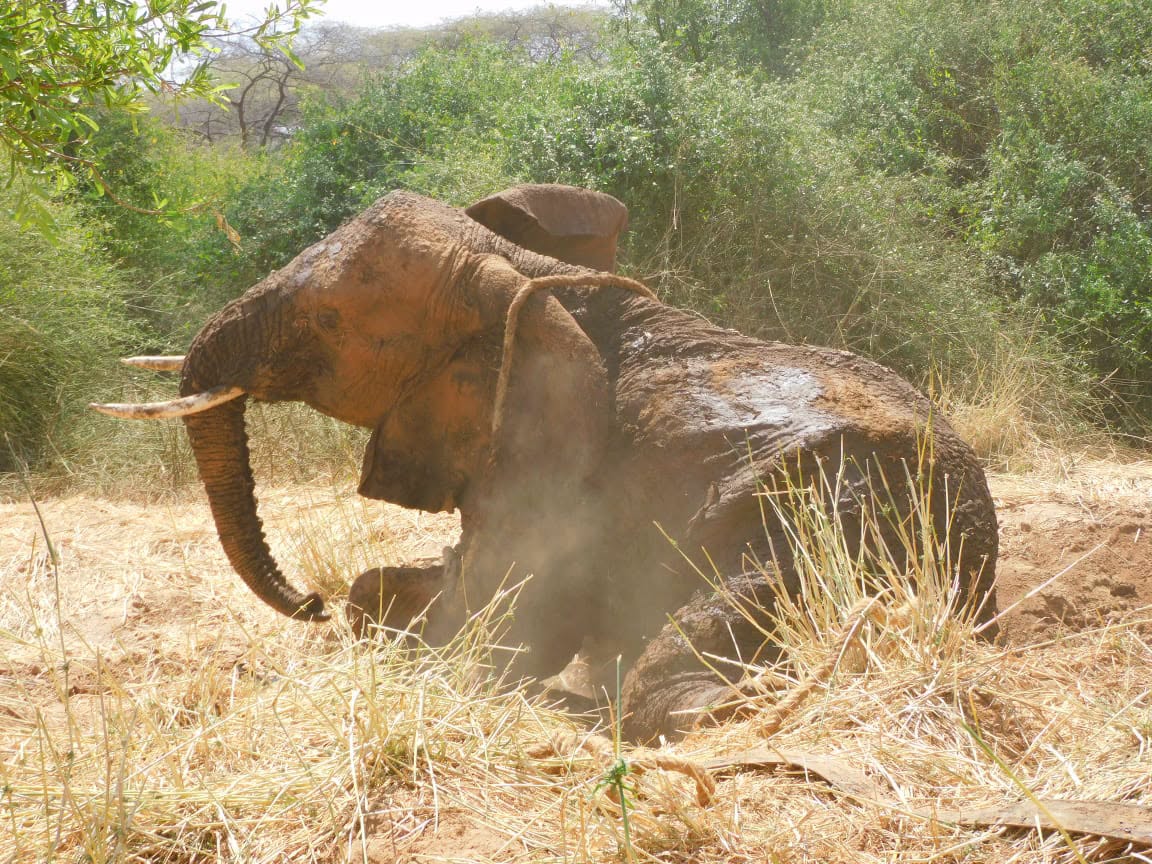
Banner image: A Kenya Wildlife Service team rescued this elephant that was stuck in the mud in Muchuro, Isiolo County, on Aug. 22, 2026. Image courtesy of KWS.
