


- A 10-year agreement provides York Timber Holdings with access to renewable electricity “at scale,” an official with the timber company said.
- The agreement will reduce the sawmill’s greenhouse gas emissions, while reducing its exposure to electricity tariff hikes and potential future carbon-based costs, according to the company.
- “Renewable energy is just one element of sustainability. Responsible management of plantations, conservation of biodiversity and water stewardship are just as important,” a forestry specialist said.
JOHANNESBURG, South Africa — York Timber Holdings signed a 10-year renewable electricity agreement with electricity trader Discovery Green for power for its Jessievale sawmill in June 2026. Renewables will now make up approximately 90% of the mill’s electricity use, and the agreement is a trend that is spreading amongst commercial users in South Africa.
“The 10-year agreement gives York Timbers access to renewable electricity at scale, while improving long-term certainty regarding electricity costs,” said Linmari Pelser, the company’s group risk and compliance officer.
Discovery Green is a subsidiary of one of South Africa’s largest health insurance schemes; Discovery’s renewable energy division works with companies that want to increase energy efficiency and shift to renewables, including “wheeling” agreements like the one with York Timber.
Under the agreement, York Timber’s electricity will still arrive over the same infrastructure, but Discovery Green will coordinate the equivalent amount of power being fed into the national grid from a range of solar and wind producers across the country. York Timber also operates a 700 kW solar farm at the mill.
Pelser said the agreement will reduce the sawmill’s greenhouse gas emissions, while reducing its exposure to electricity tariff hikes and potential future carbon-based costs, such as South Africa’s Carbon Tax. This tax on greenhouse gas emissions was introduced in 2019, and generous allowances that allowed most polluters to pay only a fraction of their assessed costs are scheduled to be lifted this year.
Dan Ginsberg, head of actuarial and research and development at Discovery Green, told Mongabay York Timber joins more than 50 other companies buying electricity through his company. “Long-term power purchase agreements with large energy users provide the demand certainty required to unlock investments in new energy infrastructure and are, therefore, critical enablers of South Africa’s energy transition.”
Paxie Chirwa, a forestry specialist at the University of Pretoria, said York Timber’s new energy agreement is welcome, though its environmental significance needs to be considered in the broader context of commercial forestry.
“Renewable energy is just one element of sustainability. Responsible management of plantations, conservation of biodiversity and water stewardship are just as important,” he told Mongabay.
“The agreement is a significant step forward since it reduces York Timber’s dependence on coal-based electricity supplied via the national electricity grid and therefore lowers its Scope 2 greenhouse gas emissions,” Chirwa said, referring to emissions linked to industrial power supply. “As South Africa transitions to a low-carbon economy, an increasing use of renewable electricity in timber processing is environmentally and economically desirable.”
He said South African timber processors could further reduce emissions by making greater use of sawdust and bark produced at sawmills as fuels for biomass energy production.
But Chirwa said that reducing emissions by using renewable energy agreements will help reduce emissions from the sector, but this is only part of the picture.
“As far as the broader issue of forestry is concerned, the agreement primarily enhances the sustainability of timber processing and not plantation management,” he said.
The industry’s overall environmental impact rests more heavily on how it manages its plantations, and harvests and transports trees.
Pelser said York Timber addresses questions of sustainable management, protection of water resources, and reduction of waste in the framework of its compliance with Forest Stewardship Council (FSC) certification standards on just under 90,000 hectares (222,000 acres) of timber plantations. She said this includes prescribed conservation set-asides, maintaining riparian buffers to protect watercourses, and sustainable harvesting plans for plantations.
Chirwa acknowledged that South Africa’s timber industry is already close to international best practices in many respects. More than 90% of South Africa’s commercial plantations are FSC certified, and he said measures like those listed by Pelser have helped to preserve biodiversity and maintain ecosystem services within plantation landscapes.
“There is room for improvement in terms of monitoring the use of fertilizers, nutrient runoff, water quality downstream from plantations as well as improving the social side of forestry activities,” he said.
He also called on the industry to disclose independently verified data on their emissions, protection of biodiversity, and ecosystem restoration.
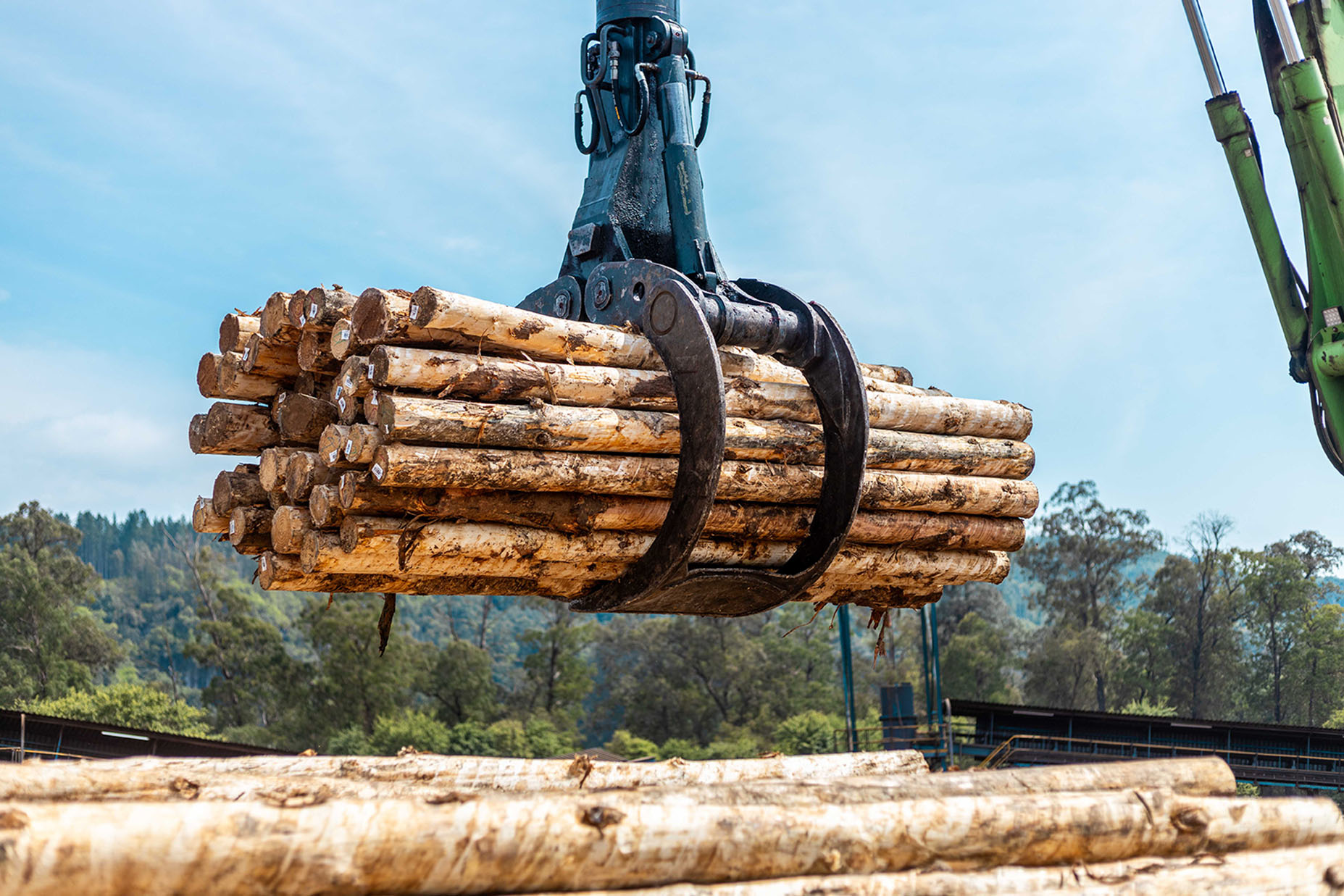
Banner image: Felling timber in Mpumalanga province, South Africa. Image by York Timbers (Fair Use).
Feedback: Use this form to send a message to the author of this post. If you want to post a public comment, you can do that at the bottom of the page.

