


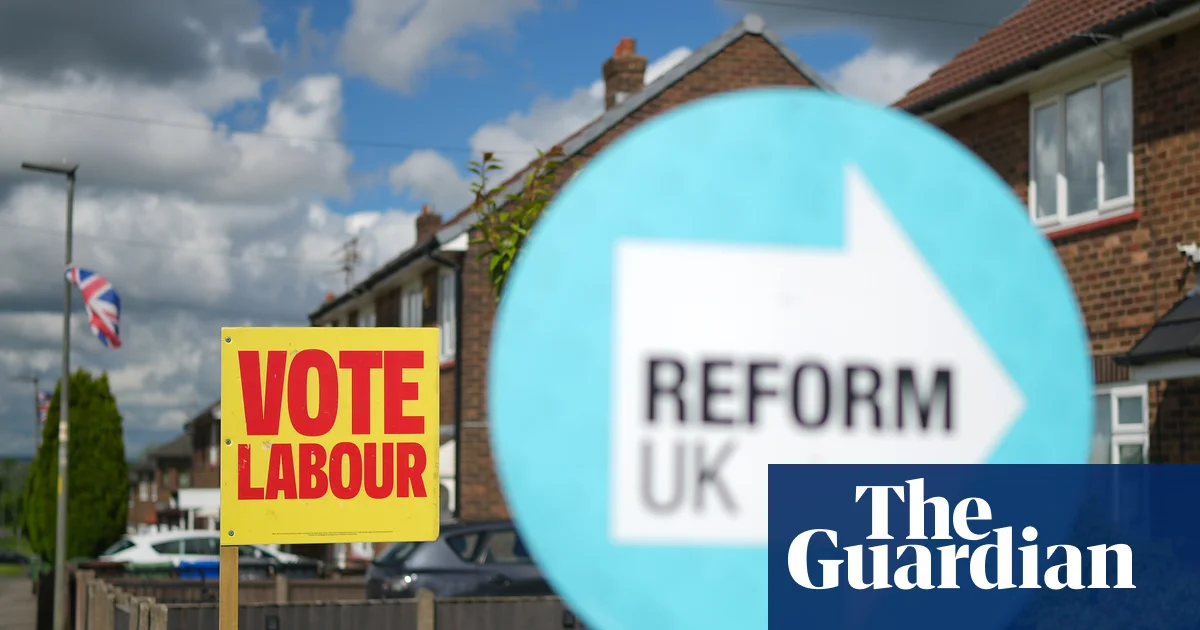
Andy Burnham is facing new pressure to act over electoral reform, with nearly 100 of his MPs backing a commission to decide on a route to replace the first-past-the-post voting system. Why is this an issue for Labour – and will anything happen?
What is the official government view?
Officially, no change. The 2024 Labour manifesto only discussed elections in terms of changes to ID rules and allowing 16- and 17-year-olds the vote. Before becoming prime minister, Burnham said he would not deviate from the manifesto.
Unofficially, things are very different. Burnham is a longstanding supporter of electoral reform, which is also the view of his party. In 2022, the Labour conference voted overwhelmingly to support a proportional electoral system. A similar motion was only defeated the previous year after unions blocked it.
It is also worth noting that voting varies. While Westminster elections are first past the post, elections to the Scottish, Welsh and Northern Irish parliaments are proportional, while mayors are elected using supplementary vote, which gives a weight to second choices.
Why is there renewed pressure?
Two main reasons. The first is that the makeup of Labour MPs changed notably with the 2024 election. Many longer-standing MPs had been sceptical about electoral reform, arguing it was the party’s role to compete in a winner-takes-all contest as one of the two parties of government, and that proportional representation would create unstable coalitions. In contrast, many new MPs, like the bulk of Labour members, support change.
Also, politics is different. First past the post had something of a rationale when Labour and the Conservatives won the bulk of votes. But eroded party loyalties have created an atomised system in which five parties – Reform UK, Labour, the Conservatives, Liberal Democrats and Greens – are bunched in a tight group. Even in the 2024 election, Labour won nearly two-thirds of all Commons seats with just a third of votes.
What are the MPs hoping to solve with electoral change?
There is a very direct vested interest for some Labour MPs: Reform has polled regularly at around or above 30%, and if replicated in a general election it could send Nigel Farage to No 10 with a huge majority but on limited public support.
There is, however, more to it. Supporters of a proportional system note that first past the post means millions of people end up having to vote tactically, picking a least-disliked candidate who may realistically win, rather than the person or party they truly support, which can create disenchantment and cynicism.
They also point out that while supporters of first past the post argue it brings stability, a country with its seventh prime minister in just over a decade is hardly a beacon for this virtue.
How would results differ under a proportional system?
There are many different potential systems, all of which would bring varying results. But as a broad guide, if the 2024 election had been held under a completely proportional method, rather than a Labour landslide Keir Starmer would have needed the support of other parties – perhaps the Lib Dems and Greens – to have got anything done at all.
There is also another factor – as electoral systems change, so does voting behaviour. One of the main blocks to support for smaller parties has been the belief among voters that they cannot win and are thus a wasted vote. Under a proportional method this could change.
So is anything going to happen?
In the short term, no. Even with the prospect of a Reform government, Burnham has categorically ruled out any change to the electoral system before the next election, as this was not part of the 2024 manifesto.
What the Labour MPs hope to achieve is a plan that could form part of the next manifesto – a commitment that if the party was re-elected, it would change the voting system. If this involved a proportional system, it would most likely get the support of the Lib Dems, Greens, Scottish National party and Plaid Cymru, all of which back such a move.
Reform also officially supports electoral reform, with Farage a long-term advocate – even though he has gone quiet on the issue since his party began leading in the polls.
