


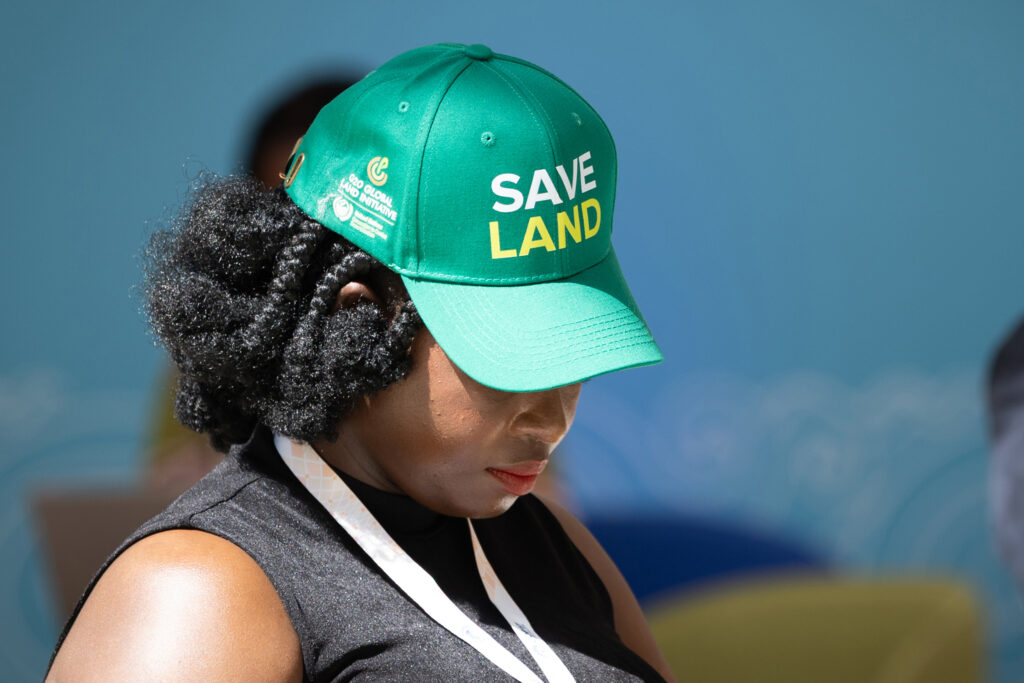
In Ulaanbaatar, Mongolia, policy makers, scientists and global negotiators are gathering to convey an urgent message: The world’s rangelands, which make up about half of Earth’s land surface, are in trouble. But these same lands offer an opportunity. If, collectively, farmers and land users restore rangelands and soils, they can combat drought and preserve a major global carbon sink.
Unlike the burning of fossil fuels, everyone seems to agree that something needs to be done about them.
Ulaanbaatar is the host this year of the biennial meeting of the United Nations Convention to Combat Desertification (UNCCD), one of the three U.N. conventions that emerged from a global gathering in Rio de Janeiro, held in 1992. These “Rio conventions,” which also include the United Nations Framework Convention on Climate Change (UNFCCC) and the Convention on Biological Diversity, were designed to address interconnected global challenges, but the UNCCD, which officially launched in 1994, has earned fewer headlines and attention than the other two.
The gathering, sometimes referred to as the “land COP,” short for conference of the parties, is the only global summit of its kind to address the interwoven problems of drought, land degradation and desertification. The outcomes of this year’s event, which enters its second week Monday, could have major implications for drought management, and ultimately, for global food security and fire control.
This year’s gathering comes as drought has gripped much of the planet—nearly one-third of the world’s terrestrial lands last year, according to one study. Record-breaking heat is projected to worsen drought conditions across much of the world, including in Europe where farmers across the continent are already suffering significant harvest losses.
Major rivers are running dry. Fires are sprouting in places once reliably covered in snow, powered by parched grasses and woody fuels. In the United States, extreme heat has become the single biggest weather-driven cause of death. Successive heatwaves in Europe, where summertime temperatures exceeding 100 degrees Fahrenheit are becoming the norm, claimed the lives of at least 25,000 people in Europe this year as of early August.
“European countries, for over a decade, have been trying to get a soil strategy going,” said Praveena Sridhar, the scientific and policy advisor for the Save Soil movement. “But now with people with no air conditioning, and the heat, and the food actually burning up, and the forest burning, it’s becoming more and more relevant. People are able to connect the dots.”
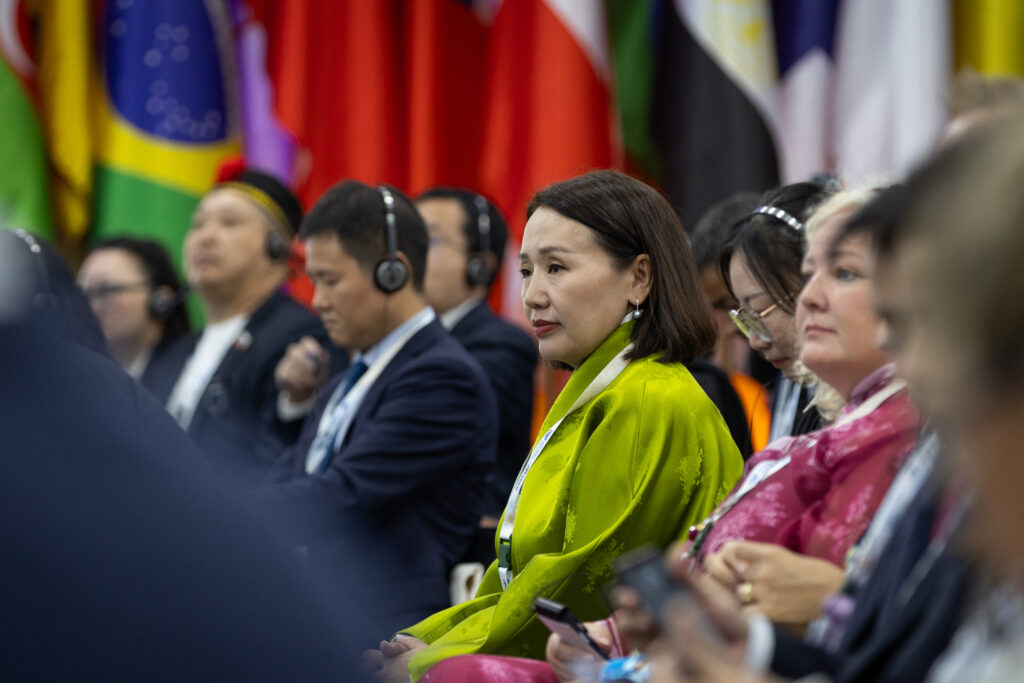
In 2025, the European Union passed a law requiring member states to monitor and report on soil health, an important step toward addressing soil degradation there. But environmental advocates believe it lacks binding requirements to actually improve soil health through a wide range of practices, including reducing pesticide use, controlling erosion by planting certain soil-stabilizing plants or reducing the conversion of agricultural and wild lands to development.
According to the U.N., an estimated 40 percent of the world’s lands are degraded, largely from neglect, drought and over-grazing, meaning they’re less able to hold water and sequester carbon. Restoring these lands could yield enormous benefits for food production, drought mitigation and carbon storage.
Rangelands, which include both wild and managed pasture, grassland, shrubland, savannah and deserts, hold about 30 percent of the world’s soil carbon, making them a critical reservoir. Yet they get less attention from policy makers.
“Globally, when you look at rangelands, it’s a very important ecosystem, often underappreciated,” said Amy Ganguli, a professor of rangeland ecology at the University of Arizona. “It’s also a land type that has experienced tremendous challenges from invasive plant species, desertification, competing land uses and perceptions of value.”
At this year’s land COP, negotiators are planning to focus their attention on these ecosystems as part of the United Nations’ determination to make 2026 the International Year of Rangelands and Pastoralists. The location is symbolic and strategic: 90 percent of Mongolia’s land consists of rangelands and much of the population is pastoral, living and moving with their animals.
This story is funded by readers like you.
Our nonprofit newsroom provides award-winning climate coverage free of charge and advertising. We rely on donations from readers like you to keep going. Please donate now to support our work.
This focus on rangelands in particular, and soils more broadly, is especially hopeful for American researchers and advocates. The U.S. pulled out of the UNFCCC earlier this year and has not ratified the U.N. Convention on Biodiversity, but an American delegation is still planning to come to the table in Ulaanbaatar.
“In the U.S. climate has become very political; land conservation has not,” said Jennifer Watts, an associate scientist with the Woodwell Climate Research Center, who is attending the event. “I started viewing this as an opportunity to really engage within the U.S. on these other important issues, including climate, through the lens of land protection.”
“It’s really a win-win,” Watts added. “These ecosystems, when they’re healthy, provide all sorts of services to society and climate: We increase biodiversity, we’re able to sustain a lot more life—wildlife, insects, humans. About 60 percent, globally, of food production for humans are from these rangelands.”
As more of Earth’s surface contends with aridity in some places and excess water in others, healthy rangelands provide a moderating effect. “Any time you can stabilize the soil and plants, it just really helps mitigate against those extreme dry and wet events,” Watts said.
At the last UNCCD conference, held in Riyadh, Saudi Arabia, in 2024, negotiators focused on developing a binding global protocol for tackling the expanding global crisis of drought and land aridity. A United Nations report, published during the conference, said droughts are costing countries an estimated $300 billion a year and are projected to impact three-quarters of the globe’s population by 2050.
African countries hardest hit by these conditions united behind an effort to develop the protocol, but more developed nations pushed back, saying the formal protocol would be too cumbersome and expensive. The parties agreed to resume negotiations in Ulaanbaatar.
At the event in Riyadh, negotiators also decided they would turn their attention to rangelands at the next COP.
A major aim of the agenda, organizers say, is to highlight the role of pastoralists in preserving rangelands. Roughly 500 million people depend on rangelands for their livelihoods, many of them nomadic and lacking political agency, despite the critical role they play in maintaining these climatically and environmentally important landscapes.
“Governments have also attempted to sedentarize pastoralists,” said Fiona Flintan, a senior scientist with the International Livestock Research Institute. “They see mobility and movement to be a problem that doesn’t kind of fit [with] centralization and administration processes. So the system and the people are also under pressure.”
About This Story
Perhaps you noticed: This story, like all the news we publish, is free to read. That’s because Inside Climate News is a 501c3 nonprofit organization. We do not charge a subscription fee, lock our news behind a paywall, or clutter our website with ads. We make our news on climate and the environment freely available to you and anyone who wants it.
That’s not all. We also share our news for free with scores of other media organizations around the country. Many of them can’t afford to do environmental journalism of their own. We’ve built bureaus from coast to coast to report local stories, collaborate with local newsrooms and co-publish articles so that this vital work is shared as widely as possible.
Two of us launched ICN in 2007. Six years later we earned a Pulitzer Prize for National Reporting, and now we run the oldest and largest dedicated climate newsroom in the nation. We tell the story in all its complexity. We hold polluters accountable. We expose environmental injustice. We debunk misinformation. We scrutinize solutions and inspire action.
Donations from readers like you fund every aspect of what we do. If you don’t already, will you support our ongoing work, our reporting on the biggest crisis facing our planet, and help us reach even more readers in more places?
Please take a moment to make a tax-deductible donation. Every one of them makes a difference.
Thank you,

