

Close Menu
NCIJ Network NCIJ Network
    What's Hot

    Stripe didn’t really buy OpenRouter because of the ‘singularity’

    August 20, 2026

    The ‘Industrial Accidents’ Behind Rogue AI Attacks

    August 20, 2026

    Bitcoin Shortsellers Get Destroyed With $1.7B Liquidated

    August 20, 2026
    Facebook X (Twitter) Instagram
    Trending
    • Stripe didn’t really buy OpenRouter because of the ‘singularity’
    • The ‘Industrial Accidents’ Behind Rogue AI Attacks
    • Bitcoin Shortsellers Get Destroyed With $1.7B Liquidated
    • Breast cancer is surging among Asian American women — and scientists don’t know why
    • ‘I’d love a normal life, but being a young carer means sacrifices’
    • Cougars cut deadly vehicle-deer collisions in the U.S. by up to 76%, study shows
    • Gray-Zone Warfare Wave Targets Germany
    • Real shirt that confuses Flock cameras, other surveillance tech hasn’t been sold for years
    • About
      • Our Team
      • Editorial Policy
      • Editorial Independence
      • International Support
    • Trust & Standards
      • AI Usage Policy
      • Conflict of Interest Policy
      • Corrections Policy
      • Ethics Policy
      • Fact-Checking Policy
      • Source Protection
    • Get Involved
      • Guide for Sources
      • Support Independent Journalism
    • Legal
      • Cookie Policy
      • Privacy Policy
      • Terms of Use
    Facebook X (Twitter) Instagram
    NCIJ Network NCIJ Network
    Thursday, August 20
    • Home
    • World
    • Ai
    • Business
    • Politics
    • Health
    • Crypto
    • Science
    • Technology
    • Cybersecurity
    • Defense & Security
    • Economy
    • Energy
    • Europe
    • More
      • Fact Check
      • Investigations
      • Opinion & Analysis
      • Environment
    NCIJ Network NCIJ Network
    Home»Opinion & Analysis

    The Guardian view on the Grenfell Tower fire: Britain is letting companies pass the buck | Editorial

    NCIJ NETWNCIJ NETWORKBy NCIJ NETWNCIJ NETWORKAugust 20, 2026 Opinion & Analysis No Comments3 Mins Read
    Share
    Facebook Twitter LinkedIn Pinterest Email

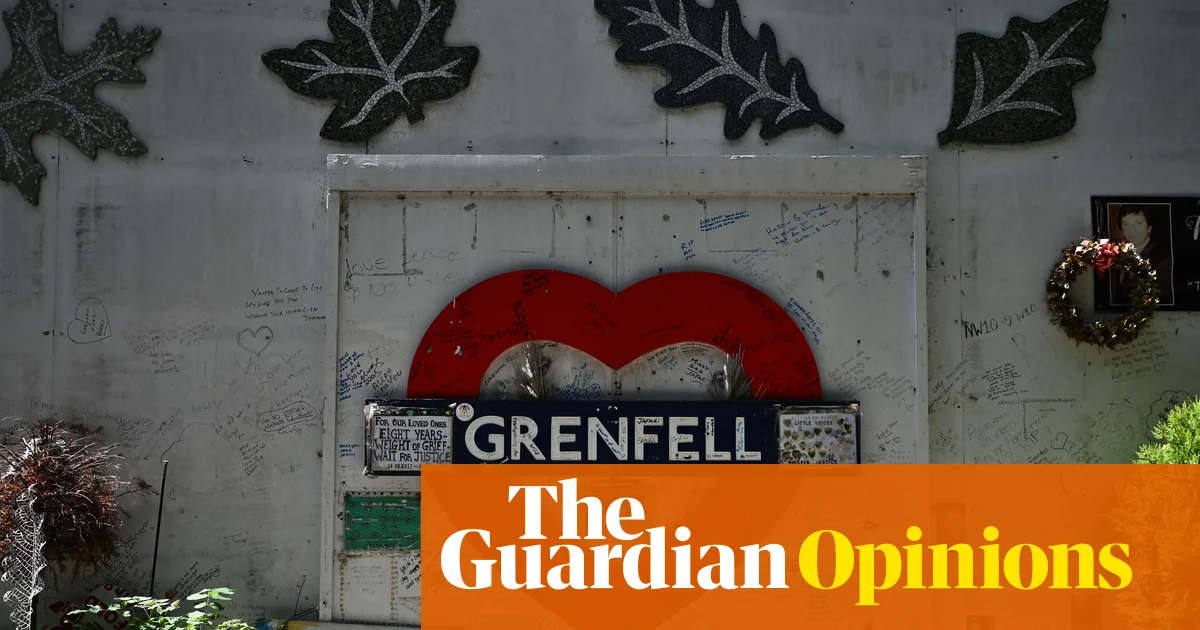
    There is something profoundly wrong when the company behind Grenfell Tower’s flammable cladding paid more compensation to its shareholders than to victims of the disaster. Of Arconic’s £86m in Grenfell-related settlements, all but £1.5m was covered by insurers. Hardly enough to make a multinational think again. The company whose product the inquiry found was the “primary cause” of the fire’s rapid spread has ended up paying only a fraction of the wider social cost, while the multibillion-pound bill for making hundreds of buildings safe falls largely on the state. In June 2017, 72 people – including 18 children – died in London’s Grenfell Tower fire. Almost a decade later, nobody has been criminally charged over its causes. It’s hard to conclude anything but that Britain’s system of corporate accountability is rotten.

    A new report by the thinktank Common Wealth and the financial investigations group FIND suggests putting right this state of affairs in England and Wales by adopting two changes that parliament could enact quickly. The first is a “failure to prevent” law that would make companies responsible for having adequate systems to prevent foreseeable serious harm. The second is to adopt a “punitive damages” approach. Rather than compensating victims for their loss, punitive damages ask what a company should pay for its conduct. Such an award against Arconic could have been used to meet the costs of remediation, the report says, “at no public cost”.

    This is possible in America. Some Grenfell families tried to bring a case under US law, where damages can punish and deter corporate wrongdoing, not just compensate victims. Currently, Meta is accused in a California court of intentionally addicting children to Facebook and Instagram in pursuit of profit. It denies wrongdoing, but says litigation potentially exposes it to $1.4tn in penalties and changes to its products. Whatever the eventual outcome, the case shows how alleged social harm can be a company-sized risk.

    Arconic successfully argued that the Grenfell families’ case be heard in British courts, where civil compensation and criminal punishment are kept separate. The Metropolitan police are investigating 57 individuals and 20 organisations as criminal suspects, but no charges are expected before Grenfell’s tenth anniversary. Compare that with Hong Kong’s Wang Fuk Court fire, which killed 168 people in November 2025. Authorities immediately treated it as a potential crime involving corporate actors. Within seven months, seven people and two firms faced manslaughter charges. No one is suggesting authoritarian Hong Kong as a model. But nearly a decade without charges in Britain, against seven months in the far east, is an uncomfortable contrast.

    There are reasons why justice has taken so long: the Covid pandemic disrupted the Grenfell public inquiry involving hundreds of core participants, and responsibility stretches across manufacturers, certifiers, architects, contractors and regulators. This exposes a deeper problem: the more entities involved, the easier it becomes for blame for a disaster to disappear between them.

    Lawmakers know how to stop companies passing the buck. The polluter pays in environmental law. There are recall obligations in product safety and collective redress in competition law. Why aren’t legal principles that are already used to force companies to account for economic and consumer harms being extended to catastrophic social harms? Until they are, the law will remain better at protecting investors rather than the public from corporate wrongdoing.

    Do you have an opinion on the issues raised in this article? If you would like to submit a response of up to 300 words by email to be considered for publication in our letters section, please click here.

    Britain buck companies Editorial fire Grenfell Guardian Letting pass Tower view
    NCIJ NETWNCIJ NETWORK
    • Website

    Keep Reading

    Gray-Zone Warfare Wave Targets Germany

    Trump Urges Senate To Pass CLARITY Act, Teases Bitcoin Buys

    Afghanistan’s Taliban Have Been Surprisingly Stable—Until Now

    UAE Imposes Trade, Financial Embargo on Iran Over Missile Strikes

    How Africa Is Battling Climate Change and the Coming ‘Super’ El Niño

    When a Big Energy Project Turns Bad by Djoomart Otorbaev

    Add A Comment
    Leave A Reply Cancel Reply

    Editors Picks

    Stripe didn’t really buy OpenRouter because of the ‘singularity’

    August 20, 2026

    The ‘Industrial Accidents’ Behind Rogue AI Attacks

    August 20, 2026

    Bitcoin Shortsellers Get Destroyed With $1.7B Liquidated

    August 20, 2026

    Breast cancer is surging among Asian American women — and scientists don’t know why

    August 20, 2026
    Latest Posts

    DHS Official Resigns, Citing ‘War on Immigrants’

    July 27, 2026

    Police make inquiries after Farage reports Polanski post for ‘inciting murder’ | Nigel Farage

    July 27, 2026

    A Japanese town wrestles with identity after protests over its first mosque

    July 27, 2026

    Subscribe to News

    Get the latest sports news from NewsSite about world, sports and politics.

    NCIJ Network is an independent digital news platform delivering trusted investigative journalism, European and global news, in-depth analysis, and fact-based reporting with accuracy, transparency, and integrity.

    Facebook X (Twitter) Instagram Pinterest YouTube

    Stripe didn’t really buy OpenRouter because of the ‘singularity’

    August 20, 2026

    The ‘Industrial Accidents’ Behind Rogue AI Attacks

    August 20, 2026

    Bitcoin Shortsellers Get Destroyed With $1.7B Liquidated

    August 20, 2026

    Subscribe to Updates

    Get the latest creative news from FooBar about art, design and business.

    Type above and press Enter to search. Press Esc to cancel.