


If you’re on the market for an Android phone, you’ve got options. Over the years, ZDNET’s team of mobile experts has put the best Android phones from brands like Google, Samsung, and Motorola through rigorous testing. We evaluate each handset’s unique capabilities, day-to-day endurance, camera quality, and more. With Google just releasing its Pixel 11 series of devices, we now have a clear picture of what the biggest and best brands have to offer in 2026.
Get more in-depth ZDNET tech coverage: Add us as a preferred Google source on Chrome and Chromium browsers.
Best mobile deals of the week
Deals are selected by the CNET Group commerce team, and may be unrelated to this article.
What is the best Android phone right now?
Our pick for the best Android phone overall is the Samsung Galaxy S26 Ultra which starts at $1,050. It features the company’s latest display innovation, the Privacy Display, a quad-camera setup that’s highly functional, a built-in S Pen stylus for precision inputs, and AI capabilities that play well with Samsung’s Bixby model and Google’s Gemini. As a runner-up, we’re honoring the Google Pixel 10a, a $425 Android phone with a durable design, support for up to seven years of OS and security updates, and a reliable camera system.
Also: The best Samsung phones you can buy
For our August update, we added the Pixel 11 Pro series, Galaxy Z Fold 8, and Motorola Razr Ultra (2026). The update also reflects the Made by Google and Samsung Unpacked events that happened over the summer.
Sort by
All
Value
Performance
Battery life
Camera quality
Display
Value for money
Storage
Display quality
Best Android phones in 2026
Show less
Prakhar Khanna/ZDNET
Why we like it: Samsung’s flagship phone continues to top the list for our benchmark tests. The latest model, the Galaxy S26 Ultra, delivers in almost every way, from general performance to display technology to camera quality, with flaws that you really have to look closely to uncover.
The standout feature of the Galaxy S26 Ultra is its Privacy Display, which dims half the screen’s pixels, so it appears tinted when viewed at an off angle. This complex display tech can be customized to hide important information, such as 2FA message alerts and passwords. Its one caveat? A screen that’s a little less sharp and vibrant than its predecessor, but the security benefits easily outweigh the drawbacks here.
Review: Samsung Galaxy S26 Ultra
Samsung has also equipped the Galaxy S26 Ultra with an updated Qualcomm Snapdragon 8 Elite Gen 5 chipset, capable of running high-end games like Genshin Impact and heavy AI tasks without much stuttering. The improved efficiency is paired nicely with 60W wired charging, the first and fastest we’ve tested on any Samsung phone to date.
Who it’s for: The Galaxy S26 Ultra is for users who want a handset with high utility, advanced security features, and a camera system that can shoot virtually anything. You’ll also have to be a user who’s willing to pay to play, as the phone typically starts at $1,300. Carrier deals, retailer discounts, and other trade-in offers are your best friends if you really want one.
Who should look elsewhere: I mentioned earlier that the S26 Ultra isn’t flawless. For one, it lacks the Qi2 magnetic adapter that’s required to attach compatible accessories without an additional case. It also has a camera configuration that’s nearly identical to last year’s model, and it’s still a large, 6.9-inch phone, at the end of the day.
Those who prefer something less expensive and easier to hold should consider Samsung’s smaller options, such as the Galaxy S26 and S26 Plus.
Samsung Galaxy S26 Ultra specs: Processor: Qualcomm Snapdragon 8 Elite Gen 5 | Display size: 6.9 inches | Storage options: Up to 1TB | Rear cameras: 200MP main, 50MP ultrawide, 50MP telephoto with 5x zoom, 10MP telephoto with 3x zoom | Front camera: 12MP | Battery: 5,000mAh | Price: Starting at $1,050
Read More
Show Expert Take Show less
Show less
Kerry Wan/ZDNET
Why we like it: The Pixel A series is always a treat to review because, for the most part, you’re getting everything you can get in the flagship version of the Pixel, but in a smaller, less expensive package.
Truth be told, it’s very hard to buy a phone today that doesn’t meet all the table stakes, but Pixels — even midrange Pixels — tend to rise to the top in terms of features. Google’s software is awesome to use — it’s one of the best versions of Android you can find.
The Pixel 10a in particular is quite good at photography. There are two camera sensors — a wide and ultrawide, but it lacks a telephoto lens. That’s fairly common for midrange phones, but what the Pixel 10a does, it does very well, including all of Google’s computational photography tricks and Gemini tricks as well.
Review: Google Pixel 10a
Who it’s for: The Pixel 10a is a budget phone typically starting at $499. It comes in a variety of fun colors, such as Lavender, Berry, Fog, and Obsidian. Though it lacks a telephoto camera, the other two cameras are exquisite.
I was particularly impressed with its ability to capture moving subjects without the typical blur you’ll see at this price point. Low-light photography is also quite good.
As for the rest of the phone, the software is the main other selling point. This is Google’s phone running Google’s operating system. If you are a tech nerd, that should appeal to you — especially at the attractive price point. You can also easily buy the phone unlocked and take it to any carrier you want in the US, if you’d like.
Who should look elsewhere: The biggest downside to the Pixel 10a is its design. In addition to the gigantic bezel that runs around the screen, the phone’s back lacks the camera “visor” that’s become iconic to the brand over the last few years.
On the plus side, the camera bump is nearly flush with the back of the phone. On the downside, it’s frankly a little boring, and the bezels around the front scream 2017-era smartphone. It’s not a great look, so if you’re someone who fancies a phone that stands out from the pack, this phone is not for you.
If you’re a spec nerd, you may also not like that this phone tops out at 8GB of RAM and 256GB of storage. The latter isn’t terrible, but the former doesn’t exactly scream future-proof. Add in the fact that Tensor processors are not known for their impressive power, and gamers might want to find a different option as well.
Google Pixel 10a tech specs: Processor: Tensor G5 | Display size: 6.3-inch | RAM/Storage: 8GB with 128GB or 256GB | Battery: 5,100mAh | Camera: 48MP wide, 13MP ultrawide, and 13MP front | Price: Starting at $499
Read More
Show Expert Take Show less
Show less
Kerry Wan/ZDNET
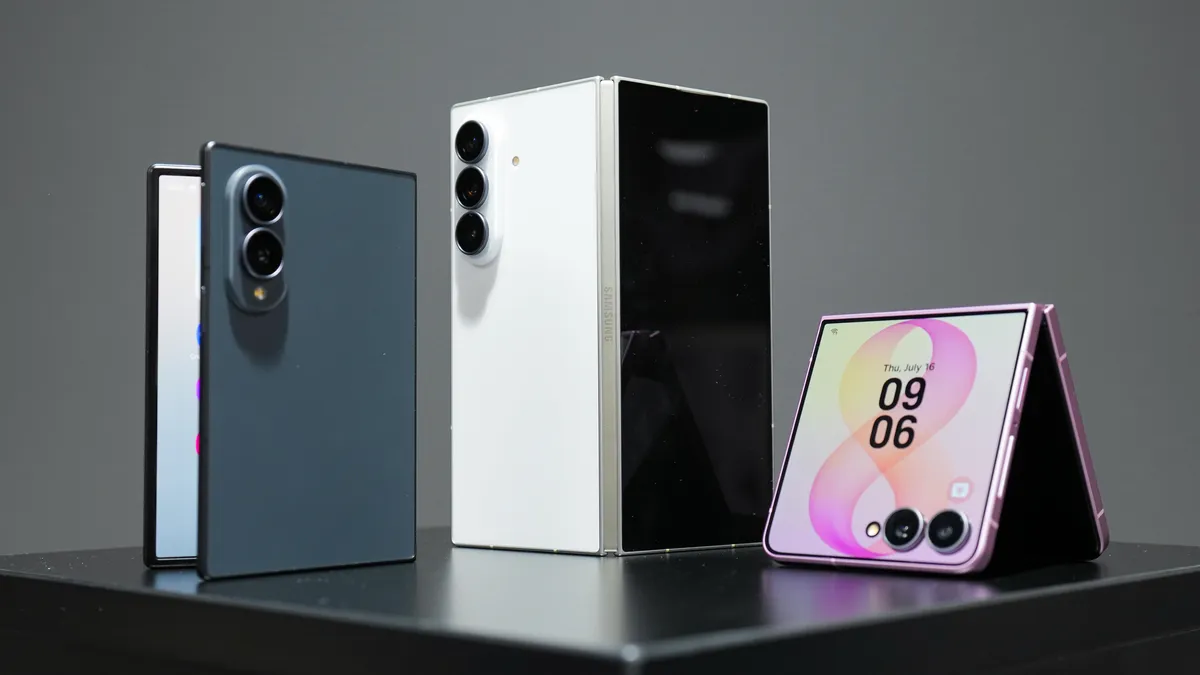
Why we like it: We heard rumors last year that Samsung was working on a wide-style foldable phone, and this July, the Z Fold 8 launched to global fanfare. After testing the phone, through the honeymoon phase and all, the group consensus is that the Z Fold 8 very much lives up to the hype.
The big kicker with the Z Fold 8 is its short, stubby form factor, with a design akin to a passport rather than a remote control. You’re getting a 5.5-inch, 10:16 aspect-ratio display on the front, making it feel like a BlackBerry, and a 7.6-inch, 4:3 aspect-ratio display when unfolded. This clever play on dimensions makes the Z Fold 8 Samsung’s most media-optimized phone yet, with noticeably smaller letterboxing (black space) when watching movies and videos.
Review: Samsung Galaxy Z Fold 8
When unfolded, the phone effectively becomes an e-reader tablet, with a crease that’s less noticeable compared to previous Z Fold iterations. Samsung is chalking that up to an updated Flex Titanium hinge that’s both more durable and thinner. While the Z Fold 8 loses out on a dedicated telephoto lens, leaving it with just the main and ultrawide cameras, it fills the rest of its internal space with a large 4,800mAh battery that we’ve found to be very reliable.
Who it’s for: I recommend the Z Fold 8 to mobile enthusiasts who want an entertainment-first device, whether they’re consuming content with the outer display tilted or with the inner display at full brightness (3,000-nit peak). Existing flip phone users may also consider the Z Fold 8, as its shorter form factor makes the transition much more seamless. Samsung recently reported more Z Flip users have switched to the Z Fold than ever, thanks to the latest model.
Who should look elsewhere: The Z Fold 8 is still a big investment, with a starting price of $1,900 for the 256GB configuration. If budgeting is a concern, and the various trade-in offers and promotions don’t tip in your favor, I recommend the older Z Fold and Flip models that have since dropped in price. The lack of a dedicated telephoto lens may also be a deal-breaker for some users. If you demand more from a foldable phone — and are willing to pay for it — consider the Z Fold 8 Ultra model instead.
Samsung Galaxy Z Fold 8 tech specs: Processor: Qualcomm Snapdragon 8 Elite Gen 5 | Display sizes: 5.5-inch exterior and 7.6-inch interior | Storage options: 256GB, 512GB, or 1TB | Rear cameras: 50MP wide, 50MP ultrawide | Front cameras: 10MP front | Battery: 4,800mAh | Price: Starting at $1,900
Read More
Show Expert Take Show less
Show less
Nina Raemont/ZDNET
Why we like it: Many would argue that Google was very modest with the upgrades to the Pixel 11 Pro series this year, but the few changes the brand made helped make an already fantastic camera system even better.
It starts with the new 50MP main sensor on both the Pro and Pro XL models, which features an updated Image Signal Processor (ISP) to capture more accurate details in hair and fabric. Google’s also replaced last year’s telephoto lens with a larger 1/1.96″, 48MP sensor, allowing the phones to pull in colors and light more effectively, even when zooming as far as 120x.
We compared the improved zoom capabilities of the Galaxy S26 Ultra during Made by Google week and found the output dramatically better, with Google’s AI processing identifying and sharpening subjects more accurately than Samsung’s.
This is thanks to the new Tensor G6 chipset, which also speeds up Night Sight capturing by 4.5 times faster compared to the Pixel 10 Pro series, as well as general HDR processing. We’re big fans of what Google has offered in terms of AI-enhanced camera features, too, including the new Magic Capture, which lets you record a video while AI identifies ideal scenes and automatically captures frames.
Review: Google Pixel 11 Pro XL camera test
Who it’s for: The Google Pixel 11 Pro series remains a solid pick for Android and AI enthusiasts who want to experience the latest software capabilities on a handset. Google is still very much ahead of Apple when it comes to what agentic and automated tasks our phones can handle, from ordering deliveries in the background to populating the right app suggestions based on on-screen context.
Users who want a flexible camera system, especially one that’s capable of capturing distant subjects with shockingly clear detail, should also consider the Pixel 11 Pro series.
The colors and finishes of this year’s Pixel 11 Pro series are also quite nice, with Canyon being a popular choice amongst the tech crowd.
Who should look elsewhere: While the Pixel 11 Pro series gets our recommendation for its camera prowess, it’s still a step below the Samsung Galaxy S26 Ultra and the iPhone 17 Pro in overall performance. Battery life is another concern; Google continues to bank on its Tensor chipset’s power efficiency to sustain the Pixel phones’ endurance, leaving the devices’ longevity in question.
Google Pixel 11 Pro and 11 Pro XL tech specs: Processor: Google Tensor G6 | Display size: 6.3 and 6.8 inches | Storage options: 256GB/512GB/1TB | Rear cameras: 50MP main, 48MP ultrawide, and 48MP telephoto | Front camera: 42MP | Battery: 4,985mAh/5,115mAh | Price: Starting at $1,099 (Pro) and $1,299 (Pro XL)
Read More
Show Expert Take Show less
Show less
Kerry Wan/ZDNET
Why we like it: While OnePlus officially announced it’s exiting the US market, the OnePlus 15 remains one of the most well-rounded flagship experiences we’ve tested. The phone has a large 6.8-inch 165Hz AMOLED display, a 7,300mAh battery, a triple-camera setup with a competent 50MP main lens at the helm, the latest Snapdragon 8 Elite Gen 5 processor, and more. At a starting price of $900, it’s very difficult to find a better flagship phone deal right now.
Putting the value aspect aside, the OnePlus 15 shines with its charging speed; it’s something I’ve learned not to take for granted, as competing Android flagships tend to require hours longer to top up. From my tests, the phone’s 80W wired charging can power it from 0% to 50% within 10 minutes, with a full charge taking closer to 30 minutes.
Review: OnePlus 15
That’s compared to the Samsung Galaxy S26 Ultra, for example, which takes more than an hour to fully charge at its standard 60W rate. OnePlus also includes an 80W charger in the box, a free bonus that benefits users who don’t want to spend more on accessories and are always on the go.
Another vantage point is the OnePlus 15’s IP69 rating, which surpasses that of competing handsets. By IP69 standards, the phone can withstand high-pressure, high-temperature water jets and humidity fluctuations. In other words, leaving the device in a washer and dryer, or even dropping it in a pot of boiling soup, won’t damage it.
Who it’s for: The OnePlus 15 typically starts at $899, which is cheaper than its closest current competitors, the $1,099 Samsung Galaxy S26 Plus and Google Pixel 11 Pro. The price point alone makes it worth recommending to consumers seeking a flagship phone experience without spending $1,000 or more. For the money, you’ll also get the fastest charging speeds on the US market, great for users who are always on the go or require as much power as possible in a given time.
Who should look elsewhere: As mentioned earlier, OnePlus has announced that it will no longer be selling and servicing its products in the US. This means that after the remaining years of the OnePlus 15’s update cycle, likely before or by 2030, it may not receive the necessary software and security support to run effectively.
For that reason, we would not recommend the OnePlus 15 if you plan to use it for more than five years. It’s a fantastic phone, but there’s no guarantee that it’ll receive the next big Android update in due time.
OnePlus 15 tech specs: Processor: Qualcomm Snapdragon 8 Elite Gen 5 | Display size: 6.8 inches | Storage options: 256GB/512GB | Rear cameras: 50MP main, 50MP ultrawide, and 50MP telephoto | Front camera: 32MP | Battery: 7,300mAh | Price: Starting at $900
Read More
Show Expert Take Show less
Show less
Cesar Cadenas/ZDNET
Why we like it: Deciding on the best compact phone came down to the wire, with Motorola’s Razr Ultra just scraping by Samsung’s Galaxy Z Flip 8. ZDNET’s Cesar Cadenas went hands-on with the Razr Ultra model this year, and was thoroughly impressed by the improved hinge system, meaning the phone feels sturdier to flip open and close. Cadenas also applauded the performance, which is underpinned by a Qualcomm Snapdragon 8 Elite chipset and 16GB of RAM.
Motorola’s outer display still supports virtually any app you throw at it, meaning you can browse the web, play games, scroll TikTok, and handle other mobile tasks without ever needing to flip the device open. Samsung’s platform is more limited in this regard, which always felt like a missed opportunity when testing.
It helps that the Razr Ultra outpaces the Z Flip 8 in other meaningful ways, including its 5,000mAh silicon-carbon battery (compared to the Z Flip 8’s 4,300mAh) that supports 68W fast wired charging, 512GB of storage (compared to the Z Flip 8’s 256GB starting model), and a fluid 165Hz refresh rate display (compared to the Z Flip 8’s 120Hz).
Review: Motorola Razr Ultra (2026)
Who it’s for: Typically costing $1,500, the Razr Ultra is not a cheap flip phone by any means. That’s why its more affordable siblings, the Razr and Razr Plus, exist. But if you want the most complete, durable, and visually stimulating flip phone on the market right now, you’ll have to pay to play with the Razr Ultra.
We applauded Motorola for continuing to explore new color and material finishes with the Razr Ultra, and that’s something fashion-forward users will likely favor, too. The battery in this year’s model also lets the compact phone run much longer.
Who should look elsewhere: When buying the Razr Ultra, you should also consider aspects like Motorola’s relatively short software update cadence, which ranges from two to three years, versus Google and Samsung’s seven years. If you’re looking for a phone that’s even more forgiving when dropped, I’d invest in a traditional slab handset instead, like the Samsung Galaxy S26 series or iPhone 17 series.
If budgeting is a concern, I advise you to look into last year’s Razr Ultra model, which has the same Qualcomm processor, general form factor, and camera setup, for around $700 — basically half off — at most major retailers.
Motorola Razr Ultra (2026) tech specs: Processor: Qualcomm Snapdragon 8 Elite | Display sizes: 4-inch exterior and 7-inch interior | Storage options: 512GB | Rear cameras: 50MP wide, 50MP ultrawide | Front camera: 32MP wide | Battery: 5,000mAh | Price: $1,500
Read More
Show Expert Take Show less
ZDNET’s review team spends upwards of a year testing the ins and outs of every major Android release, evaluating the day-to-day performance, camera quality, battery life and endurance, and more. Here’s a breakdown of every factor we consider before we make recommendations:
- Design and ergonomics: How good a phone looks and feels plays a big role in many users’ buying journeys, so we consider these aspects heavily when testing.
- Performance: Several factors affect a phone’s performance, including LTE/5G signal, battery life, and background tasks. Therefore, we typically begin our evaluations with a fully charged handset, with all background tasks closed, and with as stable of a mobile connection as possible.
- Camera quality: ZDNET tests phone cameras by capturing hundreds of photos and videos of various subjects and in various lighting conditions. We also compare the output to that of older models.
- Battery life and charging: It’s also important for us to evaluate how long phones last under light, moderate, and heavy usage, how long they take to recharge, and how they do it (wired, wireless, or both).
- Special features: These features distinguish tested devices from a bustling smartphone market and hopefully bring added value to users, not the opposite.
- Pricing and availability: Beyond budget considerations, we also note if a phone is available in the US or only internationally.
For a more extensive breakdown, check out our comprehensive phone testing methodology page.
Latest news on Android phones
Google just unveiled its Pixel 11 series, which includes the Pixel 11, Pixel 11 Pro, Pixel 11 Pro XL, and Pixel 11 Pro Fold. All the phones are equipped with the company’s new Tensor G6 chipset. Google says it yields faster app load times, enhanced photography capabilities, and longer battery life. The prices of each model have also been bumped up by $100, though Google has recalibrated its base storage tier to 256GB from 128GB.
Also: Every Pixel device announced at Made by Google 2026: 11 Pro Fold, Pixel Watch 5, and more
The news comes just after Samsung launched its Galaxy Z Fold and Z Flip foldables at Unpacked London. The headlining act was the Galaxy Z Fold 8, which features a unique 5.5-inch outer display, making it one of the most compact phone-to-tablet foldables on the market. According to Samsung, the Z Fold 8 has seen such high success, including meaningful conversions from once Z Flip users, that it’s ramping up production for the second half of the year.
Customizability remains one of the biggest vantage points of Android, even though Apple has done a commendable job over the past two to three iOS versions to give its users more autonomy. You can also expect Android phones to support the most innovative features in the mobile industry, like foldable displays and faster USB-C charging. The caveat of being more experimental is that Android phones are generally not as consistent and reliable as iPhones.
On the flip side, iPhones are notorious for their stability and ease of use. If you’re not one to tinker with your gadgets, then you’ll fit right into the iOS ecosystem. Features like iMessage and FaceTime are also key differentiators when comparing iPhones to Android. Those two features alone can dictate your decision.
Kerry Wan’s smartphone advice
I’ve used dozens of smartphones in the past year alone, learning the ins and outs — the tips and tricks — to make the most out of my handset. Here are my three biggest pointers on taking care of your smartphone in 2026:
Speeding up your smartphone
Something I always do when setting up a new Android phone is dialing up animation and transition speeds. You can do this by turning on Developer Options, a backend catalog of system settings meant for developers to access (but rules were meant to be broken, right?).
Also: Best phones for battery life: Great battery, even better performance
To turn on Developer Options, go to the About Phone page in settings and tap Build Number seven times. You should see a pop-up indicating that Developer Options has been turned on. Now, the activated tab will appear in the main settings list. From there, scroll down until you find Windows, Transition, and Animator duration scale. Tap into each and switch from 1x (default) to 0.5x to double the speed of your phone’s animations.
Optimizing your battery health
To preserve your phone’s battery life, it’s best to charge it between 20% and 80% and never let it drop to 0% or charge fully to 100%. This is because the heat generated from overcharging the phone can degrade the battery, reducing its number of charge cycles. This phenomenon is the reason why you shouldn’t charge your phone overnight or leave it plugged in for an extended period of time.
When in doubt, after a year or two of usage, consider getting your phone’s battery swapped to refresh its charge cycles. You’ll be amazed at how well it functions again.
How to keep your phone clean
Unless you’re invested in a repair and warranty plan like Samsung Care, consider protecting your phone with a protective case and/or a tempered glass screen protector. Beyond drop protection, the two accessories will help prevent scratches, scuffs, and other blemishes, and can greatly reduce the risk of water damage.
For what it’s worth, if a manufacturer claims its phone is rated IP68, that means the device can withstand dust ingress and be submerged in water for up to 30 minutes at one meter deep.
While we’re almost halfway through the year, we can still look at past industry trends to understand when new phones will be released during the second half. Below is a list of expected/confirmed release dates for major phones in 2026.
- Samsung Galaxy Z Fold 8 and Z Flip 8: July
- Google Pixel 11 series: August
- Samsung Galaxy S26 FE: August
- Apple iPhone 18 series: September
The beauty of Android is that you have a lot of options. So the answer to “Which brand is best?” depends on your feature, user interface, and design preferences. If you prefer a more minimalistic approach to hardware and software, Google’s Pixel line will serve you best. If you want everything but the kitchen sink in a smartphone, go with Samsung. For more unique value propositions like ultra-fast charging and unique designs, give Motorola a try.
Budget is also worth considering, but today, every major manufacturer, including Google and Samsung, offers Android phones in every price category (budget, mid-range, and premium), so it won’t be your biggest decider.
In the grand scheme, Apple is the most reliable smartphone brand, with the longest, most consistent support of all manufacturers. If we’re looking at Android makers only, then Samsung would take the crown, with a promise of up to seven years of software updates for its latest phones, expansive carrier support across the US (and overseas), and one of the most reliable repair and insurance infrastructures.
Most Android phones today should last at least seven years. For example, the latest handsets from Google and Samsung come with up to seven years of software support, meaning they’ll receive updates and security patches for the long term. Of course, this applies more to flagship and some mid-range phones, whereas budget devices that sell for $300 and less tend to receive shorter commitments.
Also: How to find out what apps are draining your Android phone’s battery
How you handle and use your phone will also determine its lifespan. It’s highly advised not to keep your phone charged overnight as that can trigger faster battery degradation. It also helps to put on a case and/or screen protector to keep the device’s hardware functioning properly.
If it ever feels like your phone isn’t lasting as long as it once did, consider swapping out its battery before replacing it with a new device altogether.
The latest version of Android is 99% of the time also the best version. At the moment, that’s Android 17.
The latest version of Android is Android 17, which debuted with the Google Pixel series, and officially launched across major Android models including Samsung and OnePlus.
Android 17 features new tools such as universal app bubbles, enhanced cross-app automations, improved split-screen gaming, and other quality-of-life improvements and updates.
The latest version of Android is supported by most smartphone releases in recent years, including the following:
- Google Pixel 6 series to Pixel 11 series (foldables included)
- Samsung Galaxy S23 series to S26 series (foldables and A-series models included)
- OnePlus 11 to OnePlus 15 series
- Select Sony, Motorola, Nothing, Xiaomi, Honor, Vivo, and Oppo models
To generalize, most consumers will be choosing between iOS and Android, and between the two, iOS is the more secure operating system.
The main reason is that the abundance of Android phones and app makers means there are more opportunities for hackers and data thieves to access your personal information and/or install malware. How these attacks are prevented and managed varies across manufacturers, with some OEMs like Google doing a better job than others like Xiaomi.
While iOS on iPhones may feel more restrained and limited in customizations, that results in a more protected and secure software experience, from app availability on the store to how you download files online.
While Apple’s iPhone 14 made headlines for its eSIM integration, the digital service also works — and has for some time — with Android devices, including the latest Google Pixel, Samsung Galaxy, and OnePlus smartphone. As always, it’s best practice to consult with your local carrier before converting to eSIM.
Besides the Motorola Razr Ultra, the Samsung Galaxy S26 is a worthy runner-up, with a 6.3-inch AMOLED display, up to 512GB of storage, and a flat-edge design that makes it easier to manage with one hand. During ZDNET’s testing, the small-but-mighty Android proved capable of handling apps and services typically run on larger devices.
Latest updates
- In our August update, we added the Pixel 11 Pro series, Galaxy Z Fold 8, and Motorola Razr Ultra (2026). The news portion was also updated to reflect the Made by Google and Samsung Unpacked events that happened over the summer.
- In our April update, we replaced the Galaxy S25 Ultra with the Galaxy S26 Ultra for best Android phone overall, while the new Pixel 10a has earned its spot as the best budget Android phone. Information regarding Google I/O has also been added.
- In our February update, we added the OnePlus 15 as a top pick for the best Android phone for battery life. We also added a new visualization graph that shows battery life over time in select Android smartphones we’ve tested.
Are there alternative smartphones worth considering?
Outside of this list of excellent options, here are worthy alternatives that will surely delight you, including foldables, budget picks, and more.
Show less
Kerry Wan/ZDNET
While the Motorola Razr Ultra is still the best flip phone right now, the Samsung Galaxy Z Flip 8 is a worthy alternative, with a lower entry price and a thinner design.
In fact, there are several reasons to buy the Z Flip 8 over the Razr, such as the longer seven-year software update commitment, a more flexible wide and ultra-wide camera system, and a suite of Galaxy AI tools that’s arguably the most capable of all mobile brands, including Apple.
Read More
Show Expert Take Show less
Show less
Kerry Wan/ZDNET
The Samsung Galaxy S25 Edge is one of the more interesting handsets from 2025, with an ultralight and slim design that makes it an ideal choice for users who often experience wrist strain and discomfort when managing a larger device.
Even with the slimmer form factor, the S25 Edge features a large 6.8-inch AMOLED display that gets plenty bright, a 200MP camera system that rivals the more expensive S25 Ultra, and the same OneUI software tricks that many Android users favor.
Read More
Show Expert Take Show less
For more on getting the most out of your Android phone, check out how to clear your Android phone cache, tips to extend battery life by hours, and ways to factory reset without unlocking the phone.
Smartphones Reviewed & Compared
