


Wired for Profit: Fourth in a series about Alabama Power’s influence over electric rates, renewable energy, pollution and politics in the Yellowhammer State.
WESTOVER, Ala.—Shannon Vanden Heuvel said she doesn’t believe a word they say.
A marketing designer and proud mom, she’s seen the seemingly endless television advertisements from Alabama Power, the state’s largest electric utility, an effective monopoly in much of the state.
The ads say that Alabama Power has made a commitment to customers like her.
As data center developers eye Alabama in droves, the state’s largest electricity provider has made that claim clear: Don’t worry about your power bills. They won’t go up because of data centers.
The truth is more complicated.
Whether the energy company will be able to keep that promise is an open question. The answer—a consequential one in the company’s service area, where average residential bills are the highest in the nation—is hidden among regulatory filings and secretive contracts, often obscured by heavy redactions or non-disclosure agreements signed by public officials.
A new Inside Climate News analysis shows at least a dozen proposed data center developments across the state, from Bessemer to the Black Belt. If built to full capacity, these data center campuses would consume more energy than all of the homes in Alabama combined. But who will pay for it?
Part of the answer could hinge on the outcome of the state Public Service Commission’s effort to implement SB 270, a law enacted this year that requires the PSC to consider whether a utility’s contract with a data center developer is in the public interest.
What is in the public interest, the law states, is a matter for the PSC to ultimately determine, but the statute outlines several “specific considerations” for the body to weigh when approving large-load contracts, including “whether the pricing and terms and conditions of the contract could lower costs for other customers of the utility.”
SB 270 also says that when considering approval, the PSC should consider whether Alabama Power’s contracts with large load data centers recover all incremental costs from data center operators, which are defined as “the generation, transmission, distribution, sale, or furnishing of electricity to a large load data center customer, including fuel costs and taxes, which the utility would not incur but for the large load data center customer contract.”
But experts say that whether the new law will provide meaningful protections for Alabamians worried about rising energy bills will likely be determined by how the PSC chooses to implement the provisions of the newly enacted statute, which goes into effect Oct. 1.
Commissioners and their staff are currently considering public comments on how exactly the new law will be carried out.
“How much SB 270 actually ends up protecting customers is fully dependent on how the PSC enforces the law,” said Daniel Tait, executive director of Energy Alabama, a nonprofit that advocates for clean energy in the state. “I don’t think the public has a reason to trust Alabama Power when it comes to protecting them from costs, but they should look to the Public Service Commission to step in and hold the power company to its word.”
So will that happen?
Vanden Heuvel fears she already knows the answer. It’s customers like her, she believes, who will shoulder the burden of hyperscale data centers like the one being proposed not far from her home near Westover, a town of just over 2,000 people southeast of Birmingham.
As for Alabama Power’s promise, “It is one thousand percent a PR move to quell everyone’s concerns,” she said. “They want to shut people up long enough to move these data centers in. Then they’re here, and it’s already too late.”
Alabama Power did not respond to Inside Climate News’ request for comment.
Data Center Deluge
For more than a year, residents across Alabama have watched as data center developers rushed to locate sites where ample power, water and land are available for their facilities. While a few are relatively small, similar in size to data centers built prior to the current AI boom, some are massive, requiring hundreds of acres of land, millions of gallons of water and more power than entire cities.
An Inside Climate News review of federal, state and local records has documented more than a dozen proposed data centers across the state, including multiple so-called hyperscale developments that some public officials have claimed could be the largest private investments in state history. Meanwhile, residents continue to ask: Who will really benefit?
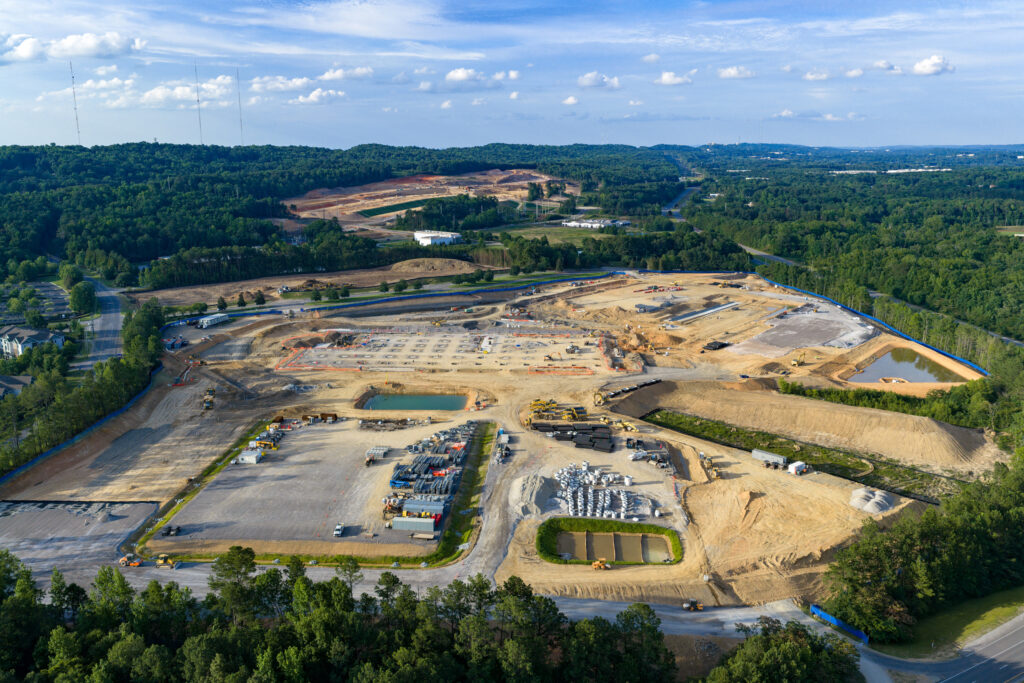
Project Marvel, a proposed data center campus in Bessemer, just southwest of Birmingham, is slated to consume 90 times more energy than all Bessemer residences combined. Despite serious environmental concerns from residents, public officials have approved the rezoning necessary for the project, greenlighting the clear-cutting of at least 100 acres of land previously zoned for agricultural use. Now, residents living near the site are preparing for up to a decade of construction to complete the development—17 buildings the size of Walmart Supercenters.

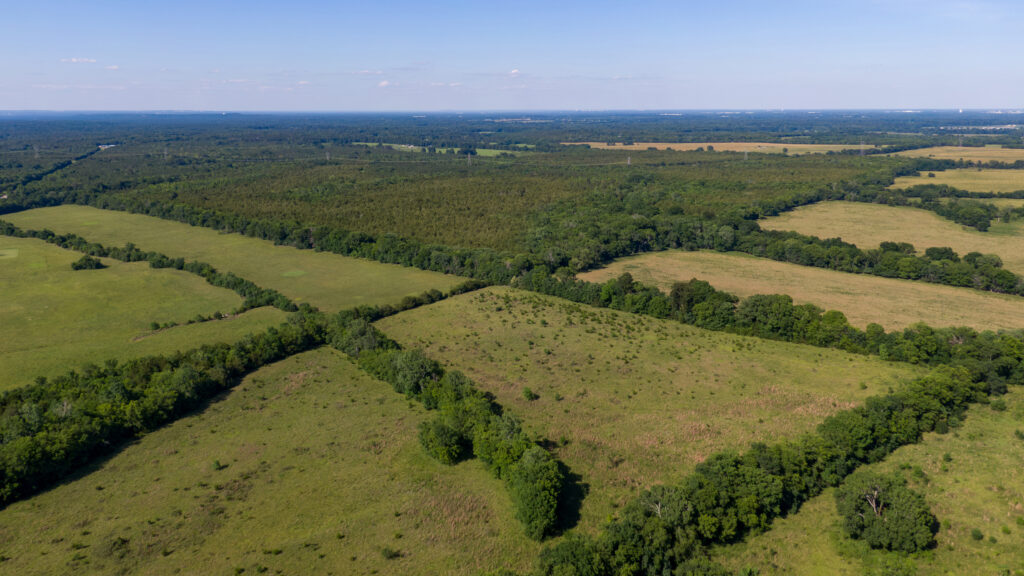
Farther south in the state’s Black Belt, another data center developer has outlined plans for a campus that would include four 720,000-square-foot buildings, a 100,000-square-foot warehouse and a 30,000-square-foot office. Nearly universally opposed by the county’s majority-Black residents, the Project Red Clay facility would be constructed along a section of Highway 80, just over a mile from the Robert Gardner farm in Lowndes County, where protestors camped overnight during the 1965 Selma-to-Montgomery march.
Representatives of the developer, Cloverleaf Infrastructure, have publicly stated that the company has requested 1,500 megawatts of energy capacity from Alabama Power and up to 100,000 gallons of water per day from the Pintlala Water System, a small rural water utility.
If realized, that single project would amount to enough energy to supply around a million homes and sufficient water to supply hundreds.
In Bessemer, Lowndes County and beyond, residents have found it nearly impossible to obtain detailed information about the projects they feel could harm their communities.
For residents in Bessemer and Columbiana, the seat of the state’s wealthiest county, that difficulty has stemmed in part from public officials signing non-disclosure agreements (NDAs) that prevent them from sharing information data center developers have deemed secret.
In Bessemer, the NDA signed by the mayor, city attorney and at least one economic development official required city officials to destroy all copies of information the developer considered confidential when the agreement expired or at any time the developer requested. That included copies of notes about the project taken by city officials, according to the agreement’s text.

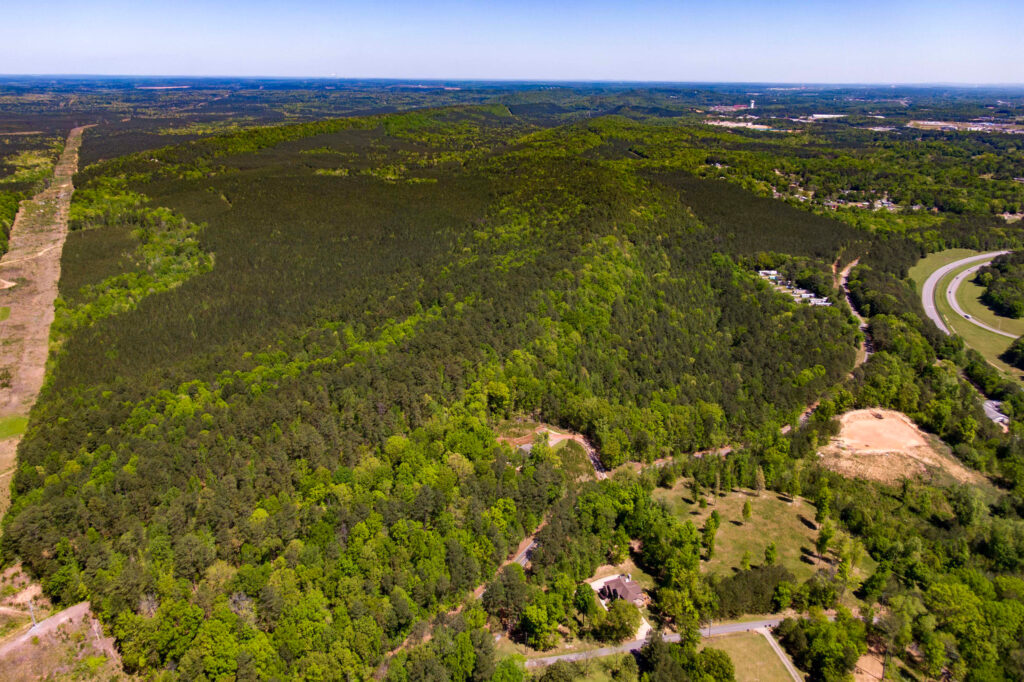
In Westover, a 40-minute drive from Birmingham, residents had been hearing rumors about a planned data center for months, but public officials in the town rebuffed citizens’ questions, saying no such data center was in the works. In early August, residents including Venden Heuvel independently obtained records from the county probate office documenting a “conceptual zoning plan” for a massive, 14-building hyperscale data center campus.
“I was pissed when we found the map [of the proposed data center],” Vanden Heuvel, 40, told Inside Climate News. “If our public officials weren’t doing anything wrong, why has it all been done in secret?”
Across these communities, one concern has surfaced repeatedly among residents: the fear that their already rising electric bills will soar even higher as a result of data center development.
“I know that’s what’s coming,” a resident who lives near the site of the proposed Project Marvel, Mary Rosenboom, told ICN last year. “And it’ll be us that foot the bill. It’s not good for the citizens. It’s good for Alabama Power’s pocketbook.”
Who Will Pay?
To combat customers’ concerns, Alabama Power has engaged in an advertisement blitz statewide, with broadcast and digital ads promising that data centers won’t raise residential power bills.
“Data centers are required to pay the full cost to serve their energy needs so costs aren’t shifted to you,” one version of the company’s Facebook advertisements said.
The company’s website makes similar guarantees.
“‘Full cost to serve’ means the large-load customer pays the costs tied to its energy needs, including dedicated facilities, delivery upgrades and customer-specific capacity obligations,” Alabama Power’s website claims. “Agreements include risk-management terms, such as minimum bills and minimum term lengths, to protect other customers if a project changes or leaves.”
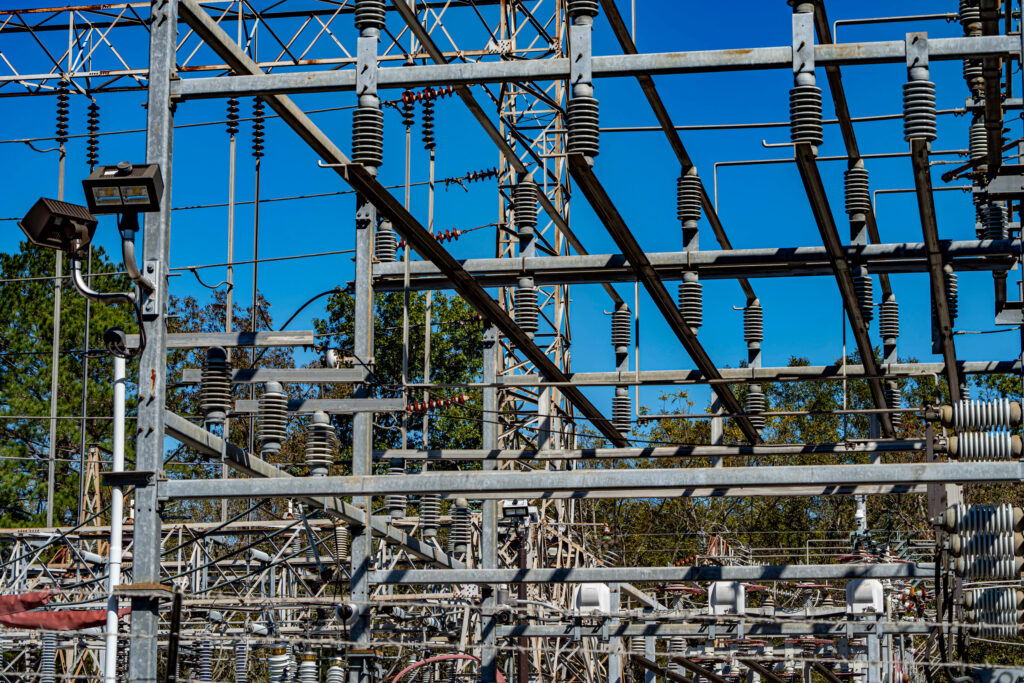
The explanation refers to contracts between Alabama Power and data center developers as the mechanism for ensuring the facilities pay their fair share. Such contracts for large-load customers like data centers, many of which operate 24 hours a day, 365 days a year, are subject to the approval of the PSC, the state regulatory body charged with oversight of Alabama Power.
That body, which consists of three Republicans, is currently considering public comments on how it should review data center contracts—a process effectively triggered by the passage of SB 270.
The law, which passed the Legislature on an overwhelmingly bipartisan basis, says that in considering approval of utility contracts with large-load customers, the PSC is required to consider whether the agreement will “provide for the recovery of the incremental costs of retail electric service to the large load data center … and promote positive benefits to other retail electric customers of the utility.”
Energy Alabama, the clean energy nonprofit, supported passage of the law, according to Tait, because it believed the legislation provides a useful outline for how PSC commissioners should review data center contracts. But how the body and its staff implement the law will be critical in whether the statute is a meaningful protection for Alabamians.
“It’s certainly possible that the public service commission could just say they considered those things and then do whatever they want,” Tait said. “The courts typically give pretty big deference to regulators to do that.”
But there is a line, Tait said. If it becomes clear that the PSC has made no attempt to weigh those factors, it could put their decisions in legal doubt.
Jaclyn Brass, an Alabama-based staff attorney for the Southern Environmental Law Center, an environmental nonprofit, said that while SB 270 is a step in the right direction for protecting consumers from the costs of data centers, “these changes are not nearly enough.”
“Allowing Alabama Power to rely solely on custom data center contracts negotiated behind closed doors is too great of a risk,” Brass said. “The solution is for a public and transparent process, like those in other states, where the PSC can hear evidence from experts and the public, then adopt a rate specifically for data centers.”
So far in the PSC’s docket proceedings, transparency has been limited.
As part of the proceeding, Alabama Power submitted a heavily redacted copy of its contract with the developer of a planned 300-megawatt data center in Birmingham.
The 12-page contract for electric service submitted by Alabama Power and released by the PSC reveals almost no substantive information about the scope or nature of the data center’s or the utility’s obligations. Every part of the document that could impact residential customers’ bills is redacted.
“Notwithstanding any alternative provision of the Company’s Rules and Regulations for Electric Service, Customer shall maintain, as of the Effective Date, financial security in an amount equivalent to [REDACTED],” the document says in part. “Upon the occurrence of, and during the continuation of, an Event of Default by Customer, in addition to any remedies available in law and equity [REDACTED].”
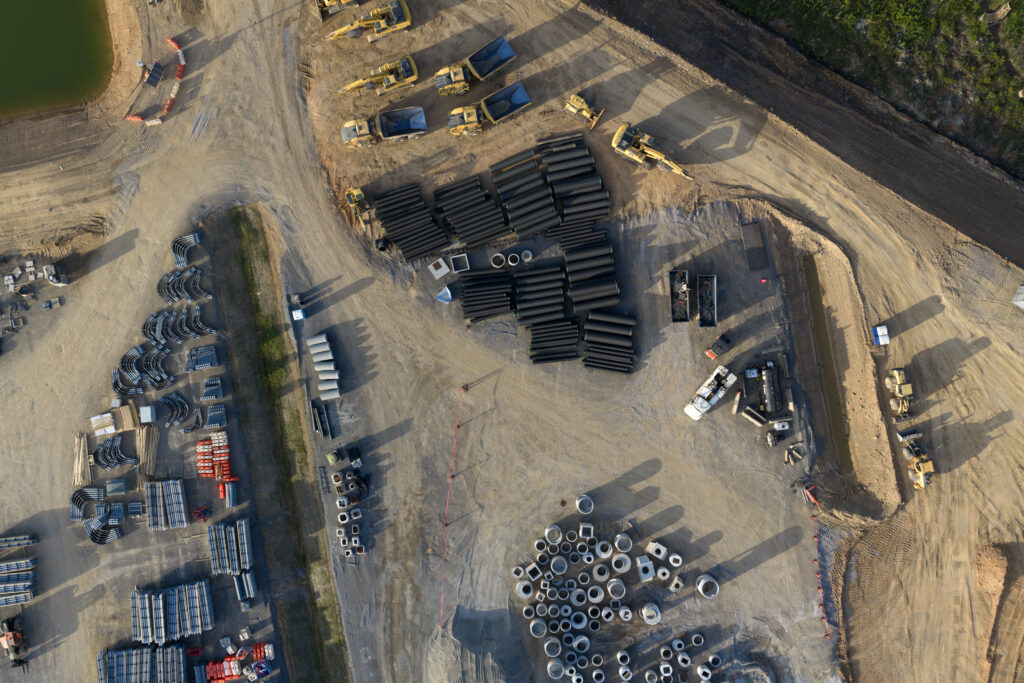
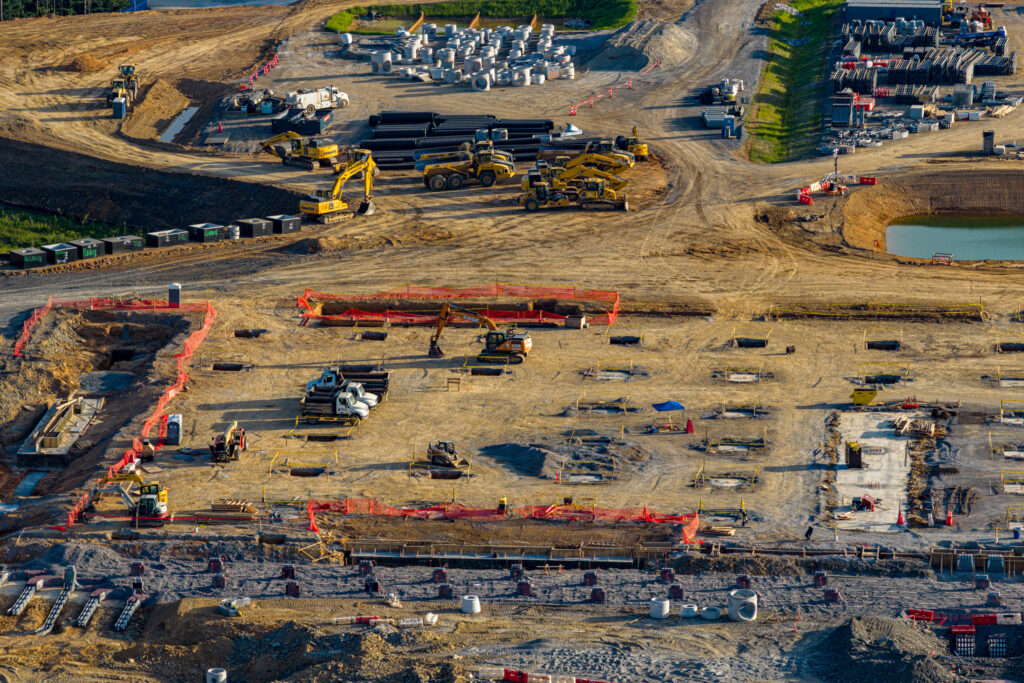
Relevant sections of the contract focused on minimum bills and minimum term lengths—both mechanisms Alabama Power said would prevent residential customers’ bills from rising—are also blacked out.
“The Initial Term of the Contract shall be [REDACTED] years from the Commencement of Electric Service,” the contract stated.
Addenda to the contract describing the planned data center facilities and outlining the developments’ electricity prices, including their base charge, capacity charge and energy charge, are all redacted, nearly in their entirety. Even the names of the individuals who signed the contract as representatives of Alabama Power and Alabama ADC Holdings, an entity associated with the data center project, are shielded from view.
Alabama Power’s cover letter submitted to regulators alongside the contract argued that the documents “demonstrate the contract to be in the public interest and compliant with all applicable requirements of state law.”
“That’s not transparency,” she said. “If they weren’t doing anything wrong, why does it appear that everything’s been done in secret?”
Lucille Kimble-Foster, one Alabama resident who submitted remarks during the PSC’s public comment period, expressed her concerns that utility officials had “redacted nearly every critical business term, including the contract capacity, pricing, and required financial security. Without those financial terms, the public and the Attorney General’s Office cannot independently verify Alabama Power’s claim that ratepayer costs will not increase.
“The APSC must mandate total financial transparency,” she wrote. “No large-load data center contract should be approved if the utility redacts the actual financial figures, load-build-up periods, or minimum-bill details from the public record.”
Both ratepayers and environmental groups have also expressed concern that data center proposals that have already gained local approval may avoid the scrutiny imposed by the new law altogether.
In its filings on the current PSC docket, Alabama Power has said it believes such projects would not be subject to any new process implemented as a result of SB 270.
Residents like Kimble-Foster have said that’s an unacceptable “loophole.”
“The APSC must immediately halt the approval of any new large-load data center contracts … until the stricter, protective standards of [the new law] are applied,” she wrote in her comment on the PSC docket. “Multi-billion-dollar corporations must not be allowed to avoid the application of consumer-protection standards for our power grid.”
A Meaningful Rate Freeze?
In addition to its advertisements about the impact of data centers on power bills, Alabama Power has centered its messaging around a rate freeze it announced in late 2025 that was later written into state law.
The advertisements argue that the rate freeze provides economic relief and certainty for customers worried about increasing costs due to data centers.
“Customer rates are frozen through 2027, so there is more predictability in your bill,” one ad said.
Some experts have argued that the rate freeze simply locks in prices that lead Alabama Power customers to pay some of the highest bills in the nation. Earlier this month, Alabama Power revealed in corporate filings that its second-quarter profits are up 15 percent year-over-year, from $381 million to $437 million. The company said in filings that the rise in profits was due to a decrease in expenses and an increase in some customer charges.
This story is funded by readers like you.
Our nonprofit newsroom provides award-winning climate coverage free of charge and advertising. We rely on donations from readers like you to keep going. Please donate now to support our work.
As part of its agreement with state regulators to freeze rates, Alabama Power delayed its plan to charge customers for a $622 million natural gas plant the utility bought in 2025 to meet expected demand fueled largely by data center development. That increase, now expected to come in 2028, would amount to a rise in the average customer’s bill of about $3.32 a month.
“Today’s decision may sound like stability, but it’s the opposite,” Energy Alabama wrote at the time. “Alabama Power’s own filing shows this isn’t a freeze at all. It’s a delay tactic that shifts costs, shields corporate profits, and leaves customers footing the bill later. Nothing meaningful changes for the families already paying some of the highest electric bills in the country.”
The Politics of Power
Soon, many of the factors impacting whether residents will help bear the financial burden of data centers will be left to voters across the state.
After this year, for example, the PSC will look very different. Following the state Legislature’s passage of the so-called Power to the People Act, a law billed as reform by supporters but considered a boon for Alabama Power by critics, the body will swell from three members to seven. Much of the PSC’s power to set its own agenda, however, will be shifted to a newly created state energy secretary to be appointed by Alabama’s next governor.
As a result, and in the wake of citizens’ outrage over data center discontent, the Alabama governor’s race has become a flashpoint when it comes to AI infrastructure in the state.
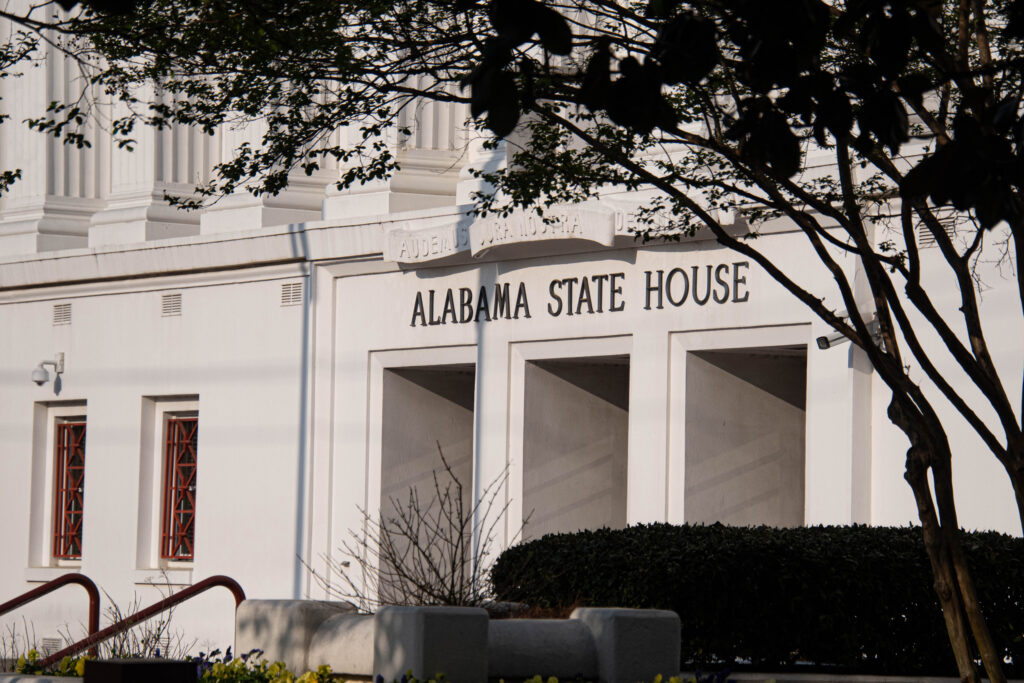
Republican Tommy Tuberville, former Auburn coach and the state’s senior U.S. senator, is widely considered the frontrunner for the governor’s office in deep red Alabama, but his opponent, former U.S. Sen. Doug Jones, a Democrat, hopes to gain ground among undecided voters when it comes to issues like data center regulation.
Tuberville has called data centers “gold mines” and said that residents’ concerns over environmental impacts are “bull crap.” Jones, meanwhile, has challenged Tuberville to a data center-focused debate, arguing in favor of a one-year moratorium on the facilities while regulations are put in place.
A new Jones advertisement focuses solely on the issue, featuring clips of Tuberville’s comments about data centers interspersed with sweeping views of some of Alabama’s most scenic natural places.
“Alabama is beautiful,” the text on the screen reads. “Let’s keep it that way.”
About This Story
Perhaps you noticed: This story, like all the news we publish, is free to read. That’s because Inside Climate News is a 501c3 nonprofit organization. We do not charge a subscription fee, lock our news behind a paywall, or clutter our website with ads. We make our news on climate and the environment freely available to you and anyone who wants it.
That’s not all. We also share our news for free with scores of other media organizations around the country. Many of them can’t afford to do environmental journalism of their own. We’ve built bureaus from coast to coast to report local stories, collaborate with local newsrooms and co-publish articles so that this vital work is shared as widely as possible.
Two of us launched ICN in 2007. Six years later we earned a Pulitzer Prize for National Reporting, and now we run the oldest and largest dedicated climate newsroom in the nation. We tell the story in all its complexity. We hold polluters accountable. We expose environmental injustice. We debunk misinformation. We scrutinize solutions and inspire action.
Donations from readers like you fund every aspect of what we do. If you don’t already, will you support our ongoing work, our reporting on the biggest crisis facing our planet, and help us reach even more readers in more places?
Please take a moment to make a tax-deductible donation. Every one of them makes a difference.
Thank you,

Reporter, Alabama
Lee Hedgepeth is Inside Climate News’ Alabama reporter. Raised in Grand Bay, Alabama, a small town on the Gulf Coast, Lee holds master’s degrees in community journalism and political development from the University of Alabama and Tulane University. Lee is the founder of Tread, a newsletter of Southern journalism, and has also worked for news outlets across Alabama, including CBS 42, Alabama Political Reporter and the Anniston Star. His reporting has focused on issues impacting members of marginalized groups, including homelessness, poverty, and the death penalty. His award-winning journalism has appeared in publications across the country and has been cited by the New York Times, the Wall Street Journal and the Washington Post, among others.
