


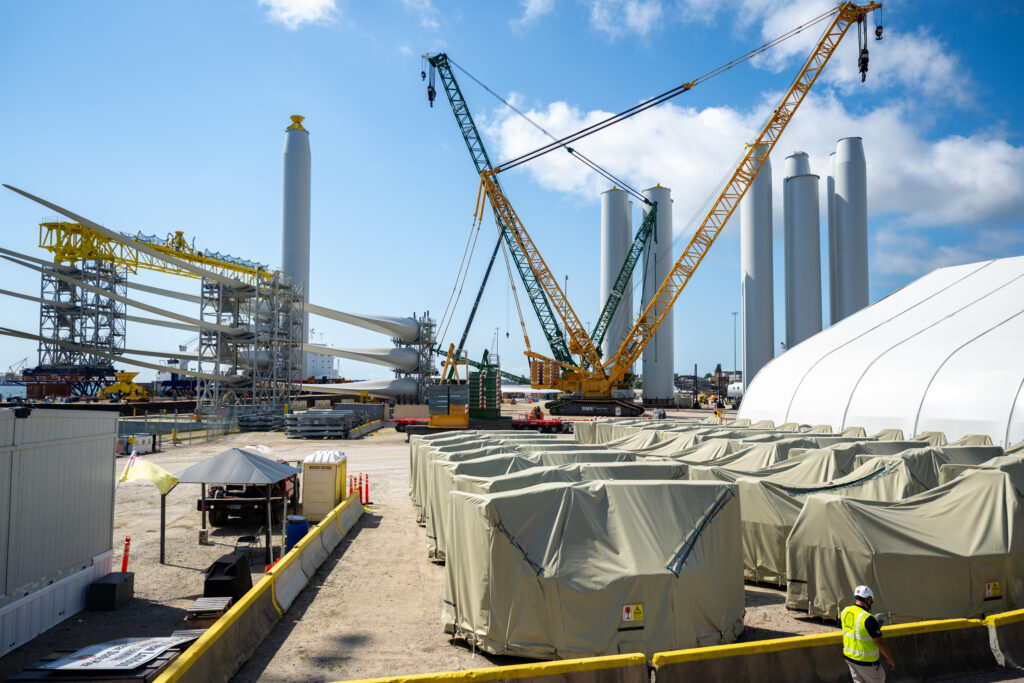
The United States had a vision: Offshore wind would produce enough energy to power over 10 million homes by 2030.
But five years after the Biden administration’s ambitious proposal, President Donald Trump’s attacks have battered the industry so thoroughly that it will struggle to regain its footing in the United States long after he leaves office, dashing hopes of a renewable-energy boom with thousands of well-paying jobs, according to former wind executives and experts.
Projections for offshore wind’s growth in the United States dropped by 85 percent since Trump’s re-election, and the only projects he hasn’t managed to kill were already well underway before his January 2025 inauguration. That’s turned the country into a market of high risk and little reward for developers, said Finlay Clark, principal analyst for global offshore wind at the research firm Wood Mackenzie.
He and other experts now see serious policy reforms and supply-chain investment as prerequisites for any offshore wind revival—a protracted effort larger than a change in administration.
“Even if we see a new president, in our view, we’re not seeing an immediate return,” Clark said, adding: “The genie’s really out of the bottle in terms of highlighting the political risk and the risk associated with development in the U.S. market for offshore wind.”
Inside the industry, the outlook is just as bleak, according to three former offshore wind executives who worked on now-canceled projects.
Wesley Jacobs—former project director for Invenergy’s Leading Light Wind, a wind farm offshore of New Jersey that was scrapped last November—said U.S. projects will struggle to attract financing, which is crucial for any future development.
“Given what’s happened over the past couple years, investors could decide that there are better places to make their bets,” Jacobs wrote in an email, emphasizing he was speaking in a personal capacity.
The White House, which has used every lever at its disposal to benefit fossil fuel companies, argued that shutting down offshore wind will benefit the country.
“Wind energy is a costly, intermittent energy source that has proven to be unreliable in times of peak demand,” Taylor Rogers, a White House spokeswoman, wrote in a statement. “President Trump is focused on unleashing reliable, affordable, and secure energy that delivers when Americans need it the most.”
There are five offshore wind projects nearing completion across the United States, mostly in the Northeast. Beyond that, the industry is stagnant as investors lose interest, according to Harrison Sholler, a wind analyst at the market research firm BloombergNEF. Last year, BNEF downgraded its pre-election forecast of 39 gigawatts by 2035 to just 5.9 gigawatts.
Tim Sullivan, who was CEO of the New Jersey Economic Development Authority until December, said the “trauma” of the past two years will leave lasting scars on the industry.
“In the second half of 2025, I don’t know if I was part of one single discussion about starting a new project in offshore wind anywhere in the Northeast or anywhere in America,” Sullivan said.
“It’s hard to make the case for ‘back to the old way of doing it with just a couple tweaks here and there,’” he added.
Investor Risk
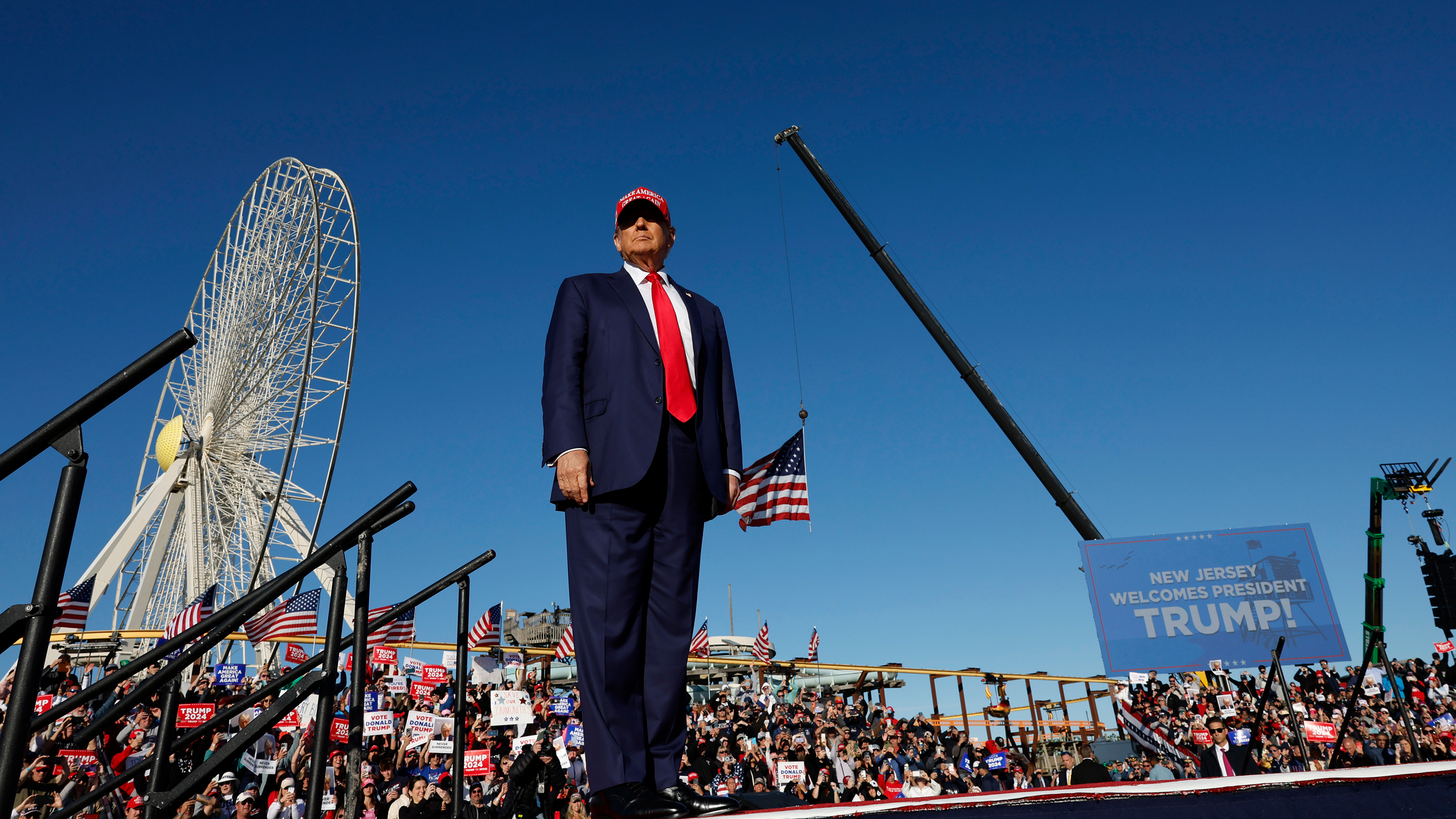
On a sunny Saturday in May 2024, Trump stood just miles from a now-scrapped wind project off the shores of New Jersey and vowed to halt the industry on “day one” of his second term. When he entered office the next January, he did just that.
Industry officials knew offshore wind was gearing up for its toughest test yet, and they figured that getting new federal permits would be all but impossible. But Trump’s actions went far beyond that: He ordered ongoing projects to halt work, canceled major leases and claimed that offshore wind posed a national security risk.
“The mood across the industry from election day through the inauguration was bleak,” Jacobs, who left Invenergy right after Inauguration Day, wrote in an email. “Every week seemed to bring worse news than anyone had anticipated. And it only got worse from there.”
Anthony “AJ” Negrelli, who was supply chain lead for Attentive Energy until March 2025, said he had hoped Trump’s second term would display a “business-first” mindset similar to his first term. The reality unsettled him.
“That unsettled feeling came from the realization that we were being singled out, and that created the sense of the ticking clock,” said Negrelli, who founded a supply chain consulting firm after he was laid off from Attentive Energy two months into Trump’s second term.
“I did not expect that he would completely disrupt it,” he added.
Sullivan said most developers and officials assumed Trump would honor “duly-issued permits” that had already gone through leasing and vetting processes.
“They were proven wrong,” he said.
Between March and August of this year, the Trump administration canceled 12 offshore wind leases in five successive deals with developers including TotalEnergies, Invenergy and RWE. Other companies with ongoing projects posted massive losses, citing the risk of doing offshore business in the United States.
This story is funded by readers like you.
Our nonprofit newsroom provides award-winning climate coverage free of charge and advertising. We rely on donations from readers like you to keep going. Please donate now to support our work.
Ørsted, for instance, raised $9.4 billion last year to keep its U.S. projects afloat. Equinor, meanwhile, booked a nearly $1 billion impairment loss in the second quarter of 2025 due to U.S. offshore wind “regulatory changes.”
“If you look at the losses booked by Shell, by Equinor, by Ørsted, all of the big European developers, I have a hard time understanding who’s going to come into the U.S. and invest in our supply chains with this level of policy uncertainty,” said Elizabeth Wilson, a Dartmouth College professor who has studied the U.S. offshore wind industry for years.
“You want to lose a billion dollars, the U.S. offshore wind sector is a great place to lose that money,” Wilson added.
TotalEnergies, the first developer to announce a deal with the Trump administration over its leases, renounced offshore wind completely in March. Its CEO, Patrick Pouyanné, called offshore wind an “un-investable topic” in the United States.
“You cannot invest billions of dollars in a country where we have no stable policy and that every four years, somebody will tell you it’s good or it’s not good,” Pouyanné said in a March investor call.
“You want to lose a billion dollars, the U.S. offshore wind sector is a great place to lose that money.”
— Elizabeth Wilson, Dartmouth College professor
Energy projects require long-term stability that the United States has not provided, said Barbara Kates-Garnick, a professor at The Fletcher School at Tufts University and Massachusetts’ former undersecretary of energy.
“While one might hope that a new administration might bring back projects, there is a cost to what we have experienced under the Trump administration for all renewable energy, and in particular offshore wind,” Kates-Garnick said.
System Problems
The industry’s woes did not begin with Trump. Standing up a new supply chain and navigating a regulatory system that wasn’t built to accommodate offshore wind proved challenging, complete with soaring costs and high interest rates.
By the end of 2023, more than half of the U.S. offshore wind pipeline was expected to be canceled. Ørsted recorded a $1.7 billion impairment at the end of 2024 mainly due to delays and costs in its U.S. offshore wind projects. Also that year, a Vineyard Wind turbine collapsed during construction, sending shockwaves through the industry.

Developers entered into long-term, fixed-price contracts with state utilities that set electricity rates at the beginning of the process, removing any market flexibility. Companies also had to spend years conducting extensive site assessments and applying for dozens of permits, requiring them to commit substantial capital years before seeing any revenue, and intensifying their risk.
At the same time, states asked developers to invest millions of dollars in the supply chain in an attempt to build out the fledgling industry.
Together, that caused developers to reconsider their bids and slow down construction, enabling Trump to attack the industry at a vulnerable juncture, according to the former developers, government officials and experts.
Clark said that under Trump, investors understand that offshore wind market risk in the United States stems from the country’s “wider policy framework,” not individual projects.
“With a new administration, developers will be much more cautious about committing further capital until they can see a durable and predictable route to delivery,” Clark wrote in an email.
“Even if policy changes now, rebuilding confidence and momentum across an industry of this scale will take time,” he added.
Still, developers remained confident that states would improve the process and help create a more durable industry—until Trump intervened.
Now, for the industry to ever bounce back, the permitting process needs an overhaul, said Sullivan, the former New Jersey economic development official.
“The industry is going to have to figure out ways to significantly shorten and tighten the investment cycle and the development cycle for these projects,” he said. “You can’t have a project that’s on the drawing boards for five or six years, getting designed and planned and permitted, then takes two or three years to build, because there’s too much political risk.”
And with a robust international market to cater to, developers don’t have to roll the dice on the United States.
“Now you have a completely unstable political and regulatory regime, and so that really sent the developers running for the hills, because there’s much more attractive markets in Europe and Asia, even South America, to be developing these projects,” said Kris Ohleth, director of the Special Initiative on Offshore Wind, a U.S. think tank that works closely with developers and states.
After years of efforts to train U.S. workers for the industry, many are returning to their previous jobs or looking for offshore work in other countries. And companies that were going to invest billions of dollars to manufacture components in the United States have since pulled out.
Without an efficient domestic supply chain, Tufts’ Kates-Garnick said, the U.S. offshore industry will never be able to compete with Europe or Asia—but a supply chain won’t develop without investor interest.
“It becomes a vicious cycle when these things are removed from the process and components will be more expensive,” she said.
Sullivan said that despite these headwinds, he believes the offshore industry can explore a post-Trump return with the right reforms.
“I still remain incredibly bullish long-term on American offshore wind,” Sullivan said. “America has never really failed to harness big energy development opportunities.”
But, he added, “with federal hostility, it’s damn near impossible.”
About This Story
Perhaps you noticed: This story, like all the news we publish, is free to read. That’s because Inside Climate News is a 501c3 nonprofit organization. We do not charge a subscription fee, lock our news behind a paywall, or clutter our website with ads. We make our news on climate and the environment freely available to you and anyone who wants it.
That’s not all. We also share our news for free with scores of other media organizations around the country. Many of them can’t afford to do environmental journalism of their own. We’ve built bureaus from coast to coast to report local stories, collaborate with local newsrooms and co-publish articles so that this vital work is shared as widely as possible.
Two of us launched ICN in 2007. Six years later we earned a Pulitzer Prize for National Reporting, and now we run the oldest and largest dedicated climate newsroom in the nation. We tell the story in all its complexity. We hold polluters accountable. We expose environmental injustice. We debunk misinformation. We scrutinize solutions and inspire action.
Donations from readers like you fund every aspect of what we do. If you don’t already, will you support our ongoing work, our reporting on the biggest crisis facing our planet, and help us reach even more readers in more places?
Please take a moment to make a tax-deductible donation. Every one of them makes a difference.
Thank you,

Fellow
Ajani Stella is a Dow Jones reporting fellow at Inside Climate News, based in New York City. Previously, he interned at amNewYork, covering politics, housing and crime. His reporting experience also includes immigration, labor and higher education policy issues. Ajani is currently a junior at Georgetown University, where he serves as executive editor of the student newspaper, The Hoya.
