

Close Menu
NCIJ Network NCIJ Network
    What's Hot

    75% of developers I surveyed prefer Claude Code – here’s why they choose it over Codex

    August 15, 2026

    CLARITY Act odds fall to10%

    August 15, 2026

    Common food preservative linked to rising suicide deaths among young people

    August 15, 2026
    Facebook X (Twitter) Instagram
    Trending
    • 75% of developers I surveyed prefer Claude Code – here’s why they choose it over Codex
    • CLARITY Act odds fall to10%
    • Common food preservative linked to rising suicide deaths among young people
    • New York City man charged with hate crimes after alleged synagogue assault | New York
    • Instapaper, the Original Read-It-Later App, Just Got a Huge Upgrade
    • Apple Turns to Alibaba to Help Build AI Model for China
    • Storm Lala: Hawaii braces for potential first direct hit by a hurricane in 34 years
    • Moroccan police arrest over 100 migrants trying to reach Spanish enclave | Migration News
    • About
      • Our Team
      • Editorial Policy
      • Editorial Independence
      • International Support
    • Trust & Standards
      • AI Usage Policy
      • Conflict of Interest Policy
      • Corrections Policy
      • Ethics Policy
      • Fact-Checking Policy
      • Source Protection
    • Get Involved
      • Guide for Sources
      • Support Independent Journalism
    • Legal
      • Cookie Policy
      • Privacy Policy
      • Terms of Use
    Facebook X (Twitter) Instagram
    NCIJ Network NCIJ Network
    Saturday, August 15
    • Home
    • World
    • Ai
    • Business
    • Politics
    • Health
    • Crypto
    • Science
    • Technology
    • Cybersecurity
    • Defense & Security
    • Economy
    • Energy
    • Europe
    • More
      • Fact Check
      • Investigations
      • Opinion & Analysis
      • Environment
    NCIJ Network NCIJ Network
    Home»Science

    A 30-year-old fossil was hiding bones from a mysterious ancient sea monster

    NCIJ NETWNCIJ NETWORKBy NCIJ NETWNCIJ NETWORKAugust 15, 2026 Science No Comments3 Mins Read
    Share
    Facebook Twitter LinkedIn Pinterest Email

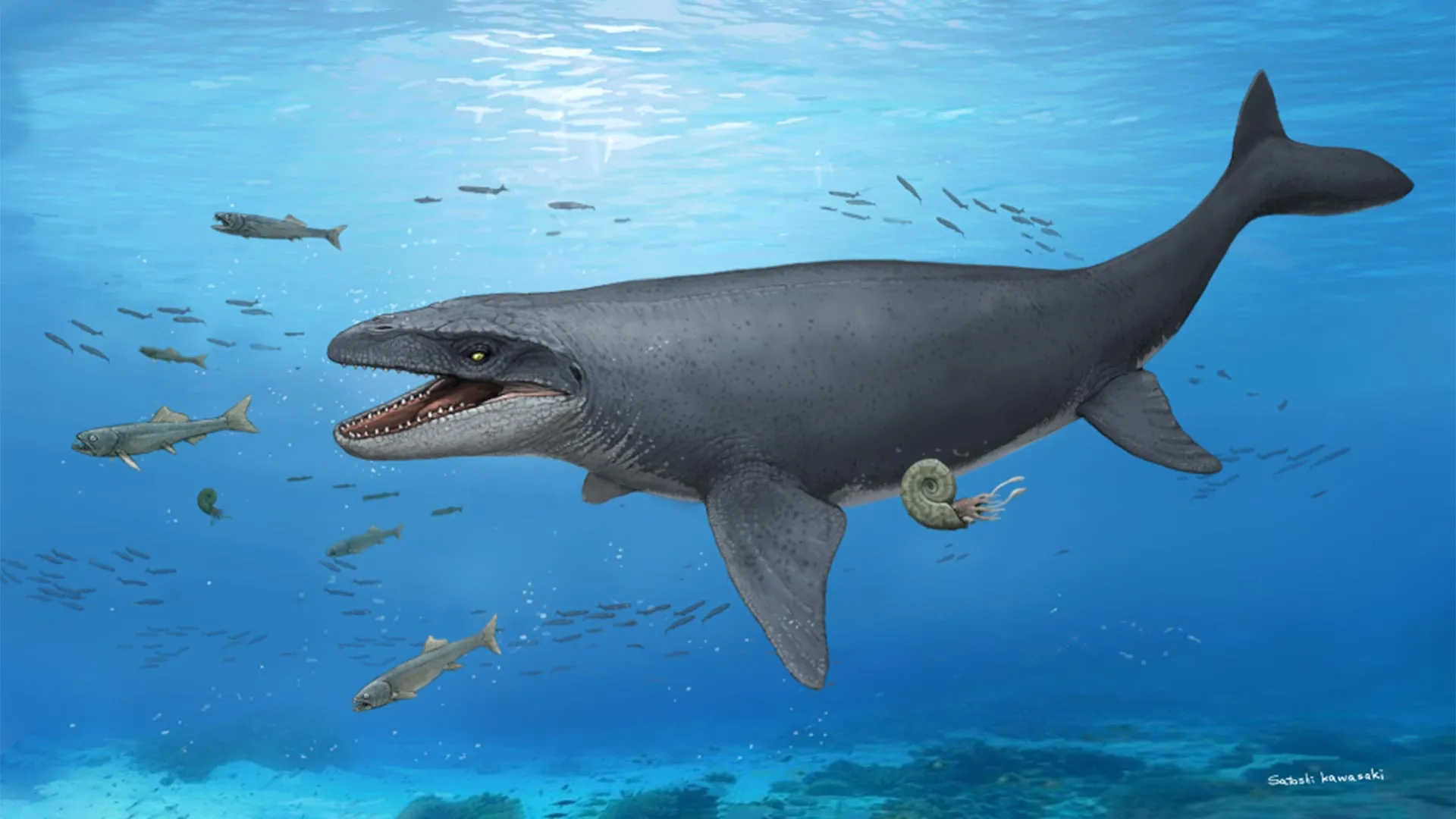
    Researchers from Okayama University of Science, Tokyo City University, the Natural History Museum, Kishiwada City (Osaka Prefecture), and other institutions have uncovered four fossil bones that went unrecognized for roughly three decades. The bones were found inside rock containing mosasaur remains collected in Kishiwada City, Osaka Prefecture.

    One of the newly identified fossils is the premaxilla, the bone at the very front of the upper jaw. This marks the first time a premaxilla has been confirmed in a mosasaur fossil discovered in Japan. Other unusual anatomical features in the remains do not match those seen in previously described mosasaurs, suggesting the animal could represent a species that is new to science.

    Ancient Marine Reptile Fossils Reexamined

    Mosasaurs were large marine reptiles that inhabited oceans around the world during the Late Cretaceous, approximately 98 to 66 million years ago.

    The fossils in this study were first discovered between 1990 and 1992 in Sobura, Kaizuka City, Osaka Prefecture. They were later preserved at the Natural History Museum, Kishiwada City. When researchers recently returned to pieces of rock that had not yet been fully prepared, they found four fossil bones still embedded in the surrounding material.

    Among those discoveries, the premaxilla stands out as one of the most important. It is the first confirmed example of this part of the skull in a Japanese mosasaur specimen.

    When the fossils were originally found, scientists had far fewer mosasaur specimens available for comparison, making it difficult to determine exactly what kind of mosasaur the bones represented. In the decades since, researchers around the world have accumulated much more anatomical information and a larger collection of comparative fossils. Those advances allowed the team to identify the bone as a premaxilla.

    Unusual Skull Features Raise New Species Possibility

    Researchers also examined the basisphenoid, a bone positioned near the braincase, and found several distinctive characteristics.

    The bone has short projections extending outward that resemble horns, and it lacks a ventral median groove. These features differ from those documented in previously known mosasaurs. The unusual combination of traits raises the possibility that the fossil belongs to a species that has not yet been described.

    The findings demonstrate how valuable it can be to revisit unprepared specimens stored in museums and research collections. Fossils that have been kept for decades may still contain important bones or other evidence that was not recognized when they were first collected.

    The discovery may also help scientists build a clearer picture of marine ecosystems in the northwestern Pacific during the Cretaceous Period. Additional research will be needed to determine whether the specimen truly represents a new mosasaur species.

    Findings Presented in Japan

    The results were presented at the 177th Annual Meeting of the Palaeontological Society of Japan, held at Osaka Metropolitan University on June 27, 2026.

    The research team included:

    • Yasuaki Takano, Master’s student, Graduate School of Okayama University of Science
    • Associate Professor Shoji Hayashi, Department of Dinosaur Paleontology, Okayama University of Science
    • Professor Yasuhisa Nakajima, Tokyo City University
    • Satoshi Utsunomiya, Panasonic Electric Works Co., Ltd.
    • Yuma Asai, Master’s Program, University of Tsukuba
    • Curator Miho Kazama, Natural History Museum, Kishiwada City
    • Advisor Katsunori Watanabe, Natural History Museum, Kishiwada City
    30yearold Ancient bones fossil Hiding monster mysterious Sea
    NCIJ NETWNCIJ NETWORK
    • Website

    Keep Reading

    Common food preservative linked to rising suicide deaths among young people

    When gut microbes run low on fiber, they may start eating you

    Hollywood actor seeks help from Shropshire vicar for documentary

    Scientists detect a surprising shift in human blood as atmospheric CO2 rises

    This common vitamin deficiency becomes far more dangerous when paired with belly fat

    Scientists solve the mystery of a brain “switch” that can trigger weight loss in opposite ways

    Add A Comment
    Leave A Reply Cancel Reply

    Editors Picks

    75% of developers I surveyed prefer Claude Code – here’s why they choose it over Codex

    August 15, 2026

    CLARITY Act odds fall to10%

    August 15, 2026

    Common food preservative linked to rising suicide deaths among young people

    August 15, 2026

    New York City man charged with hate crimes after alleged synagogue assault | New York

    August 15, 2026
    Latest Posts

    Why two public companies quietly liquidated 511 Bitcoin in 24 hours to escape $31.7 million in debt

    July 26, 2026

    TechCrunch Mobility: Uber bets on its former CEO

    July 26, 2026

    Ed Miliband indicates development and climate will be at heart of UK foreign policy | World Bank

    July 26, 2026

    Subscribe to News

    Get the latest sports news from NewsSite about world, sports and politics.

    NCIJ Network is an independent digital news platform delivering trusted investigative journalism, European and global news, in-depth analysis, and fact-based reporting with accuracy, transparency, and integrity.

    Facebook X (Twitter) Instagram Pinterest YouTube

    75% of developers I surveyed prefer Claude Code – here’s why they choose it over Codex

    August 15, 2026

    CLARITY Act odds fall to10%

    August 15, 2026

    Common food preservative linked to rising suicide deaths among young people

    August 15, 2026

    Subscribe to Updates

    Get the latest creative news from FooBar about art, design and business.

    Type above and press Enter to search. Press Esc to cancel.