


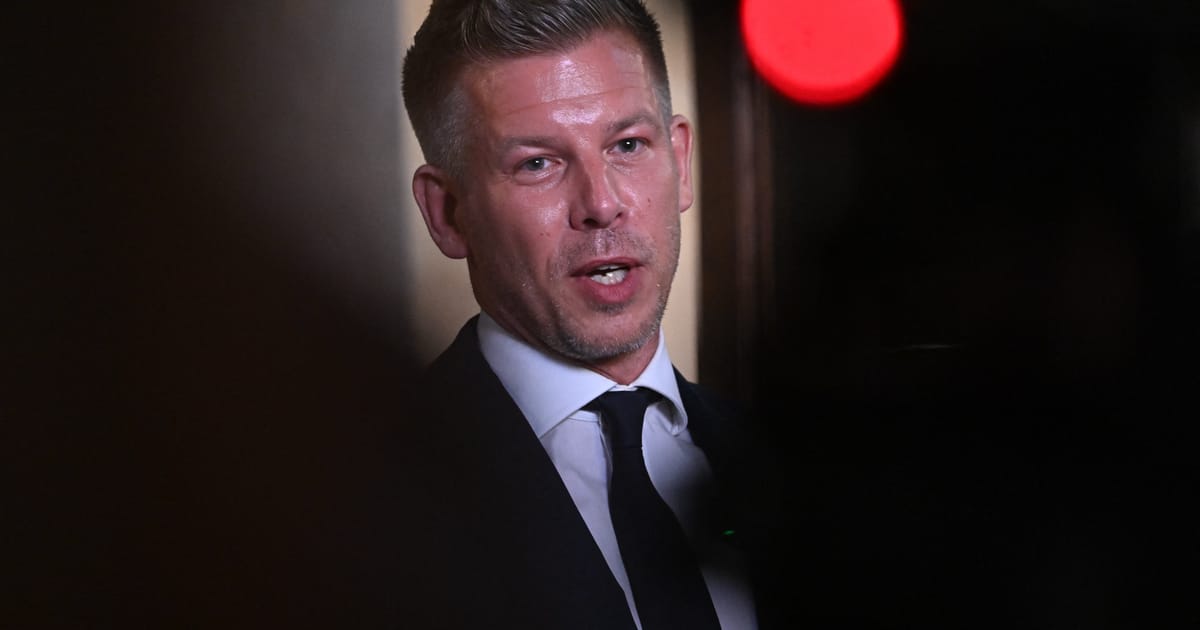
Rosatom CEO Alexei Likhachev wrote that the Russian state nuclear company was still on schedule with two new reactors at Paks despite Hungary’s change of government in April, which saw Magyar oust Russia-friendly incumbent Viktor Orbán.
Concrete preparation for Unit 5 is more than 80 percent complete, he said, while work on Unit 6 is advancing and reactor components are already being manufactured.
“We are ready for dialogue,” Likhachev said, adding that Rosatom had received no questions from Hungary’s new government.
Magyar challenged that account hours later. Under the original contract, Paks II should have been operating by 2024, he told reporters in a press conference Thursday. Instead, Hungary has spent roughly 1,000 billion forints (€2.8 billion) on a site he described as little more than depots and “two large concrete pits.”
“I don’t really see that they have adhered to the contract,” Magyar said. His government is now carrying out a full review of the project, including its financing and cooling arrangements.
The review cuts at one of Orbán’s signature deals with Russia. Orbán struck the Paks II agreement in Moscow in 2014, handing Rosatom the two-reactor expansion backed by up to €10 billion in Russian state financing. Two years later, he called it the “deal of the century.”
Those ties survived Moscow’s full-scale invasion of Ukraine. As recently as March this year, Orbán’s foreign minister Péter Szijjártó admitted to discussing EU sanctions with senior Russian officials after leaked calls showed him boasting that a bank linked to Paks had been kept off a sanctions list.
Downstream, Romania shut the second and last operating reactor at Cernavodă on Thursday after the Danube fell too low to supply its cooling pumps.
