


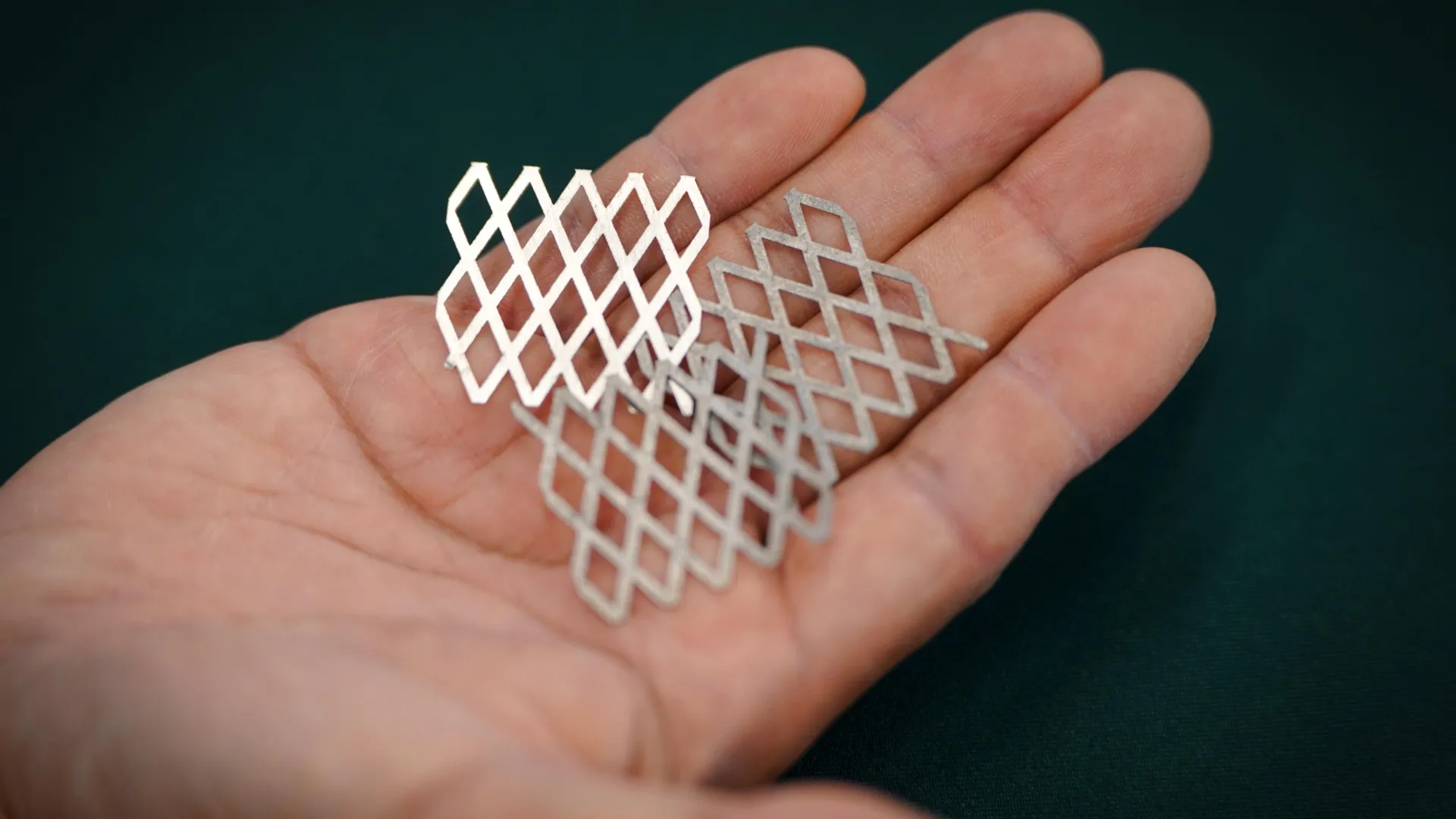
A team at the University of Hong Kong (HKU) has developed a new type of stainless steel that could overcome a major limitation of conventional stainless steel and potentially lower the cost of producing green hydrogen.
Led by Professor Mingxin Huang of HKU’s Department of Mechanical Engineering, the researchers created stainless steel for hydrogen (SS-H2), a material designed to resist severe corrosion under conditions that ordinary stainless steel cannot withstand.
The advance is the latest result from Huang’s “Super Steel” Project. His team previously developed stainless steel with anti COVID properties in 2021, along with exceptionally strong and tough forms of Super Steel in 2017 and 2020.
A New Steel for Green Hydrogen
SS-H2 is particularly promising because of its resistance to corrosion. That property could make it useful in systems that produce green hydrogen using seawater, an area where researchers are still searching for practical and sustainable technologies.
Hydrogen can be produced through electrolysis, a process that uses electricity to split water into hydrogen and oxygen. When that electricity comes from renewable energy, the resulting fuel is often described as green hydrogen. However, the equipment used for electrolysis must withstand demanding chemical and electrical conditions, especially when salt is involved.
In a salt water electrolyzer, the new steel delivered performance comparable to titanium structural components currently used to produce hydrogen from desalinated seawater or acidic solutions. The key difference is cost. SS-H2 is considerably less expensive.
The findings were published in Materials Today in a study titled “A sequential dual-passivation strategy for designing stainless steel used above water oxidation.” The researchers have applied for patents covering the technology in several countries, and two patents have already been authorized.
Why Conventional Stainless Steel Has a Limit
Stainless steel has been used for roughly a century and has become one of the most important materials for applications where corrosion is a concern. Much of its durability comes from chromium.
When chromium (Cr) in the steel reacts with its environment, it forms a thin protective film on the surface. This passive layer helps prevent the underlying metal from continuing to corrode.
For conventional stainless steels, however, this protection has an important limit.
The protective chromium oxide, Cr2O3, can undergo further oxidation and form soluble Cr(VI) species. Once this happens, the surface can enter a form of degradation known as transpassive corrosion.
In conventional stainless steel, that process can occur at about ~1000 mV (saturated calomel electrode, SCE). Water oxidation, an essential reaction during electrolysis, requires a substantially higher potential of about ~1600 mV. This mismatch has prevented conventional stainless steel from being used effectively in some high voltage electrochemical applications.
Even 254SMO super stainless steel, considered a benchmark chromium based corrosion resistant alloy with excellent resistance to pitting in seawater, faces this problem. Its resistance to corrosion decreases when the electrical potential becomes sufficiently high.
A Surprising Second Protective Layer
Huang’s group found a way around that long standing limitation using what the researchers call “sequential dual-passivation.”
Instead of relying only on the traditional protective chromium oxide layer, SS-H2 develops another protective layer on top of it. This second layer is based on manganese and begins forming at about ~720 mV.
Together, the two layers allow the steel to resist corrosion in chloride containing environments at potentials reaching 1700 mV. Chlorides, which are abundant in seawater, are particularly aggressive toward many metals and can cause localized corrosion.
Reaching 1700 mV is important because it takes the material beyond the potential needed for water oxidation. The researchers therefore see SS-H2 as a fundamental advance over conventional stainless steel.
What makes the result especially striking is the role played by manganese. Traditionally, manganese has been regarded as harmful to the corrosion resistance of stainless steel.
“Initially, we did not believe it because the prevailing view is that Mn impairs the corrosion resistance of stainless steel. Mn-based passivation is a counter-intuitive discovery, which cannot be explained by current knowledge in corrosion science. However, when numerous atomic-level results were presented, we were convinced. Beyond being surprised, we cannot wait to exploit the mechanism,” said Dr. Kaiping Yu, the first author of the study, whose PhD is supervised by Professor Huang.
Nearly Six Years of Research
The project took nearly six years, beginning with the discovery of the unusual steel and continuing through efforts to understand why it behaved this way at the atomic level. The work eventually progressed toward publication and possible industrial use.
Rather than concentrating primarily on how alloys resist corrosion under ordinary conditions, Huang’s group has focused on developing materials that remain stable at much higher electrical potentials.
“Different from the current corrosion community, which mainly focuses on the resistance at natural potentials, we specializes in developing high-potential-resistant alloys. Our strategy overcame the fundamental limitation of conventional stainless steel and established a paradigm for alloy development applicable at high potentials. This breakthrough is exciting and brings new applications.” Professor Huang said.
A Potential 40 Fold Reduction in Material Costs
The economic implications could be substantial.
Electrolyzers operating with desalinated seawater or acidic solutions currently require expensive titanium components coated with gold or platinum. These materials can account for a large share of the cost of an electrolysis system.
According to the researchers, a 10 megawatt PEM electrolysis tank system currently costs approximately HK$17.8 million. PEM refers to proton exchange membrane electrolysis, a technology that uses an electrically powered membrane system to separate water into hydrogen and oxygen.
Structural components can represent as much as 53% of the total system cost.
The researchers believe SS-H2 could replace some of those expensive components with a much more economical steel. Their estimates suggest that using the new material could reduce the cost of structural materials by about 40 times, giving it considerable potential for industrial hydrogen production.
Moving From the Laboratory to Industry
Important engineering challenges remain before the material can be widely deployed. Electrolyzers require components in practical forms such as metal meshes and foams, so laboratory performance alone is not enough.
The researchers have nevertheless begun moving SS-H2 toward large scale production.
“From experimental materials to real products, such as meshes and foams, for water electrolyzers, there are still challenging tasks at hand. Currently, we have made a big step toward industrialization. Tons of SS-H2-based wire has been produced in collaboration with a factory from the Mainland. We are moving forward in applying the more economical SS-H2 in hydrogen production from renewable sources,” added Professor Huang.
The combination of high corrosion resistance and far lower material costs could make SS-H2 especially valuable if it performs reliably in commercial electrolyzers. If the technology successfully makes the transition from experimental steel to industrial components, it could provide a cheaper route to producing green hydrogen from renewable energy and seawater.
