


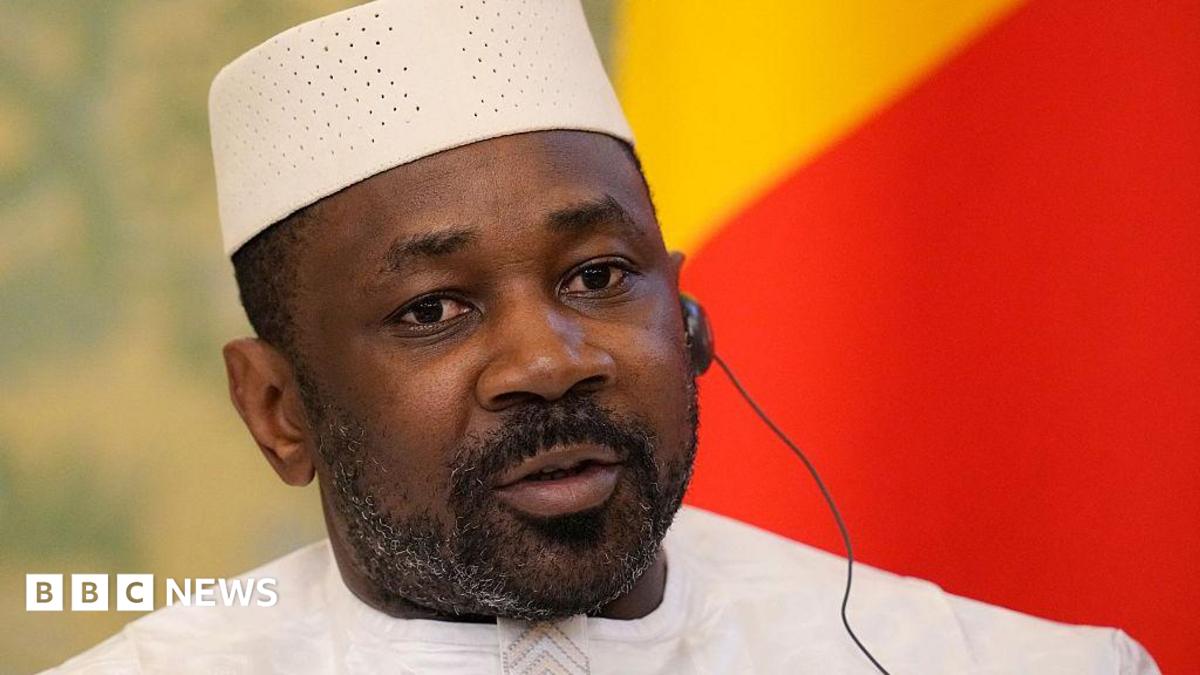
Mali is a former colony of France, and has been gripped by a security crisis fuelled by an Islamist insurgency since 2012. It was one of the reasons given for Goïta leading a coup in 2021 but attacks by jihadist groups have continued and even increased.
At the time of the arrests last year, Mali’s Security Minister Gen Daoud Aly Mohammedine said “fringe elements of the Malian armed security forces” had been detained for seeking to “destabilise the institutions of the republic”.
“These soldiers and civilians” were said to have obtained “the help of foreign states”, the minister said.
Vezilier was said to have acted “on behalf of the French intelligence service, which mobilised political leaders, civil society actors and military personnel” in Mali, according to the minister.
Political tension and the security crisis have worsened in Mali.
In April the country’s defence minister was killed in an apparent suicide truck bombing on his residence near the capital, Bamako, during a wave of militant attacks. Goïta named himself defence minister shortly after, in an apparent attempt to consolidate his already considerable power.
When the capital came under siege by Islamist fighters, they managed to impose a partial blockade there and total blockades elsewhere including the city of Ségou.
Last May, the junta dissolved all political parties following rare anti-government protests, which former Prime Minister Moussa Mara described as a severe blow to reconciliation efforts initiated by the military leaders.
Goïta had promised elections within two years of seizing power, but these have never been held.
Last July, the transition period was extended by five years, clearing him to continue leading the country until at least 2030.
Alongside its neighbours Niger and Burkina Faso, Mali has enlisted the help of Russian allies to contain the jihadist attacks in the region after breaking ties with France – but there have been no significant improvements in security.
Additional reporting by Wycliffe Muia
