


Reservoirs have rebounded, but the fight over water isn’t over in Corpus Christi. The City Council has ordered a public referendum on a citizen-led petition that would sharply increase the price of water for industrial facilities during drought.
The proposal is expected to face a litany of legal challenges before November’s election.
It would add millions of dollars in fees to the region’s largest water users, including ExxonMobil, Occidental Chemical and Valero, the next time reservoir levels are below 30 percent full, like they were for 29 months until early August. Community and environmental groups gathered nearly 13,000 signatures of registered voters to get their proposal on the ballot.
“This was a lot of signatures,” said Corpus Christi Mayor Pro-tem Kaylynn Paxson at the City Council meeting Tuesday evening. “This is something that doesn’t happen every day. I am very proud and amazed to say that this actually took place.”
The 6-2 vote to call a special election on the referendum followed years of growing tensions between the public in Corpus Christi and the industrial giants that consume enormous amounts of water. As the region’s main reservoirs fell from 30 percent full in March of 2024 to less than eight percent full in May of this year, residents clamored for authorities to curtail water consumption at refineries and chemical plants.
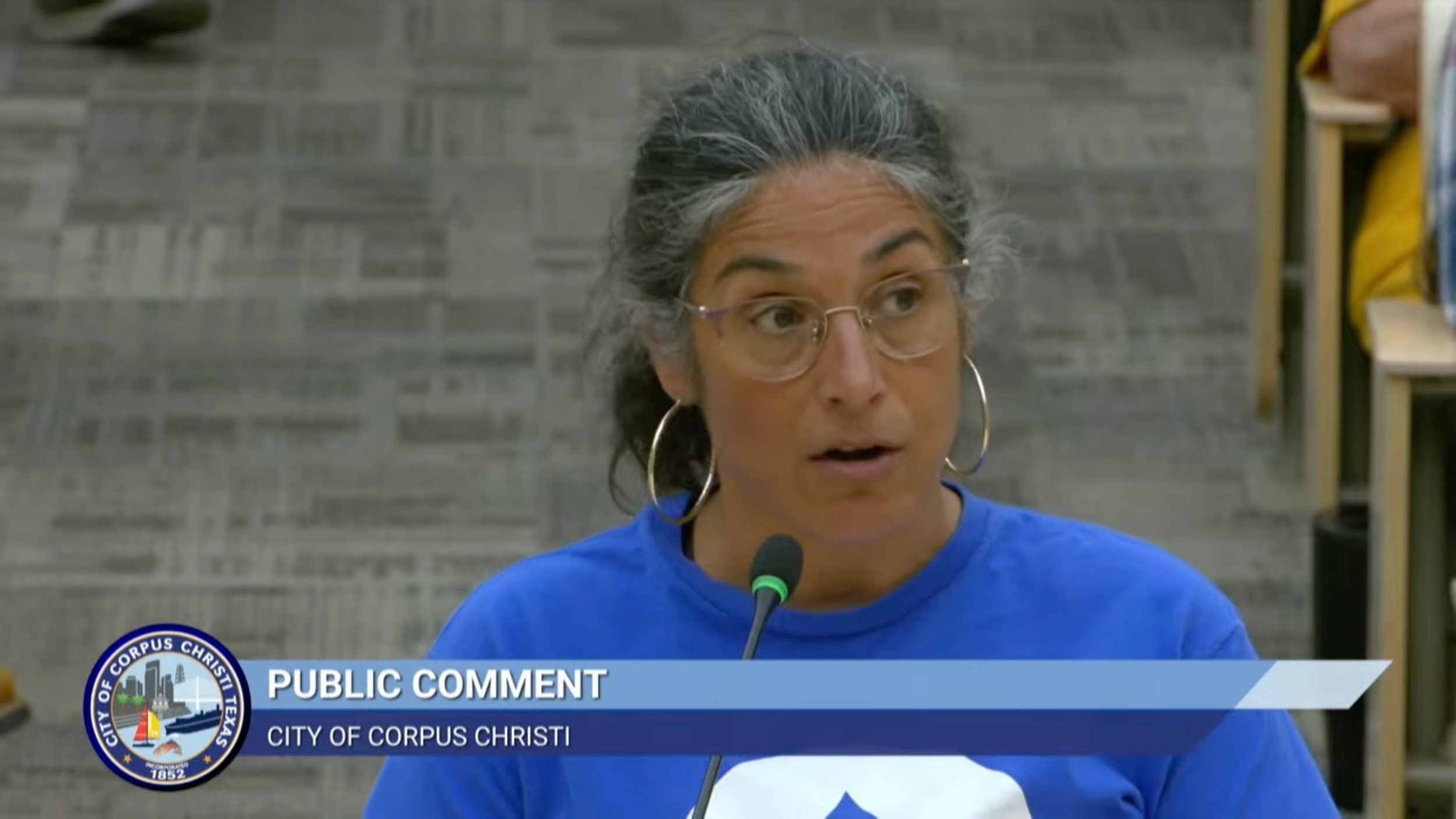
Activists began to circulate the petition for the referendum, called the Fair Water Amendment, this year as Corpus Christi came perilously close to running out of water. Dozens of volunteers for a local organization called For the Greater Good along with paid canvassers from Texas Campaign for the Environment spent months gathering signatures.
“Something that seemed impossible gave me hope in our democracy,” said Miriam Guerra-Rachidy, a member of For the Greater Good, in comments to the City Council on Tuesday. “It gave me hope in believing that the people can make a difference.”
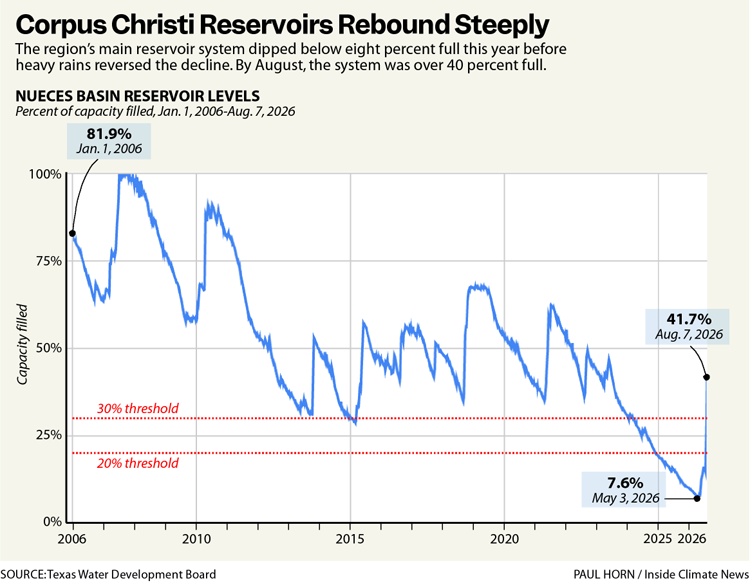
The region no longer faces an imminent threat of disaster after a rainy spring and summer replenished its main reservoir system, currently 42 percent full.
The Fair Water Amendment would implement a 70 percent water rate increase for Corpus Christi’s largest industrial water users when reservoirs dip below 30 percent capacity. It would implement an increase of 140 percent when reservoirs dip below 20 percent, and a 280 percent increase if the city declares a water emergency.
Even advocates for the proposal expect to face lawsuits from industry groups in coming months.
“It’s gonna be challenged, no doubt,” said Sylvia Campos, a City Council member who campaigned for the amendment. “That’s the nature of the beast.”
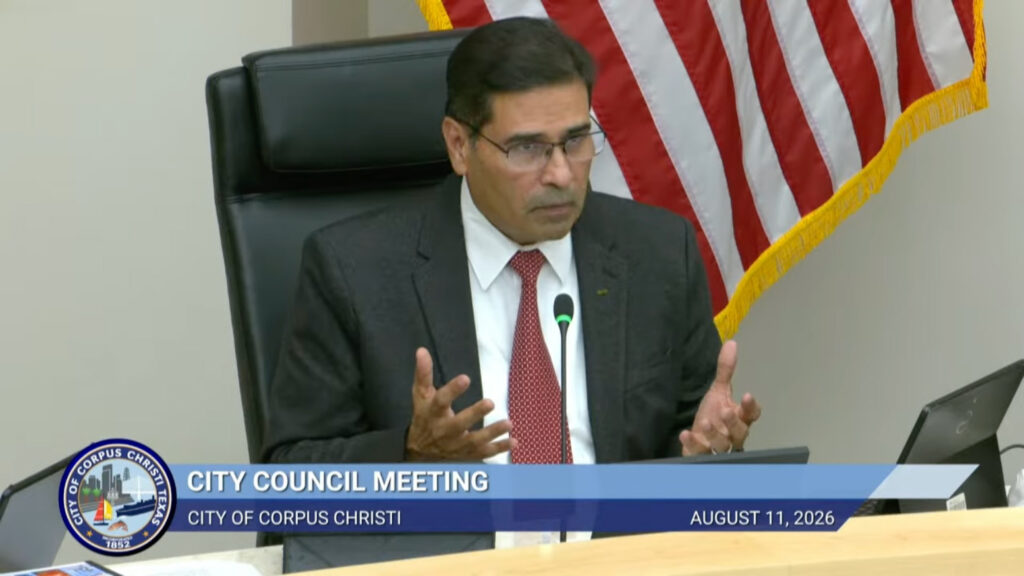
Several parts of the proposed amendment will be easy to challenge, said Corpus Christi City Manager Peter Zanoni. The proposal requires rate increases for industrial complexes that buy their water directly from the city as well as those that buy their water from intermediaries like water districts or towns.
Corpus Christi supplies water to its entire seven-county region, including more than 20 other cities and towns.
“It’s gonna be challenged, no doubt. That’s the nature of the beast.”
— Sylvia Campos, Corpus Christi City Council member
“They don’t report to me or this City Council. They’re whole and separate entities, so we can’t set their rates for them,” Zanoni told the City Council Tuesday. “You don’t have the authority to do that.”
The city’s direct industrial customers could also contest the proposed drought surcharge at the state’s Public Utility Commission, where they are already fighting the city’s current water rate and demanding an $80 million refund.
In approving the ballot measure Tuesday, Corpus Christi City Council rejected the advice of its own legal counsel, who recommended officials block the referendum under an obscure state law that bans municipal charter amendments related to climate change.
This story is funded by readers like you.
Our nonprofit newsroom provides award-winning climate coverage free of charge and advertising. We rely on donations from readers like you to keep going. Please donate now to support our work.
If the City Council passed an ordinance that labeled the Fair Water Amendment as related to climate change, it wouldn’t be allowed on the ballot without approval from the state Legislature, wrote Interim City Attorney Buck Brice in a city memo.
But council member Gil Hernandez, who disagreed with levying the surcharge on large industrial water users, said he did not think the Fair Water Amendment could be categorized as “climate change” related.
“It’s too much of a stretch,” Hernandez said. “Even though I disagree with the contents of the amendment. I’m not going to do acrobatic acts to try and make this climate change.”
For Isabel Araiza, organizer of the petition drive and a founder of For the Greater Good, Tuesday’s vote was the climax of a yearslong organizing campaign. She said the fear and severity of this year’s water crisis energized the community to take action.
With the proposal on November’s ballot, Araiza said organizers will launch a new campaign of education and awareness before the election.
“Civic engagement is flourishing and it’s beautiful,” said Araiza, a local college professor. “The powerful industry [doesn’t] want people to recognize their power, and people are recognizing their power.”
Neena Satija of the Texas Newsroom contributed to this report.
About This Story
Perhaps you noticed: This story, like all the news we publish, is free to read. That’s because Inside Climate News is a 501c3 nonprofit organization. We do not charge a subscription fee, lock our news behind a paywall, or clutter our website with ads. We make our news on climate and the environment freely available to you and anyone who wants it.
That’s not all. We also share our news for free with scores of other media organizations around the country. Many of them can’t afford to do environmental journalism of their own. We’ve built bureaus from coast to coast to report local stories, collaborate with local newsrooms and co-publish articles so that this vital work is shared as widely as possible.
Two of us launched ICN in 2007. Six years later we earned a Pulitzer Prize for National Reporting, and now we run the oldest and largest dedicated climate newsroom in the nation. We tell the story in all its complexity. We hold polluters accountable. We expose environmental injustice. We debunk misinformation. We scrutinize solutions and inspire action.
Donations from readers like you fund every aspect of what we do. If you don’t already, will you support our ongoing work, our reporting on the biggest crisis facing our planet, and help us reach even more readers in more places?
Please take a moment to make a tax-deductible donation. Every one of them makes a difference.
Thank you,

Reporter, Austin
Dylan Baddour covers the energy sector and environmental justice in Texas. Born in Houston, he’s worked the business desk at the Houston Chronicle, covered the U.S.-Mexico border for international outlets and reported for several years from Colombia for media like The Washington Post, BBC News and The Atlantic. He also spent two years investigating armed groups in Latin America for the global security department at Facebook before returning to Texas journalism. Baddour holds bachelor’s degrees in journalism and Latin American studies from the University of Texas at Austin. He has lived in Argentina, Kazakhstan and Colombia and speaks fluent Spanish.
