


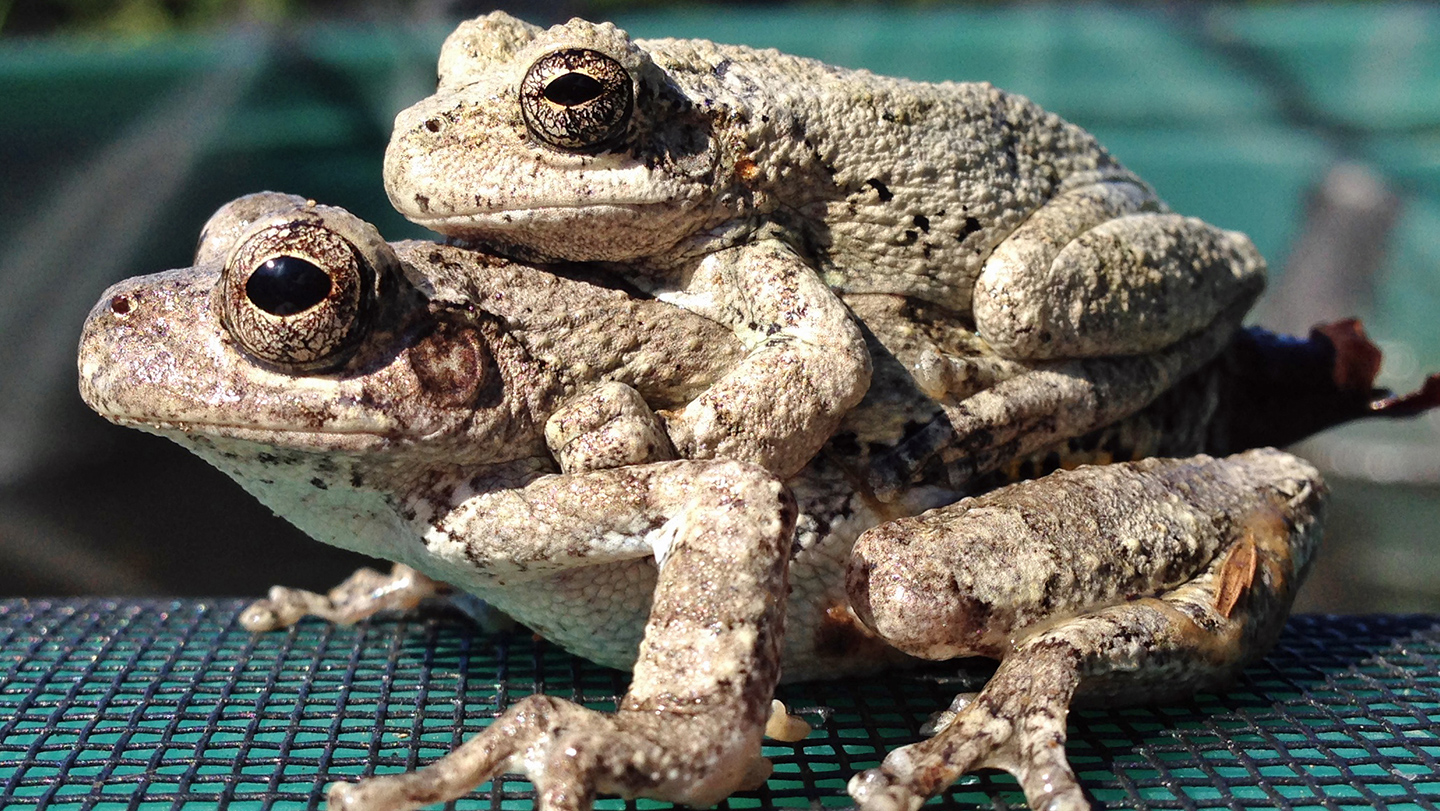
It’s not just you. Frogs also get overwhelmed when confronted with too many options — and sometimes, they make bad decisions.
Female Cope’s gray tree frogs (Hyla chrysoscelis) prefer males with longer calls, which in some tree frogs is tied to better survival odds for offspring. But female frogs exposed to an overabundance of mating calls are worse at picking out the best mates, researchers report August 12 in iScience. This suggests that, like people, frogs experience choice overload — the tendency to delay, avoid and make worse decisions when more choices are offered.
This suggests that choice overload could level the playing field for mediocre males because “females weren’t able to choose as assiduously as they wanted to,” says Jessie Tanner, an animal behaviorist at the University of Tennessee in Knoxville.
In this latest study, researchers captured 60 female frogs in the middle of mating from ponds around Knoxville. These females were placed in the center of a sound chamber and allowed to choose among two, four or eight mating calls. Only one call in each experiment was the ideal long-call.
In over 100 trials, more than 75 percent of females exposed to just two recordings chose the longer, more attractive, call. But only about 50 percent made the same choice when exposed to four calls, and only 20 percent did so when exposed to eight calls. Female frogs also took longer to decide when faced with more choices — sometimes taking up to a minute and a half longer to move decisively towards a speaker.
Other females just froze up: Three percent of two-call trials ended with a frog staying put. But 17 percent of females in the eight-call trials never picked a mate before the trial period was over.
Choice overload could be dangerous for females because waiting could put them at greater risk from predators around mating ponds. But it also could explain how males with less-than-ideal calls keep contributing to the frog gene pool, Tanner says.
In research on frog mating, “I think choice overload has been underappreciated,” she says. Female frogs simply “can’t always get what they want.”
