


Unlock the Editor’s Digest for free
Roula Khalaf, Editor of the FT, selects her favourite stories in this weekly newsletter.
Well-heeled passengers who fly regularly, long haul or for business, will barely notice the effect of Brussels’s carbon tax on international aviation. Families setting off for an annual jaunt to the beach via a low-cost airline may not be so fortunate.
The EU is proposing to extend its carbon levy to international flights with destinations within a 5,000km radius of Frankfurt Airport. This builds on its existing carbon pricing scheme, under which airlines that operate flights in the bloc must purchase permits to pollute. The new twist is due to be introduced in 2029 and will help fund investments in green aviation technologies and fuels.
This will create immediate cost pressure for airlines. Burning a tonne of jet fuel releases just over three tonnes of CO₂. Greenhouse gas permits are trading above €80 per tonne, a price set to rise. At the moment, the scheme would add roughly €24 to the price of a flight from Paris to Istanbul and less than 10 per cent overall to costs across all affected flights, decarbonisation advocacy group T&E reckons.
Despite this, legacy long-haul carriers like Air France-KLM and Lufthansa could see a pick-up in sales, thanks to a more level playing field with non-EU competitors such as Emirates, United Airlines and Turkish Airlines. Until now, intra-EU carbon pricing benefited carriers flying in from hubs outside the bloc, such as Istanbul. Lufthansa, while displeased by the extra cost, has welcomed its role in reducing competitive distortion.
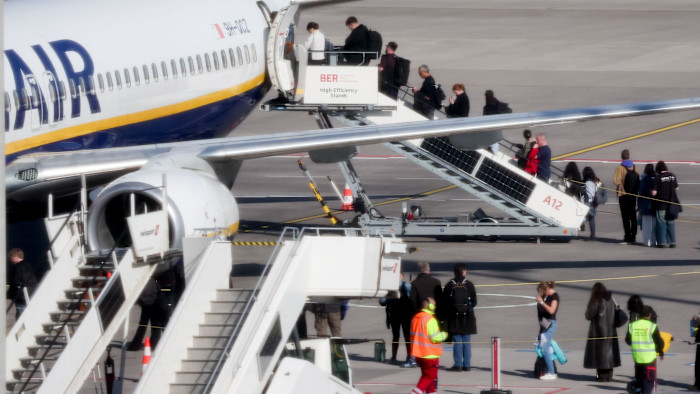
The outlook could be less rosy for short-haul operators, whose cost-conscious strategies are already under intense strain from jet fuel prices still far above prewar levels. They have tended too to be quicker to pass cost increases on to passengers; in the case of the EU’s existing carbon tax regime, the whole amount got added to ticket prices, versus 87 per cent for long-haul flights, University of Barcelona researchers found.
That leaves the cheapest airlines and their fare-sensitive clientele in an uncertain spot. Ryanair customers, for example, seem to exhibit price elasticity of demand as high as -2.07, meaning a 10 per cent rise in prices triggers a 20 per cent drop in sales, according to University of Antwerp researchers. The standard elasticity of EU air travel they assumed is -1.4.
Ryanair boss Michael O’Leary has suggested that Europe’s “dumb enviro taxes” will push more travellers towards low-cost airlines. That’s some comfort. But it will make their existing flyers — already fielding a raft of upward pressures on ticket prices — feel even more squeezed.
Lex sends a newsletter every Wednesday with additional insights, the pick of the week’s columns and links to what we’re reading. Premium subscribers to the FT can sign up here
