


- Following proof of the presence of microplastics in Amazonian rivers, streams and lakes, researchers are investigating how these particles affect fish health and physiology.
- A study highlights the risks associated with microplastics in the air-breathing organs of the pirarucu, a giant fish that must rise to the surface to breathe.
- Studies conducted with Amazonian fish show microplastics in their gills and digestive tracts, and experiments with the tamoatá point to increased stress and weight loss.
- Scientists warn of risks to human health in a region where fish is a dietary staple; in Brazil’s Amazonas state, average annual consumption is 14 kilos per person, five times the national average.
This is the second story in a special three-part series on microplastics in the Amazon. Read the first part here.
MANAUS, Brazil — In Amazonian waters, the pirarucu lives between two worlds. In the oxygen-depleted waters typical of floodplain lakes, this giant fish rises to the surface to breathe air. Over an evolutionary history spanning at least 100 million years, it developed a modified swim bladder that functions as a primitive lung. This rare adaptation has allowed it to thrive in environments that are too harsh for other fish species. Today, however, the very adaptation that ensures its survival makes it vulnerable to a new threat: Microplastic pollution.
“Amazonian environment is already highly challenging,” said Adalberto Val, a biologist and head of the National Institute of Science and Technology for Adaptations of Aquatic Biota of the Amazon (INCT-Adapta). “Here we have high temperatures, low oxygen levels in the water … Organisms already respond to these challenges as they learned during the evolutionary process. Then we start adding new challenges, like plastic.”
When breathing becomes a risk
Pirarucus (Arapaima gigas) cannot survive for more than 10 minutes without surfacing for air. They rely on an air-breathing organ connected to their modified swim bladder, a necessity that puts them in direct contact with microplastics floating at the surface. Drawing on established knowledge about the species, Val and researchers from the University of British Columbia in Canada published an article outlining the dangers of this exposure.
When microplastics enter the pirarucu’s air-breathing organ, “mechanical damage” is a primary risk. The particles can physically block the glottis, obstructing airflow. The glottis also contains cells that detect oxygen and carbon dioxide levels. Microplastics can impair these cells, disrupting the fish’s respiratory control.
Val said microplastics can also “sequester” elements essential to fish physiology. Sodium, potassium and calcium, for example, can bind to plastic particles and become unavailable for normal bodily functions.
“On the other hand, this microplastic is a foreign element inside the body,” Val said. “The organism attempts to attack it, trying to destroy it, which causes inflammatory processes. This becomes a vicious cycle where the animal’s energy is directed toward dealing with these microplastics, triggering several other processes that make the animal sick.”
Because the pirarucu breathes air, microplastics are more likely to be absorbed into its internal tissues. Once in the tissue, this contamination is no longer just a threat to the fish; it also raises serious concerns for the human populations of the Amazon who rely on fish as their source of food.
Floods, droughts and water types can alter contamination dynamics
While scientific research into the issue is relatively new, the presence of microplastics contamination in Amazonian waters is well documented. Studies have found these particles everywhere from major rivers to forest streams known as igarapés, as well as in lakes and the mangroves at the Amazon River Mouth. In high-volume rivers like the Amazon and the Negro, the amount of water helps dilute the contamination, but it does not prevent plastics from traveling, settling on the riverbed or accumulating in areas with slow currents.
The problem is far worse in urban areas, where streams and lakes receive untreated sewage and improperly discarded trash. In Manaus, researchers have found high concentrations of microplastics in urban streams, reaching up to 74,550 particles per cubic meter (MPs/m³). Another example is the Puraquequara Lake on the eastern side of the city, where researchers found microplastics in the digestive tracts of half the jaraquis they analyzed. The jaraqui is the most consumed fish in Amazonas state.
Val said that global studies on microplastics are abundant but focus primarily on ocean and coastal pollution, paying more attention to marine animals. In the Amazon, however, researchers are working to understand how this pollution interacts with the unique characteristics of the world’s largest river basin.
“There has been significant progress in measuring the presence of microplastics in the Amazon, but we need to achieve much more regarding their dynamics in environments and their movement through different types of landscapes,” Val said.
One of these unique features is the flood pulse, that is, the seasonal rise and fall of Amazonian rivers. During the high-water season, waters connect different habitats, including floodplain areas and flooded forests, allowing pollutants to spread widely. During the dry season, when water levels drop, plastic particles concentrate in pools, channels, sediment and isolated environments, increasing the exposure of aquatic organisms.
The diversity of water types in the Amazon region also plays a role. Acidic blackwater such as that of the Negro River and muddy, sediment-rich whitewater like that of the Amazon River may interact differently with microplastics, favoring their fragmentation in some environments, while causing them to settle on the bottom of rivers and lakes in others.
Vegetation also makes a difference. Floating plants, known as macrophytes, act as physical barriers that trap plastic particles and slow their displacement downstream. However, this trapping effect may also make microplastics highly accessible to animals that live in, feed on or move through these plant beds, from small fish to manatees.
In streams, small fish face greater risk
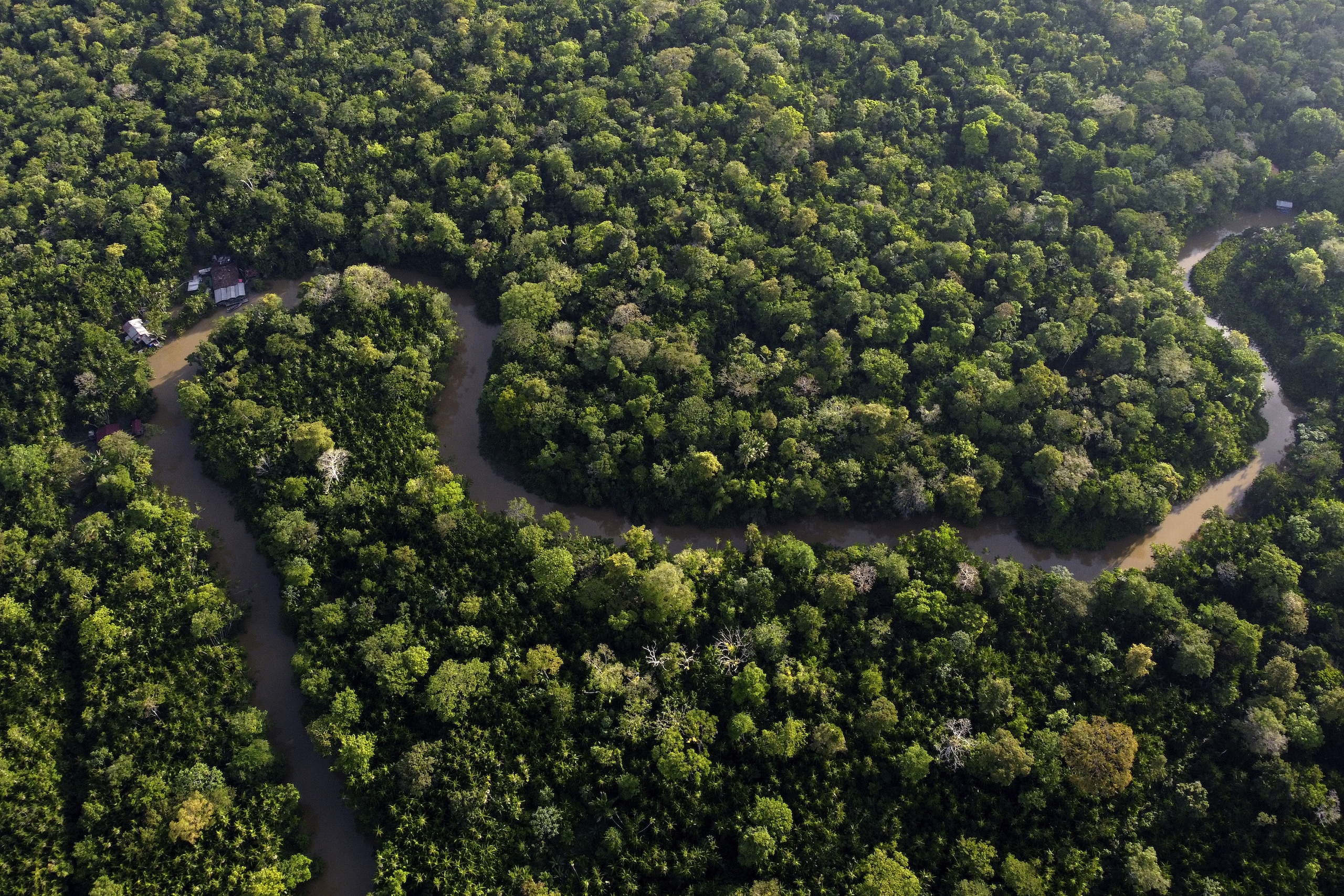
While the pirarucu, one of the world’s largest freshwater fish, inhabits wide rivers and large lakes, the Amazon is also home to countless small species. They live scattered across a network of narrow water bodies known as igarapés. Monitoring conducted by researcher Andreu Rico showed that microplastic concentrations in the main channels of major rivers like the Amazon, Negro, Tapajós and Tocantins were still too low to pose a toxic risk. In the urban streams of Manaus and Belém, however, at least 20% of the monitored sites had concentrations exceeding safe limits for aquatic life, his study published in 2023 found.
Federal University of Mato Grosso (UFMT) ecologist and professor Danielle Regina Ribeiro-Brasil decided to study precisely these overlooked stream ecosystems. “In a major river, microplastics disperse in the large volume of water and may pose a lower risk,” she said. “But in igarapés, especially those that receive sewage and garbage from cities, even a lower concentration can have a major impact.”
Ribeiro-Brasil collected fish in the Guamá and Acará-Capim river basins in Pará, targeting areas impacted by deforestation, cattle ranching and urban expansion. She detected microplastics in the gills and digestive tracts of all but one of the fish analyzed. In total, she found 383 plastic particles in the samples.
“The data comes as a surprise, because we used to think that only fish that feed on sediment or plants would be highly contaminated, but detection is widespread, including in predators,” she said. To her, this indicates that plastic pollution is already deeply integrated into local food chains.
On average, she found 5.6 particles per individual. “It doesn’t seem much,” Ribeiro-Brasil said. “But we are talking about small animals that live in narrow channels. Therefore, even a smaller amount can cause them physical damage.” Ingesting these tiny particles can cause gastrointestinal blockages and internal injuries. The particles also easily adhere to the gills, potentially interfering with the fish’s respiration and the immune system.
Once again, species diversity causes responses to vary. While the lambari (Hemigrammus unilineatus), which grows to about 5 centimeters (2 inches) in length, showed lower levels of contamination, species like the jacundá (Crenicichla regani), at approximately 7 cm (2.8 in), accumulated more particles in its gills.

At the bottom of the river, the tamoatá finds plastic
Renan Amanajás, a fisheries engineer and researcher at the National Institute of Amazonian Research (INPA), said that knowledge still has to be expanded: “In the Amazon, there is a universe of more than 3,000 fish species. For many of them, the impacts of microplastics are similar, but we need to investigate whether there are new patterns depending on each species’ peculiarities.”
The pirarucu is a prime example. While its inflammation and physiological stress resemble reactions seen in other fish, its need to surface for air poses unique risks that are difficult to compare with species elsewhere in the world.
Amanajás studies the impacts of microplastics on another unique Amazonian fish: The tamoatá (Hoplosternum littorale). Abundant at the bottom of lakes and floodplains, it feeds on detritus deposited on sediment, a habit that makes it highly vulnerable to ingesting particles accumulated on the riverbed. To put the potential exposure in perspective, researchers estimate that the sediment of the Negro River contains around 13 million microplastic particles per cubic meter.
“The data we have collected so far show that a 0.0005% concentration of microplastics in diet can already depress the well-being of this animal, increasing stress levels and causing weight loss,” Amanajás explained. He said that the resulting inflammatory response compromises other essential bodily functions.
There is credible risk of contamination from fish to humans
From fish organisms, microplastic contamination ripples outward to affect the historic relationship between human populations and Amazonian fish. The threat spans three major fronts. The first is conservation. Compounded by other threats like pesticides, climate change, deforestation and dams, plastic pollution adds a new layer of pressure on the region’s aquatic biodiversity. While gaps remain regarding the full extent of these impacts, studies show that microplastics can alter animals’ fundamental biological processes.
The second front is food security. Fish is a dietary staple in the Amazon; as Amanajás put it, “it is the greatest expression of the culture of the people who live here.” In Amazonas state, for example, people eat an average of 14 kilos (31 pounds) of fish per year, compared to the national average of 2.8 kilos (6 lbs). In riverside communities that rely heavily on subsistence fishing, consumption is often much higher. In this context, microplastic contamination is, according do Amanajás, deeply concerning because it could compromise the future growth, weight and quality of fish stocks.

“We can safely say that microplastics alter the ability of fish to gain weight because part of the energy that would be used to grow is redirected to fight this inflammatory process,” Amanajás said. “But we still don’t have enough data showing this contamination dynamic in Amazonian fish, whether they come from farming or in wild fisheries.”
While specific studies on how microplastics affect the reproduction of Amazonian fish are still lacking, international research indicates that these particles can damage reproductive organs and compromise the development of embryos and offspring. In the Amazon, where studies have documented microplastics in the digestive tracts of dozens of species, researchers are now asking how this exposure might impact wild populations and, by extension, local fisheries.
The third front is human health. Food is one of the primary pathways of human exposure to microplastics. A 2025 study of fish from the South China Sea and the Strait of Malacca found microplastics in the edible tissues of commercial species, averaging 8.95 particles per individual, and estimated a daily intake of up to 1.6 particles per person through fish consumption.
While there are no similar studies for Amazonian fish yet, researchers say this exposure pathway is highly likely to exist in the region. “We know that environmental and human health are connected. The quality of our environment affects the quality of our lives,” Val said.
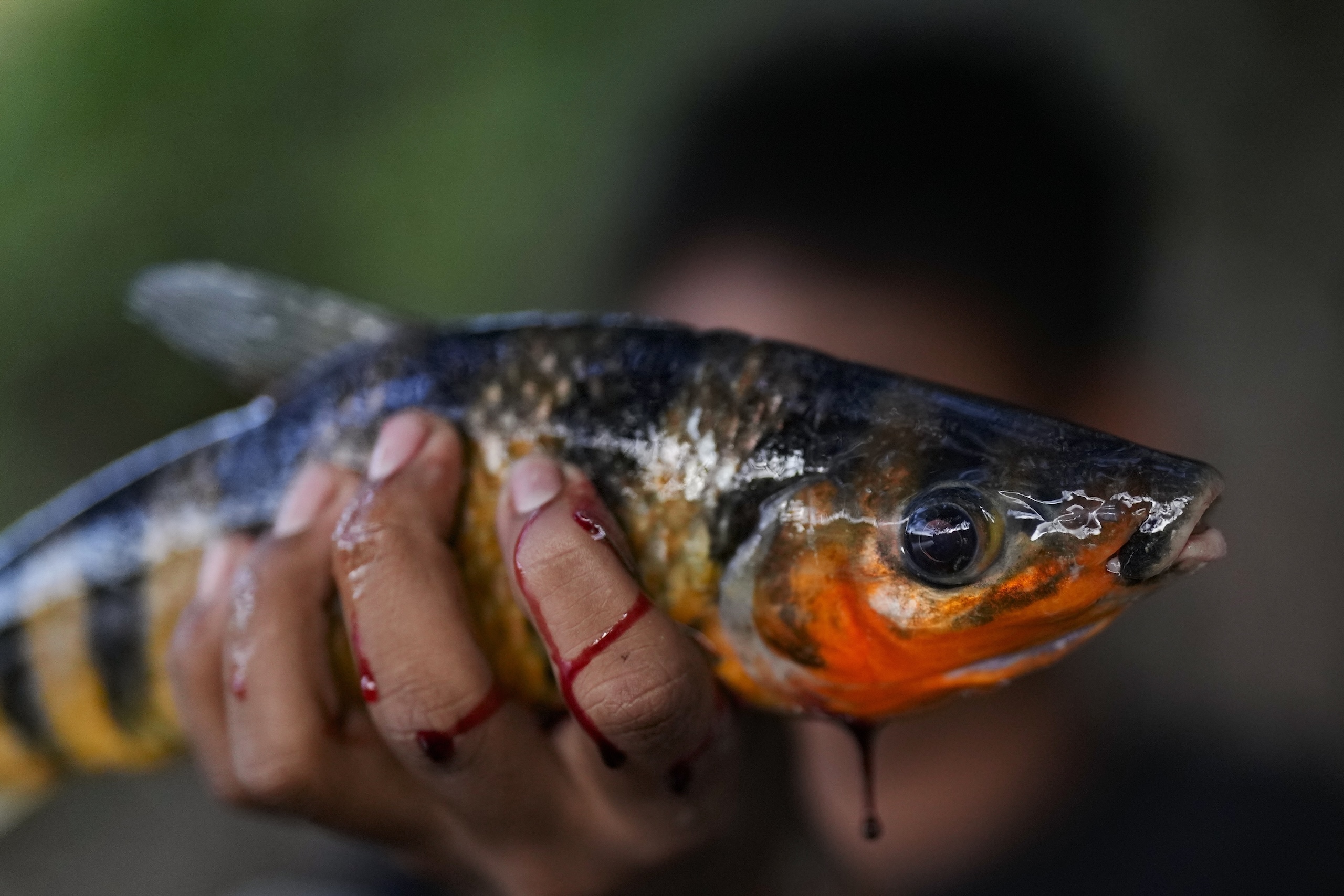
Banner image: An Indigenous man of the Juma people displays a fish caught in the Assuã River in Canutama, Amazonas state. Image by Andre Penner/AP photo.
This story was reported by Mongabay Brazil’s team and first published here on our Portuguese site on July 23, 2026.
Citations:
Guimarães, G. A., Pereira, S. A., Moraes, B. R., Ando, R. A., Martinelli Filho, J. E., Perotti, G. F., Sant’Anna, B. S., & Hattori, G. Y. (2024). The retention of plastic particles by macrophytes in the Amazon River, Brazil. Environmental Science and Pollution Research, 31, 42750–42765. doi:10.1007/s11356-024-33961-z
Ibrahim, Y. S., Abd Razak, N. I., Roslan, N. S., Ku Yusof, K. M. K., Mohd Ali, A. A., Omar, N. F., Chinglenthoiba, C., Mohamad, N. N., & Tuan Anuar, S. (2025). Morphochemical information on microplastic fibers found in edible tissue of local commercial fishes from the South China Sea and the Straits of Malacca for potential human consumption. Environmental Science: Advances, 4(6), 964-979. doi: 10.1039/D4VA00425F
Ribeiro-Brasil, D. R. G., Torres, N. R., Picanço, A. B., Sousa, D. S., Ribeiro, V. S., Brasil, L. S., & Montag, L. F. A. (2020). Contamination of stream fish by plastic waste in the Brazilian Amazon. Environmental Pollution, 266, 115241. doi:10.1016/j.envpol.2020.115241
Zink, L., Val, A. L., & Wood, C. M. (2025). Perspectives on the impact of microplastics (MPs) on fish of the Amazon that exhibit air-breathing and aquatic surface respiration. Anais da Academia Brasileira de Ciências, 97(Suppl. 3), e20250254. doi:10.1590/0001-3765202520250254

