

Close Menu
NCIJ Network NCIJ Network
    What's Hot

    Critical Progress LoadMaster flaw now actively exploited in attacks

    August 10, 2026

    Bybit Sues North Korea Over $1.5B Hack, Wins Order Freezing Assets

    August 10, 2026

    Pennsylvania Confronts an Unfamiliar Climate Hazard: Wildfire Smoke

    August 10, 2026
    Facebook X (Twitter) Instagram
    Trending
    • Critical Progress LoadMaster flaw now actively exploited in attacks
    • Bybit Sues North Korea Over $1.5B Hack, Wins Order Freezing Assets
    • Pennsylvania Confronts an Unfamiliar Climate Hazard: Wildfire Smoke
    • Centrist Democrats dismiss Abdul El-Sayed as a freak radical. Do they want to win in 2028 or not? | Nesrine Malik
    • Southern Iran Bears Brunt of U.S. Bombing
    • Inside the Left’s Playbook for Winning Elections
    • Labour says Farage has ‘no serious answers’ to prisons crisis – UK politics live | Politics
    • Over 2 million DOGE sit trapped in limbo as Dogechain keeps printing blocks past its final deadline
    • About
      • Our Team
      • Editorial Policy
      • Editorial Independence
      • International Support
    • Trust & Standards
      • AI Usage Policy
      • Conflict of Interest Policy
      • Corrections Policy
      • Ethics Policy
      • Fact-Checking Policy
      • Source Protection
    • Get Involved
      • Guide for Sources
      • Support Independent Journalism
    • Legal
      • Cookie Policy
      • Privacy Policy
      • Terms of Use
    Facebook X (Twitter) Instagram
    NCIJ Network NCIJ Network
    Monday, August 10
    • Home
    • World
    • Ai
    • Business
    • Politics
    • Health
    • Crypto
    • Science
    • Technology
    • Cybersecurity
    • Defense & Security
    • Economy
    • Energy
    • Europe
    • More
      • Fact Check
      • Investigations
      • Opinion & Analysis
      • Environment
    NCIJ Network NCIJ Network
    Home»Science

    Stress can scramble your brain’s internal GPS, MRI study finds

    NCIJ NETWNCIJ NETWORKBy NCIJ NETWNCIJ NETWORKAugust 10, 2026 Science No Comments3 Mins Read
    Share
    Facebook Twitter LinkedIn Pinterest Email

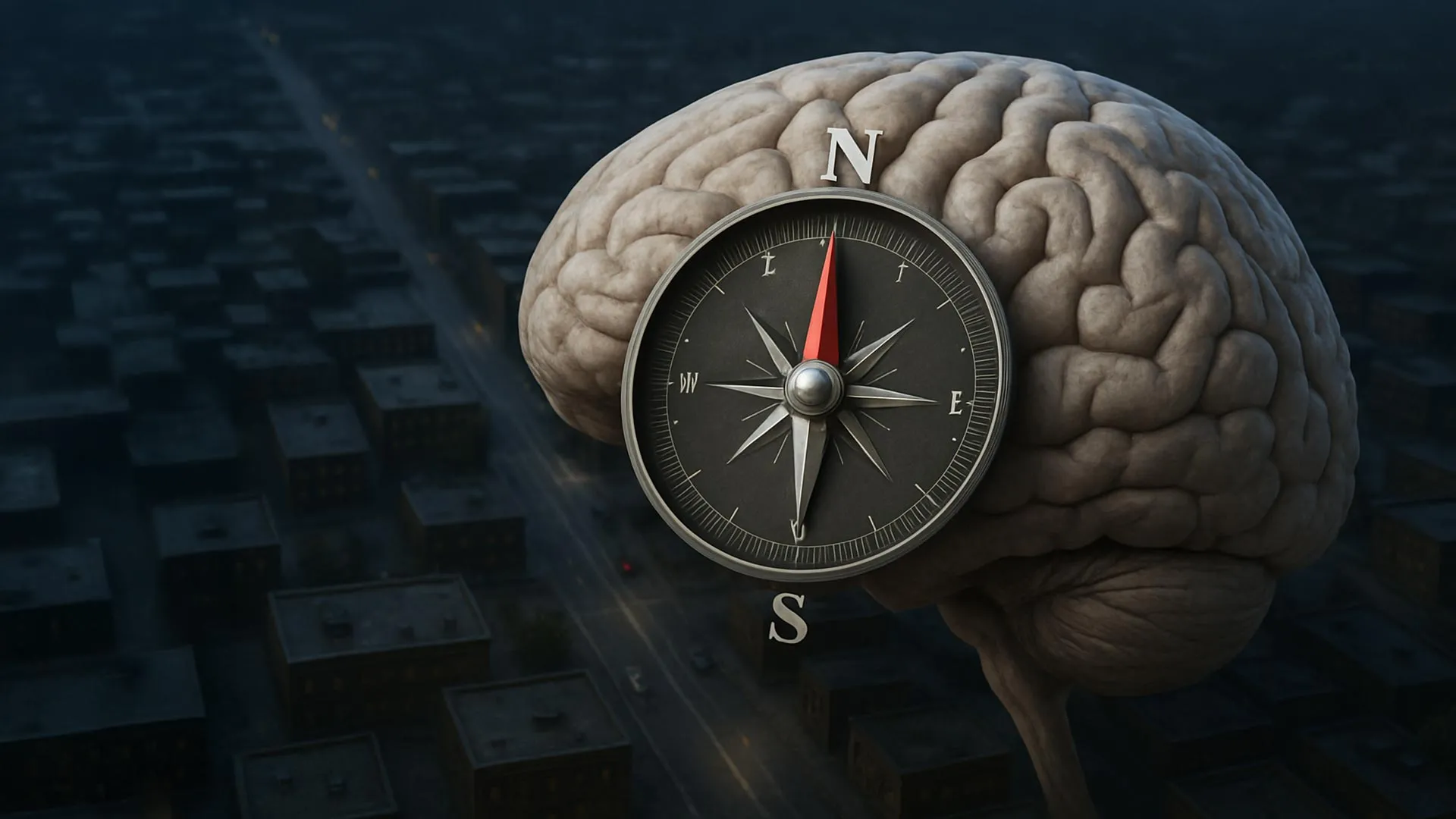
    The stress hormone cortisol can interfere with the brain system that helps people navigate and stay oriented. Researchers from Ruhr University Bochum in Germany found that cortisol weakens the activity of grid cells, specialized nerve cells that are essential for spatial navigation.

    The finding comes from an imaging study involving 40 participants who completed a virtual navigation task while researchers monitored their brain activity with MRI. When participants were given cortisol before the experiment, they had more difficulty finding their way, and the normally precise activity patterns produced by grid cells became much less distinct. The findings were published in PLOS Biology.

    Stress is already known to influence thinking and behavior, but researchers have had a limited understanding of how cortisol affects the specific brain circuits involved in navigation. Dr. Osman Akan from the Ruhr University Bochum, Department of Cognitive Psychology, worked with colleagues from the Department of Neuropsychology and researchers from University Hospital Hamburg-Eppendorf to examine this process more closely.

    Testing Navigation Inside an MRI Scanner

    The experiment included 40 healthy men who participated on two separate days. On one day, each participant received 20 milligrams of cortisol. On the other day, they received a placebo. During both sessions, they performed a spatial orientation task while their brain activity was recorded in an MRI scanner.

    Participants navigated through a large virtual meadow and traveled toward a series of trees. Each tree disappeared once they reached it. Afterward, they had to determine the most direct route back to their original starting position without being shown the correct path.

    Researchers tested navigation under two different conditions. In one version of the virtual environment, there were no permanent landmarks, and the trees served only as temporary destinations. In the other version, participants could use a lighthouse as a fixed reference point.

    Cortisol Makes Navigation Less Accurate

    The results showed that cortisol significantly reduced the participants’ ability to orient themselves. Compared with their performance after receiving the placebo, they made substantially larger errors when attempting to reach their destinations.

    This decline occurred regardless of whether spatial landmarks were available and regardless of how complicated the route was.

    Stress Disrupts the Brain’s Internal GPS

    The effects of cortisol were also visible in the functional MRI data. Under normal conditions, certain nerve cells in the entorhinal cortex become active in a repeating grid pattern during spatial navigation. These cells are known as “grid cells” and effectively function as part of the brain’s internal GPS system.

    After participants received cortisol, this grid-like activity became much less clearly defined. The disruption was especially pronounced when participants navigated without permanent landmarks. Under those conditions, grid cell activity was almost entirely absent.

    “Under stress, the brain loses the ability to effectively utilize its internal navigation maps,” explains Akan.

    Researchers also observed increased activity in another part of the brain called the caudate nucleus after cortisol was administered. This suggests that the brain may attempt to rely on a different navigation strategy when its primary spatial mapping system is impaired.

    “This indicates that the brain is trying to compensate for the loss of the main navigation system in the entorhinal cortex through alternative strategies,” says Akan.

    Possible Relevance to Alzheimer’s Disease

    The findings may also be important for understanding Alzheimer’s disease because the entorhinal cortex is among the first brain regions affected by the condition.

    “Because chronic stress is a risk factor for dementia, our study reveals a critical mechanism for how stress hormones destabilize this sensitive region,” explains Akan.

    brains finds GPS internal MRI scramble stress study
    NCIJ NETWNCIJ NETWORK
    • Website

    Keep Reading

    The dodo bird had a secret sensory world scientists are only now discovering

    Scientists say just 7 days of meditation can rewire your brain

    Climate change doubled likelihood of Canada’s extreme fire weather, study finds

    A 0.42-nanometer breakthrough could push transistors beyond silicon

    Wine, beer, or spirits? Massive study finds a surprising health divide

    Dinosaurs became giants — so why did they never become tiny?

    Add A Comment
    Leave A Reply Cancel Reply

    Editors Picks

    Critical Progress LoadMaster flaw now actively exploited in attacks

    August 10, 2026

    Bybit Sues North Korea Over $1.5B Hack, Wins Order Freezing Assets

    August 10, 2026

    Pennsylvania Confronts an Unfamiliar Climate Hazard: Wildfire Smoke

    August 10, 2026

    Centrist Democrats dismiss Abdul El-Sayed as a freak radical. Do they want to win in 2028 or not? | Nesrine Malik

    August 10, 2026
    Latest Posts

    Certighost Exploit Lets Low-Privileged Active Directory Users Impersonate a Domain Controller

    July 24, 2026

    Silicon Valley Is Completely Divided Over Chinese AI

    July 24, 2026

    Ship insurers restrict war coverage for Saudi Arabian cargoes in Red Sea

    July 24, 2026

    Subscribe to News

    Get the latest sports news from NewsSite about world, sports and politics.

    NCIJ Network is an independent digital news platform delivering trusted investigative journalism, European and global news, in-depth analysis, and fact-based reporting with accuracy, transparency, and integrity.

    Facebook X (Twitter) Instagram Pinterest YouTube

    Critical Progress LoadMaster flaw now actively exploited in attacks

    August 10, 2026

    Bybit Sues North Korea Over $1.5B Hack, Wins Order Freezing Assets

    August 10, 2026

    Pennsylvania Confronts an Unfamiliar Climate Hazard: Wildfire Smoke

    August 10, 2026

    Subscribe to Updates

    Get the latest creative news from FooBar about art, design and business.

    Type above and press Enter to search. Press Esc to cancel.