


Human-induced climate change has more than doubled the likelihood of the extreme weather conditions that fueled Canada’s destructive 2026 wildfire season, finds a rapid analysis.
As of early August, thousands of wildfires torched more than 3.8 million hectares (9.4 million acres) across the country — an area already significantly in excess of Canada’s 30-year annual average of 2.7 million hectares (6.7 million acres). The 2026 wildfire season has escalated with astonishing speed, with approximately 94% of the total burned area accumulating in a brief five-week window between late June and late July.
In its analysis of Canada’s wildfires, the team at World Weather Attribution (WWA), a global network of scientists who examine the influence of climate change on extreme weather events, focused on a metric called daily severity rating (DSR). It integrates temperature, wind, humidity and dryness to measure how difficult a fire is to suppress once ignited.
By combining observational data with climate models, the researchers found that the kind of fires that burned in July 2026 can now be expected in today’s climate influenced by greenhouse gas emissions every two to six years in the Northwest Territories and every six to 15 years in Ontario. In a pre-industrial, cooler climate, such fires would occur every 50 years or so.
“Our research is yet another piece of evidence for this shift being due to climate change,” Theodore Keeping, research associate in extreme weather and climate change at Imperial College London, said in a press release. “The geographic spread of these fires is scary and shows that despite preparedness from wildfire governance, adaptation alone is not enough. We need to rapidly move away from fossil fuels to avoid events like this becoming even more of a reality”.
The blazes in Canada have taken a severe toll on local populations, particularly Indigenous communities, which research suggests account for 42% of wildfire evacuations despite representing only 5% of Canada’s population.
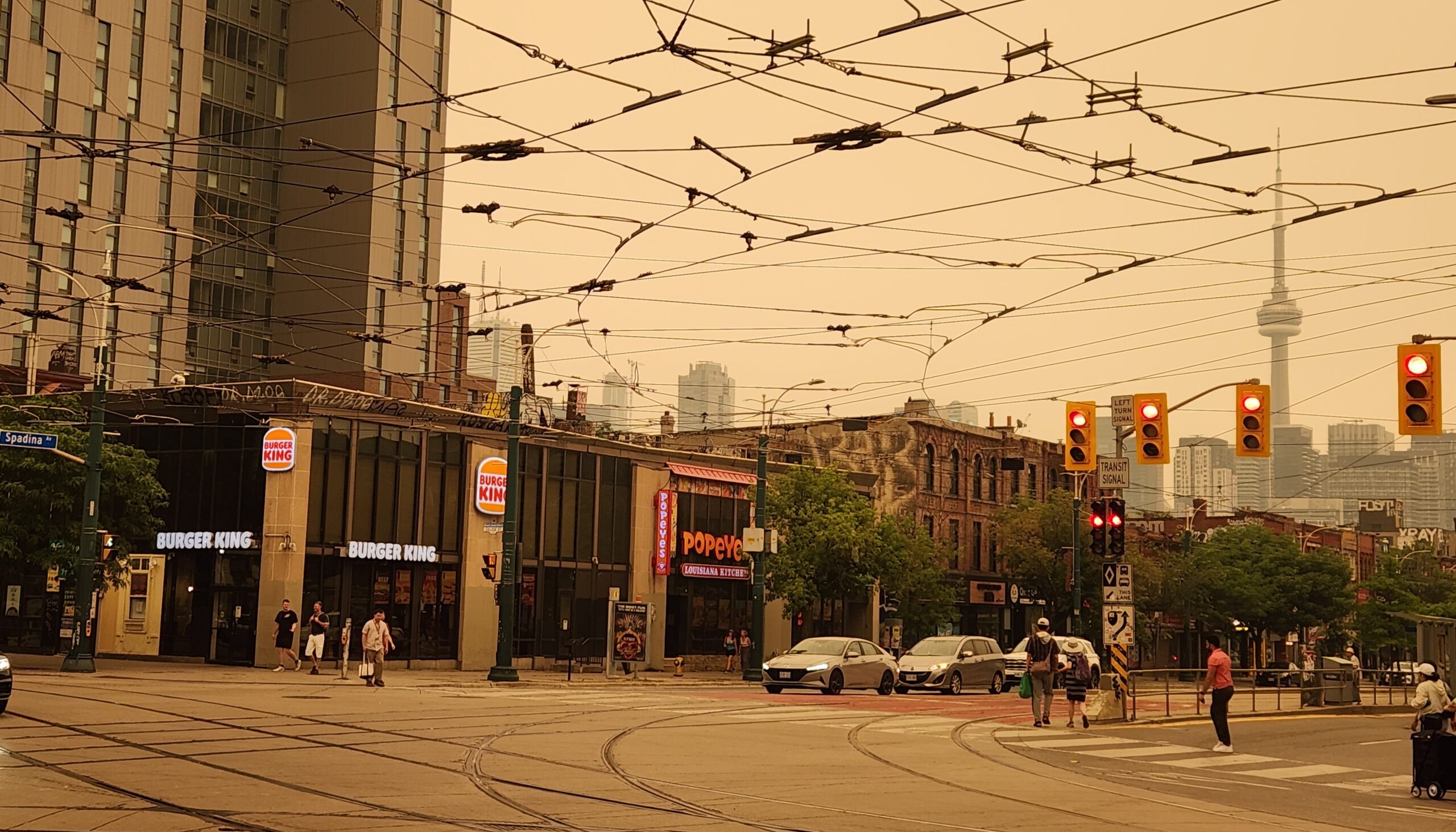
Gaps in emergency communication have forced several remote communities, including the Namaygoosisagagun (Collins) First Nation of Northwestern Ontario, to flee by boat without any official early warning. Additionally, toxic smoke plumes traveled hundreds of kilometers, exposing more than 120 million people across Canada and the U.S. to hazardous air quality, according to the report.
“Indigenous communities, families, and firefighters are bearing the brunt of losses of homes, traditional practices, and also the long-term mental health impacts,” said Roop Singh, head of urban and attribution at the Red Cross Red Crescent Climate Centre, in the press release. “A few years ago a fire of this magnitude would have been a rare event. It is now happening more often as a result of climate change.”
While Canada has recently increased investments in its capacity to suppress wildfires and interagency coordination, researchers said that physical limits to adaptation are being reached.
Banner image: Wildfire smoke colouring the air orange in Toronto on the morning of July 15, 2026. View over the intersection of College St and Spadina Avenue looking southeast. Image courtesy of ARandomName123 via Wikimedia Commons (CC BY-SA 3.0).
