

Close Menu
NCIJ Network NCIJ Network
    What's Hot

    Practical lessons from deploying AI securely at scale

    August 8, 2026

    Trump Media Abandons Crypto Treasury, Prediction Market Ventures

    August 8, 2026

    Suriname moves to evict Mennonites and illegal Amazon settlers

    August 8, 2026
    Facebook X (Twitter) Instagram
    Trending
    • Practical lessons from deploying AI securely at scale
    • Trump Media Abandons Crypto Treasury, Prediction Market Ventures
    • Suriname moves to evict Mennonites and illegal Amazon settlers
    • Pakistan, Saudi Arabia, Turkey Sign a Mutual Defense Pact
    • Trump blasts appeals court for halting White House ballroom construction, claiming decision is a ‘national security threat’ – live | Republicans
    • Appeals Court Upholds Block on Trump Ballroom Construction
    • They’re Battle-Tested Democrats. Do Voters Care?
    • Zohran Mamdani’s NYC Tech Team Is What DOGE Should Have Been
    • About
      • Our Team
      • Editorial Policy
      • Editorial Independence
      • International Support
    • Trust & Standards
      • AI Usage Policy
      • Conflict of Interest Policy
      • Corrections Policy
      • Ethics Policy
      • Fact-Checking Policy
      • Source Protection
    • Get Involved
      • Guide for Sources
      • Support Independent Journalism
    • Legal
      • Cookie Policy
      • Privacy Policy
      • Terms of Use
    Facebook X (Twitter) Instagram
    NCIJ Network NCIJ Network
    Saturday, August 8
    • Home
    • World
    • Ai
    • Business
    • Politics
    • Health
    • Crypto
    • Science
    • Technology
    • Cybersecurity
    • Defense & Security
    • Economy
    • Energy
    • Europe
    • More
      • Fact Check
      • Investigations
      • Opinion & Analysis
      • Environment
    NCIJ Network NCIJ Network
    Home»Science

    The key to colonizing Mars may be hidden inside asteroids

    NCIJ NETWNCIJ NETWORKBy NCIJ NETWNCIJ NETWORKAugust 7, 2026 Science No Comments4 Mins Read
    Share
    Facebook Twitter LinkedIn Pinterest Email

    I recently rewatched Armageddon, complete with Bruce Willis, oil drillers sent into space, and an asteroid the size of Texas racing toward Earth. Beneath all the Hollywood spectacle is a fascinating question: What could humanity actually do with an asteroid if we were able to reach and use one?

    The most valuable answer may have nothing to do with destroying it. Sorry, Bruce. Asteroids could instead help us build an entirely new world.

    The Supply Problem Facing Mars

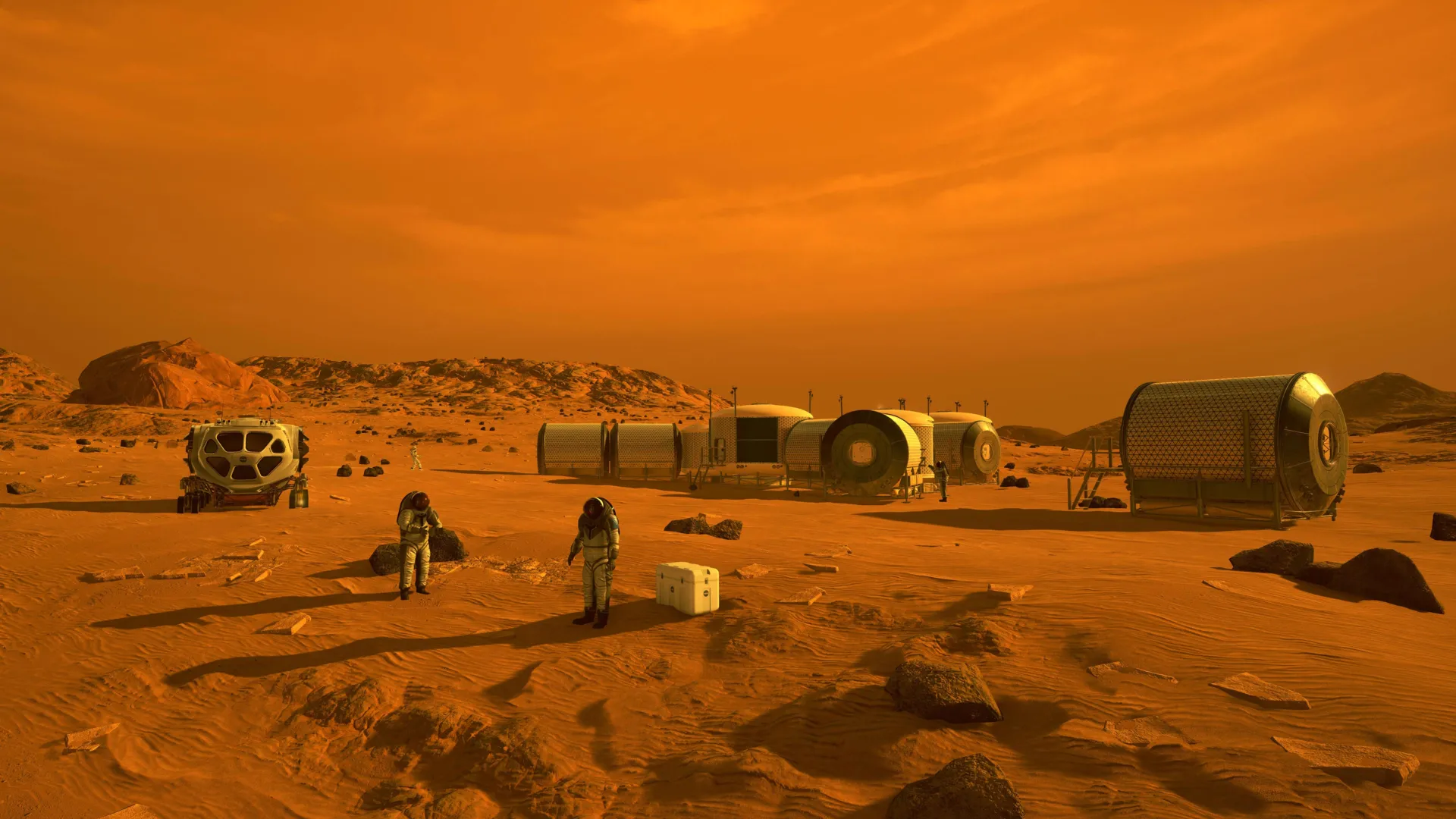
    Establishing a colony on Mars would involve far more than solving difficult engineering challenges. It would also require a reliable system for moving supplies, equipment, and raw materials across the Solar System.

    Logistics may not sound especially exciting, but it could determine whether humans ever become a multiplanetary species or remain permanently tied to Earth.

    A settlement on Mars would need more than food, water, and oxygen. It would require enormous amounts of metal, including structural steel for habitats, aluminum for machinery, and iron for tools. Equipment would also wear down, break, and eventually need to be replaced.

    Regularly shipping all of those materials from Earth would not be a practical long-term solution. Launching a tonne of cargo can cost tens of millions of pounds, while a trip to Mars usually takes between six and nine months, depending on the positions of Earth and Mars in their orbits. That is far too slow and expensive for a dependable hardware supply system.

    Mining Asteroids for Martian Metals

    Researchers at EPFL in Switzerland have now calculated how asteroid mining could supply metals directly to Mars.

    Millions of asteroids travel through the Solar System. Some of them, called M type asteroids, contain large quantities of iron, nickel, and other useful metals. In simple terms, they are enormous mineral deposits moving through space.

    The central question is whether spacecraft could reach these asteroids, extract useful materials, and transport them to Mars without consuming so much energy and fuel that the entire effort becomes impractical.

    The study’s answer is cautiously optimistic, although success would depend on several important conditions.

    Finding the Best Space Supply Routes

    The researchers used a computer program to test thousands of possible combinations across several potential supply chains. Their calculations included the energy needed to travel between Mars and different asteroids, the amount of metal that could realistically be collected, and the fuel required to complete the journey.

    Return fuel is especially important, and this is where the plan becomes more inventive.

    Some asteroids are carbonaceous, meaning they contain carbon and water ice. With the right processing methods, those materials could be converted into rocket propellant in space. Spacecraft would then avoid carrying all of their return fuel from Earth.

    The researchers included this possibility directly in their supply chain models.

    The Right Asteroids Could Make It Work

    The results point to specific asteroids that could be reached using existing spacecraft technology. For these targets, the energy required for the full journey may be low enough to make mining and delivery worthwhile.

    However, choosing the correct asteroid would be critical. A poorly selected target might require so much fuel that the value of the metals brought back would not justify the mission.

    The study does not mean asteroid mining is about to begin. Humanity is still a long way from operating its first mine in space.

    Its importance lies in showing that the logistics problem can be solved. A future supply network could move metals from asteroids to Mars while using propellant produced from asteroid resources.

    A Mars colony would need people to build it. Just as importantly, it would need a dependable system for delivering the materials those builders require. This research suggests such a system is possible.

    asteroids colonizing hidden key Mars
    NCIJ NETWNCIJ NETWORK
    • Website

    Keep Reading

    Scientists find unexpected life on Ötzi the Iceman’s 5,300-year-old body

    Wearable ultrasound patch boosts REM sleep without drugs or surgery

    Earth’s molten core suddenly reversed direction — and scientists don’t know why

    Scientists tracked 12 people in Antarctica for 10 months—what happened could shape future Mars missions

    UCLA scientists discover how to guide heat like light at room temperature

    Ancient Greek rings may have been forged with iron from meteorites

    Add A Comment
    Leave A Reply Cancel Reply

    Editors Picks

    Practical lessons from deploying AI securely at scale

    August 8, 2026

    Trump Media Abandons Crypto Treasury, Prediction Market Ventures

    August 8, 2026

    Suriname moves to evict Mennonites and illegal Amazon settlers

    August 8, 2026

    Pakistan, Saudi Arabia, Turkey Sign a Mutual Defense Pact

    August 8, 2026
    Latest Posts

    Angela Rayner rules out rent controls in England

    July 24, 2026

    Merz names Nina Warken chancellery chief in Cabinet reshuffle – POLITICO

    July 24, 2026

    US attacks Iran as Houthis allow Chinese ships to pass: What’s the latest? | US-Israel war on Iran News

    July 24, 2026

    Subscribe to News

    Get the latest sports news from NewsSite about world, sports and politics.

    NCIJ Network is an independent digital news platform delivering trusted investigative journalism, European and global news, in-depth analysis, and fact-based reporting with accuracy, transparency, and integrity.

    Facebook X (Twitter) Instagram Pinterest YouTube

    Practical lessons from deploying AI securely at scale

    August 8, 2026

    Trump Media Abandons Crypto Treasury, Prediction Market Ventures

    August 8, 2026

    Suriname moves to evict Mennonites and illegal Amazon settlers

    August 8, 2026

    Subscribe to Updates

    Get the latest creative news from FooBar about art, design and business.

    Type above and press Enter to search. Press Esc to cancel.