

Close Menu
NCIJ Network NCIJ Network
    What's Hot

    UN Security Council Will Get Advice on AI Risks From Tech Giants Building It

    September 22, 2026

    Renewables: Grid shortages are forcing India to produce and waste green energy

    September 22, 2026

    Australia news live: Joyce says One Nation talking to Coalition about power-sharing agreement; fog causes Sydney airport delays | Australia news

    September 22, 2026
    Facebook X (Twitter) Instagram
    Trending
    • UN Security Council Will Get Advice on AI Risks From Tech Giants Building It
    • Renewables: Grid shortages are forcing India to produce and waste green energy
    • Australia news live: Joyce says One Nation talking to Coalition about power-sharing agreement; fog causes Sydney airport delays | Australia news
    • Chinese president arrives in US with new energy leverage as war rattles global markets
    • The Guardian view on Keynes in the West End: James Graham’s latest play captures the zeitgeist | Editorial
    • Far-right activist Daniel Thomas slashes dinghy in Channel with blade while rescue worker onboard | The far right
    • Paramount will need to release way more movies to make this merger work
    • Check Point Warns of Management Server Zero-Day Exploited in Targeted Attacks
    • About
      • Our Team
      • Editorial Policy
      • Editorial Independence
      • International Support
    • Trust & Standards
      • AI Usage Policy
      • Conflict of Interest Policy
      • Corrections Policy
      • Ethics Policy
      • Fact-Checking Policy
      • Source Protection
    • Get Involved
      • Guide for Sources
      • Support Independent Journalism
    • Legal
      • Cookie Policy
      • Privacy Policy
      • Terms of Use
    Facebook X (Twitter) Instagram
    NCIJ Network NCIJ Network
    Tuesday, September 22
    • Home
    • World
    • Ai
    • Business
    • Politics
    • Health
    • Crypto
    • Science
    • Technology
    • Cybersecurity
    • Defense & Security
    • Economy
    • Energy
    • Europe
    • More
      • Fact Check
      • Investigations
      • Opinion & Analysis
      • Environment
    NCIJ Network NCIJ Network
    Home»Science

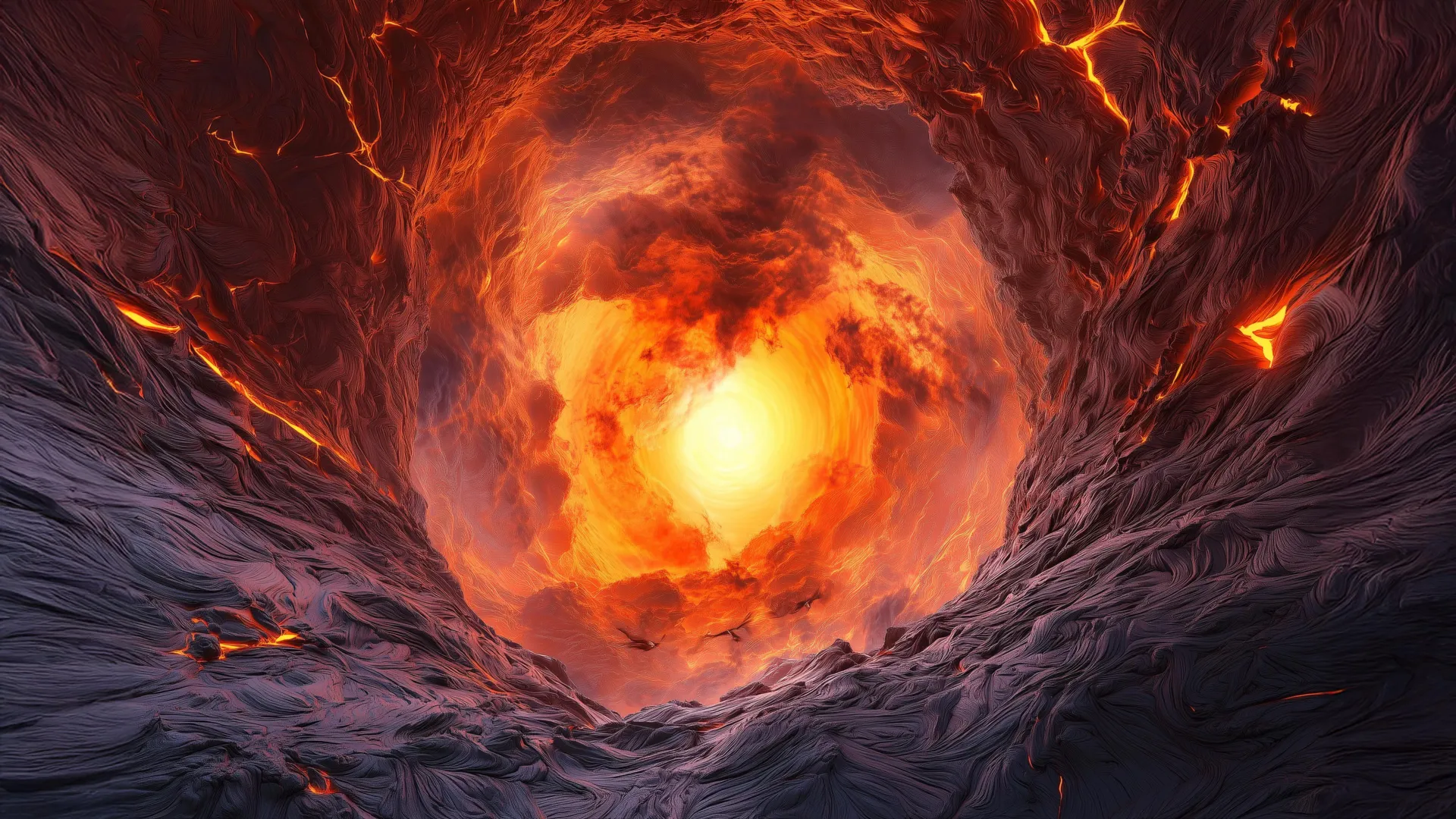
    A colossal magma system has been hiding beneath Tuscany

    NCIJ NETWNCIJ NETWORKBy NCIJ NETWNCIJ NETWORKAugust 5, 2026 Science No Comments4 Mins Read
    Share
    Facebook Twitter LinkedIn Pinterest Email

    Scientists have discovered an enormous body of magma deep beneath Tuscany, even though the region shows few of the surface clues typically associated with such systems. Using a seismic imaging method called ambient noise tomography, researchers detected approximately 6,000 km3 of volcanic fluids buried 8 to 15 km below the surface. (6,000 km3 equals the volume of 2.4 billion standard Olympic swimming pools.)

    The international team included scientists from the University of Geneva (UNIGE), the Institute of Geosciences and Earth Resources (CNR-IGG), and the National Institute of Geophysics and Volcanology (INGV). Their findings, published in Communications Earth & Environment, could also help researchers locate geothermal reservoirs, lithium deposits, and rare earth elements connected to deep magmatic activity.

    A Vast Magma System With No Obvious Warning Signs

    Some of the world’s best-known volcanic regions, including Yellowstone National Park in the United States, Lake Toba in Indonesia, and Lake Taupo in New Zealand, sit above magma reservoirs containing thousands of cubic kilometers of molten material.

    Scientists usually identify these systems through visible or measurable evidence at the surface. Such clues can include ancient eruption deposits, volcanic craters, rising or sinking ground, and escaping gases. When those signs are absent, however, even enormous quantities of magma can remain undetected within Earth’s crust.

    That appears to have happened in Tuscany. Researchers from UNIGE, working with specialists from the Institute of Geosciences and Earth Resources (IGG-CNR) and the National Institute of Geophysics and Volcanology (INGV), mapped approximately 6,000 km3 of volcanic fluids within the continental crust.

    The newly identified material extends across Tuscany at depths ranging from 8 to 15 km.

    No Current Volcanic Threat

    Over geological timescales, a magma body of this size could theoretically play a role in the development of a supervolcano. Researchers emphasize, however, that the system does not currently represent a threat.

    “We knew that this region, which extends from north to south across Tuscany, is geothermally active, but we did not realize it contained such a large volume of magma, comparable to that of supervolcanic systems such as Yellowstone,” explains Matteo Lupi, associate professor in the Department of Earth Sciences at UNIGE’s Faculty of Science, who led the study.

    Using Earth’s Background Noise as an Underground X-ray

    The team located the magma through ambient noise tomography, a technique commonly used by seismologists to examine structures hidden below the surface. The method functions like an “X-ray” of Earth’s crust by analyzing subtle vibrations continuously produced by ocean waves, wind, and human activity.

    As these vibrations move through the ground, seismic instruments at the surface record how quickly the waves travel. The researchers deployed around 60 high-resolution sensors for the study.

    Seismic waves generally slow down when they pass through unusually hot or partially molten material. By identifying areas where the waves moved at lower velocities, the researchers were able to pinpoint the likely location of magma.

    They then combined the measurements to create a three-dimensional reconstruction of the underground structures across the study area.

    New Tool for Geothermal Energy and Critical Minerals

    The discovery has implications beyond understanding Tuscany’s geology. Because ambient noise tomography can survey large underground regions relatively quickly and inexpensively, it may provide a useful way to search for geothermal energy and mineral resources.

    Deep magmatic systems are often associated with deposits of lithium and rare earth elements. These materials are increasingly important for technologies such as electric vehicle batteries and other components needed for the energy transition.

    “These results are important both for fundamental research and for practical applications, such as locating geothermal reservoirs or deposits rich in lithium and rare earth elements, which are used, for example, in electric vehicle batteries. In addition to their great scientific interest, these studies show that tomography, by exploring the subsoil quickly and at low cost, can be a useful tool for the energy transition,” concludes Matteo Lupi.

    Beneath colossal Hiding magma System Tuscany
    NCIJ NETWNCIJ NETWORK
    • Website

    Keep Reading

    NASA-Funded Research Finds Complex Life Defying Record Heat

    Meet the ‘fire amoeba,’ a record-breaking survivor of extreme heat

    Risks of Decompression Sickness and Venous Thromboembolism during Spaceflight and Patent Foramen Ovale Implications

    Humpback whale mother may have mourned her dead calf for days

    For the first time, scientists watch sound jump between quantum states

    This emerging treatment could help people avoid knee replacement surgery

    Add A Comment
    Leave A Reply Cancel Reply

    Editors Picks

    UN Security Council Will Get Advice on AI Risks From Tech Giants Building It

    September 22, 2026

    Renewables: Grid shortages are forcing India to produce and waste green energy

    September 22, 2026

    Australia news live: Joyce says One Nation talking to Coalition about power-sharing agreement; fog causes Sydney airport delays | Australia news

    September 22, 2026

    Chinese president arrives in US with new energy leverage as war rattles global markets

    September 22, 2026
    Latest Posts

    COLDCARD security audit phishing attack installs remote access tool

    August 5, 2026

    Reddit aims to make ‘karma’ less important for first-time posters with shift to AI moderation tools

    August 5, 2026

    Right turn on green: is the Telegraph changing its tune on the climate? | Daily Telegraph

    August 5, 2026

    Subscribe to News

    Get the latest sports news from NewsSite about world, sports and politics.

    NCIJ Network is an independent digital news platform delivering trusted investigative journalism, European and global news, in-depth analysis, and fact-based reporting with accuracy, transparency, and integrity.

    Facebook X (Twitter) Instagram Pinterest YouTube

    UN Security Council Will Get Advice on AI Risks From Tech Giants Building It

    September 22, 2026

    Renewables: Grid shortages are forcing India to produce and waste green energy

    September 22, 2026

    Australia news live: Joyce says One Nation talking to Coalition about power-sharing agreement; fog causes Sydney airport delays | Australia news

    September 22, 2026

    Subscribe to Updates

    Get the latest creative news from FooBar about art, design and business.

    Type above and press Enter to search. Press Esc to cancel.