


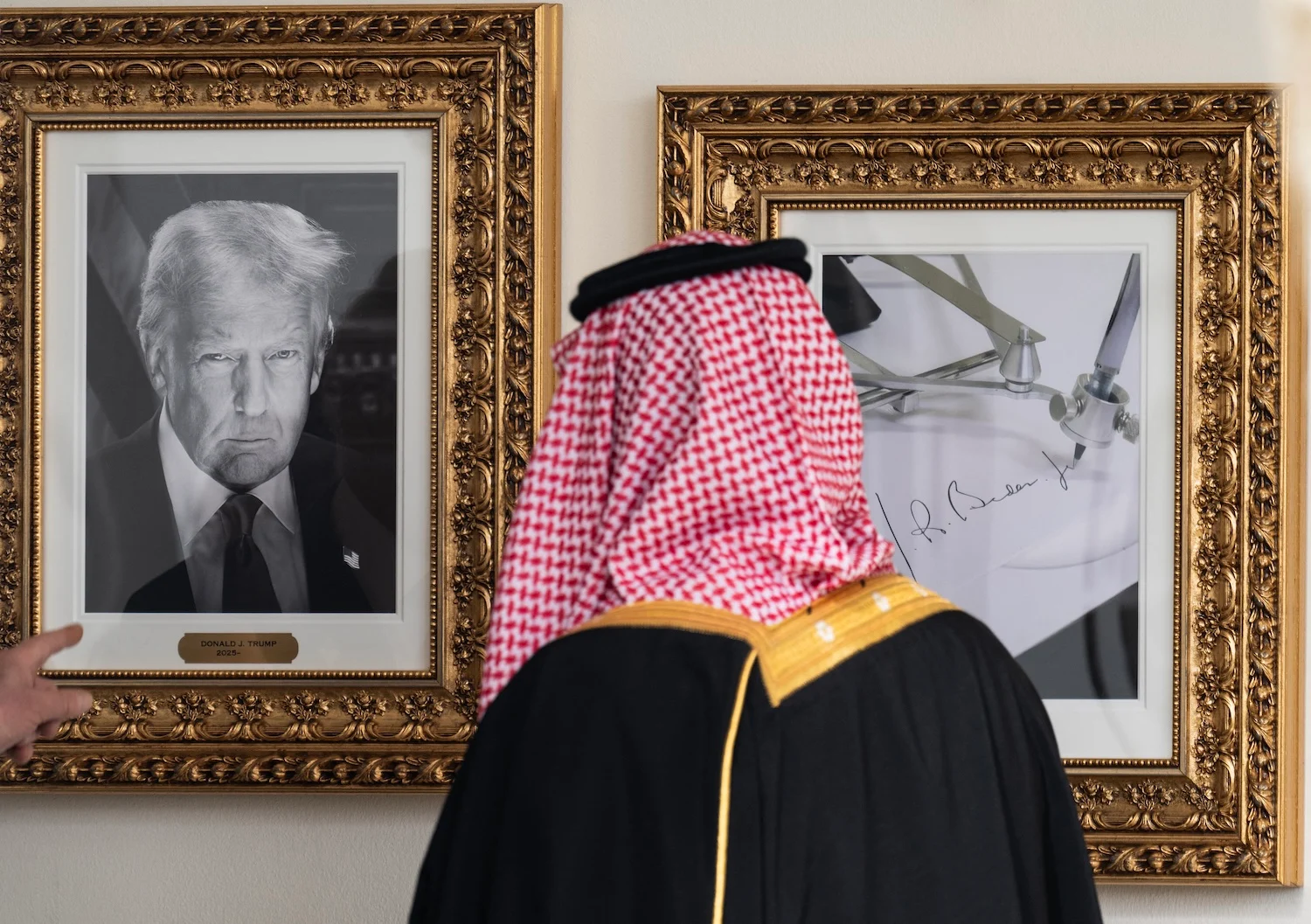
I feel bad for the Saudis. They find themselves hammered between the Iranians and the Houthis, an unhappy situation thanks in part to a feckless and mercurial U.S. president. Over the past decade, Saudi Arabia’s leaders have wanted nothing more than regional stability while they go about the business of transforming their country. For a while there, the Middle East was just stable enough for Crown Prince Mohammed bin Salman and his advisors to dream big about a radically changed kingdom by 2030.
And then Hamas struck Israel in October 2023, kicking off a regional war. The Saudis have done everything they can to steer clear of that war—a rational response to the violence and bloodshed. And yet, Riyadh’s own lack of strategic forethought has made the country’s problems worse.
I feel bad for the Saudis. They find themselves hammered between the Iranians and the Houthis, an unhappy situation thanks in part to a feckless and mercurial U.S. president. Over the past decade, Saudi Arabia’s leaders have wanted nothing more than regional stability while they go about the business of transforming their country. For a while there, the Middle East was just stable enough for Crown Prince Mohammed bin Salman and his advisors to dream big about a radically changed kingdom by 2030.
And then Hamas struck Israel in October 2023, kicking off a regional war. The Saudis have done everything they can to steer clear of that war—a rational response to the violence and bloodshed. And yet, Riyadh’s own lack of strategic forethought has made the country’s problems worse.
The latest escalation between Saudi Arabia and Ansar Allah (aka the Houthis)—which took place on July 13 when the Saudi Air Force allegedly bombed the runway at Sanaa International Airport—was, in a word, unnecessary, and in more words, a function of poor judgment.
Why the Saudis would start this fight is a mystery. Apparently, they were acting on behalf of Yemen’s internationally recognized government, which has been concerned about violations of a U.N. arms embargo on the Houthis. The strikes on the airport were intended to prevent the landing of an Iranian Mahan Air flight conveying a Houthi delegation back from the funeral of Ayatollah Ali Khamenei. Mahan Air is the Islamic Revolutionary Guard Corps’ (IRGC) carrier of choice for supplying its friends around the region. It is reasonable to believe that the Houthis were carrying more than just pistachios and carpets back from Tehran.
Even stipulating that the flight was a violation of the Security Council resolution, it does not make a lot of sense to crater the runway in Sanaa. With all the Houthi and IRGC provocations that Riyadh has let slide in recent years, allowing the Houthis to land should have been an easy call. The war between Saudi Arabia and the Houthis had effectively come to an end (even though Saudi officials privately grumble that the Iranians never lived up to their commitments, including those regarding Yemen after Riyadh normalized ties with Tehran in 2023). The risk inherent in bombing the airport seems greater than the reward. Surely the Saudis could have looked the other way.
The Houthis, for their part, did not look the other way. They responded by firing on Abha International Airport in Asir province and on oil facilities in Jazan, on the Red Sea coast near Yemen. They also laid on a blockade of Saudi shipping in the Bab el-Mandeb Strait. Meanwhile, Iraqi militias aligned with Iran and the Houthis targeted Aramco facilities in Yanbu and the Saudi oil processing plant at Abqaiq, which is massive and critical to global energy supplies.
To make matters worse, the Saudis are facing the Houthis alone. Regional leaders condemned the Houthi attacks and expressed solidarity with the Saudis, but none of kingdom’s Arab neighbors came forward to help. Most of them are too weak and timorous to confront the Houthi threat.
The one exception might be the United Arab Emirates, but in another moment of strategic mismanagement last December, Riyadh alienated Abu Dhabi over their joint war in Yemen. At the time, Emirati allies in Yemen known as the Southern Transitional Council (STC) took over most of the southern part of the country and declared their intention to establish independence. The Saudis took saw it as an end-run around their efforts to reach a diplomatic and political resolution to Yemen’s yearslong crisis and preserve the country’s unity. So they bombed STC forces, drove its leadership out of the country, and demanded that the Emiratis stay out of Yemen. The folks in Abu Dhabi obliged.
I can understand why the Saudis were angry, but in their wrath, they lost sight of the big picture. The STC’s dramatic move was sure to put the Houthis and their IRGC patrons on the defensive, with southern forces right on the doorstep of Houthi-controlled areas. The Saudis claimed to be concerned about the breakup of an Arab state and the precedent that it would set. But a southern Yemen aligned with the UAE and Saudi interests against the Houthis seems like a better outcome than fruitless talks with the Houthis over Yemen’s future.
Around the same time, the Saudis made another strategic error. Rather than welcoming—or at least tolerating—Israel’s recognition of Somaliland, Saudi Arabia was a vocal opponent along with Turkey, Qatar, and Arab members of the African Union. It makes sense for the Egyptians to oppose the Israeli move because Ethiopia, which is a major rival of Egypt in the Horn of Africa, maintains strong ties with Somaliland. The Turks were opposed because Somaliland gives the Israelis a toehold in the Horn, where Turkey has been building up its presence for more than a decade. The Qataris, who are investors in Somaliland, were playing both sides as they normally do.
But the Saudi opposition did not make sense. An independent Somaliland that is aligned with Israel and affords the Israelis a presence in the country puts pressure on the Houthis and the IRGC. That should be good for Riyadh, even if Saudi Arabia could not celebrate publicly. Saudi leaders seemed too angry at the Emiratis—who they saw as in cahoots with the Israelis in Somaliland—to grasp the strategic win. Meanwhile, Saudi Arabia’s allies in holding Somalia together—Turkey, Egypt, and Qatar—are unlikely to help the Saudis with their Houthi problem.
The fact that U.S. President Donald Trump has occupied the Oval Office during this period of Saudi misfortunate is particularly painful. The Saudis loathed President Barack Obama for his nuclear deal with Iran and worried that President Joe Biden would undercut their position with a follow-up agreement—which never materialized. In fact, Biden ended up strengthening ties with the kingdom and spent his last two years in office negotiating a bilateral security pact. Still, the Saudis (like other Persian Gulf countries) seemed very much to prefer Trump to his Democratic opponent, former Vice President Kamala Harris, because Trump allegedly gets stuff done and is good for business and investment.
And yet, when Saudi Arabia came to an agreement with the Trump administration that would give them access to nuclear technology, the president pulled the rug out from under them. A day after his secretary of energy signed the deal, Trump added a critical condition: normalization of relations with Israel. This is something that the Saudis have said they will only do after the establishment of a Palestinian state, which Israelis are unwilling to abide.
It was not the first time that Trump burned the Saudis. He broke the Carter doctrine in September 2019, when he failed to respond to Iran’s attacks on Saudi oil facilities. More recently, his entire misbegotten Operation Epic Fury has empowered Tehran at the expense of its neighbors on the western side of the Gulf. Once Trump finds a way out of the conflict, he will leave the Saudis and others to deal with the fallout.
No doubt, 2026 has been Saudi Arabia’s annus horriblis—and there are still more than four months to go. The Saudis wish they had the luxury of sealing their country off from the region’s problems, but they can’t. Riyalpolitik—the act of buying off those who might do them harm—only goes so far. To improve their position, the Saudis need to discard the principles and emotions that have driven their policymaking and develop a better sense of their strategic environment. Only then will they have a chance to shape the region, rather than letting others shape it for them.
