


Reading Time: 3 minutes
Editor’s note: This column was excerpted from an open letter sent on July 30, 2026, to Madison city officials. On Aug. 2, Madison Mayor Satya Rhodes-Conway announced plans to remove barricades and tow vehicles occupying Williamson Street — while relocating memorial items.
On July 22 Madison police shot Corey Ruiz on Williamson Street. That shooting should have been a moment of profound self-examination for this city. Instead, what has followed has exposed another failure of leadership.
Let me be clear: The shooting raises profound questions about Madison’s use of force and demands a full, independent investigation and public accountability. A man is dead in a system that too often relies on armed police to respond to public health and social crises.
But what has happened in the days since has become something else entirely.
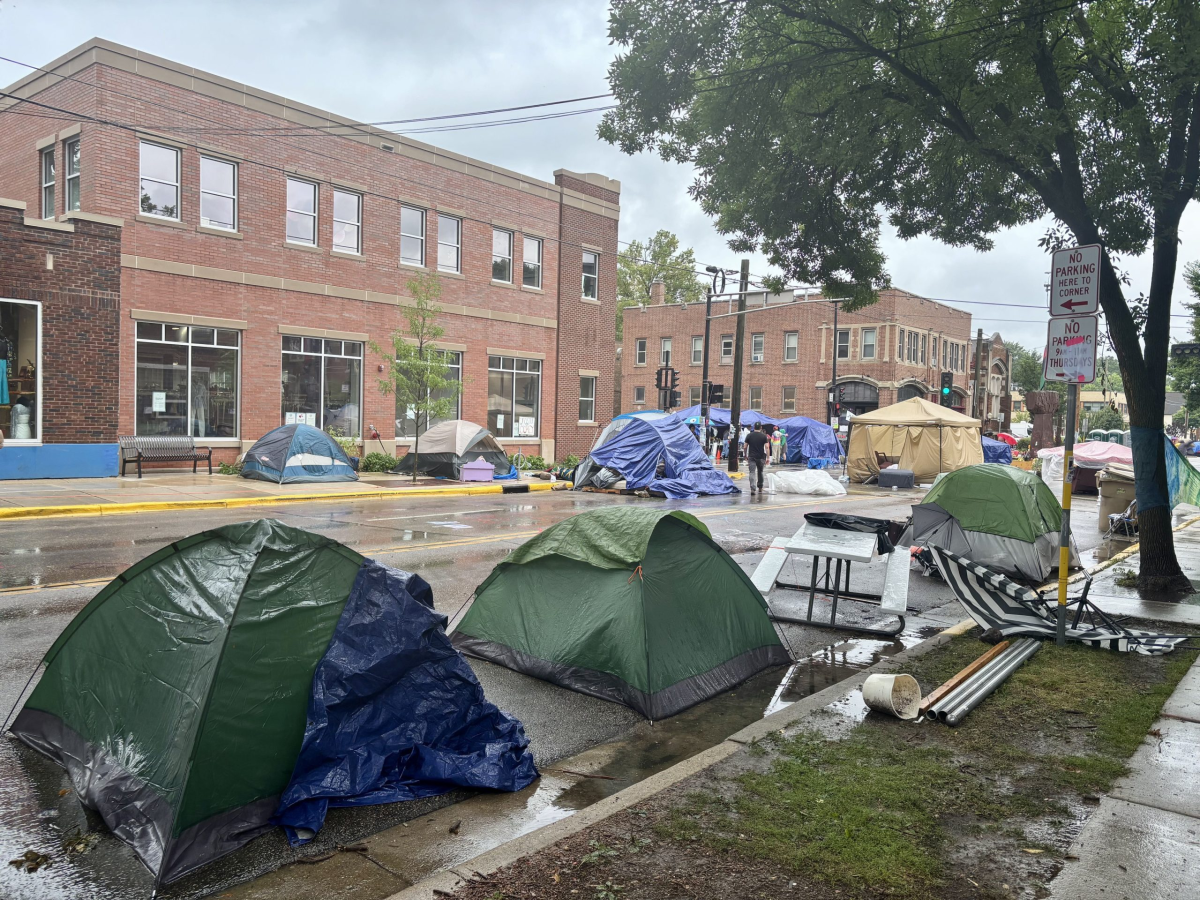
I spent time walking along Williamson Street this week and speaking with business owners. I watched volunteers attempting to provide mental health support, addiction services, sanitation and basic necessities that should never have fallen on their shoulders.
This is not a functioning response.
I saw broken glass, discarded needles, human waste and other signs of a neighborhood under tremendous strain. Businesses that have served this community for decades are struggling to stay open. That includes St. Vincent de Paul, which helps keep families housed by paying utility bills and distributes thousands of diapers every month.
Small business owners who had nothing to do with the shooting are seeing their livelihoods threatened as city leaders allow others to shoulder responsibilities that should belong to the government.
This crisis was entirely predictable.
Williamson Street has long been home to organizations that provide food assistance, harm reduction resources and help navigating housing and social services. Those organizations perform essential work, and our community is better because they exist. But they were never meant to become substitutes for a comprehensive public health system.
When a city fails to provide sufficient emergency shelter, addiction treatment, psychiatric care, crisis response, supportive housing and outreach, people in crisis congregate wherever help can be found. This is the consequence of the government failing to build a system capable of meeting people’s basic needs.
Instead of investing in that system, Madison has effectively concentrated its social safety net in one neighborhood.
That isn’t compassionate.
It isn’t sustainable.
And it isn’t fair — to people struggling with addiction or mental illness, to the volunteers trying to help them, or to the residents and small businesses that call Williamson Street home.
What disturbs me most is that everyone now seems to be fighting the wrong battle.
The shooting of Ruiz should have united Madison around demanding better policing and stronger public health infrastructure.
Instead, neighbors are turning against protesters. Protesters are turning against businesses. Businesses are turning against the city. Residents are exhausted. People experiencing homelessness and addiction remain trapped in the same circumstances that existed before the shooting.
No one is winning.

I’ve read dozens of comments from Madison residents, many of whom initially supported the demonstrations but now say they feel abandoned by city leadership. They describe blocked businesses, unsafe conditions, interrupted access to essential services, fire hazards, open drug use and a neighborhood that increasingly feels less like a protest than a place where the government has stopped governing. Whether every account is accurate is beside the point. The common thread is unmistakable: People feel abandoned.
Government exists precisely for moments like this.
It is not enough to allow volunteers to build makeshift public health services on a public street while trained professionals remain absent.
It is not enough to leave sanitation to neighbors cleaning up broken glass, discarded needles and human waste outside their own storefronts.
It is not enough to ask local businesses to absorb devastating financial losses while waiting indefinitely for a resolution.
And it is certainly not enough to respond to profound social failures primarily with police.
Madison prides itself on progressive values. Those values mean very little if they amount to outsourcing public health to nonprofits, addiction treatment to volunteers, housing to charities, sanitation to neighborhood residents and crisis intervention to police officers.
Williamson Street deserves better.
The people living with addiction deserve better.
The business owners deserve better.
The residents deserve better.
Corey Ruiz deserved better.
If this city truly wants to honor his memory, then stop managing symptoms and start addressing causes.
Invest in mental health infrastructure.
Expand shelter and supportive housing.
Fund addiction treatment and professional outreach.
Restore sanitation and public safety.
Support the businesses and nonprofits that have borne the costs of this crisis.
Hold officers accountable when they use unlawful or excessive force.
And stop expecting one neighborhood to carry burdens that belong to all of Madison.
The tragedy began years before the shooting when we accepted that nonprofits, charities, neighborhood volunteers and police officers could substitute for the public systems that are supposed to be run by the government.
The shooting was one terrible consequence of that failure.
The chaos that has followed is another.
Madison can do better.
Right now, it is choosing not to.
Sarah A. Larsen is a Madison resident.

Guest commentaries reflect the views of their authors and are independent of the nonpartisan, in-depth reporting produced by Wisconsin Watch’s newsroom staff. Want to join the Wisconversion? See our guidelines for submissions.
