


Most of the world seems to misunderstand why global capital is not financing the developing world’s climate transition. The real problem lies in the structure of price formation, which policymakers can best address by focusing on three key priorities.
NEW DELHI—The world possesses an enormous stock of long-term savings, and the Global South boasts a robust pipeline of commercially sound climate projects. But the channel connecting them is blocked by what amounts to a currency wall.
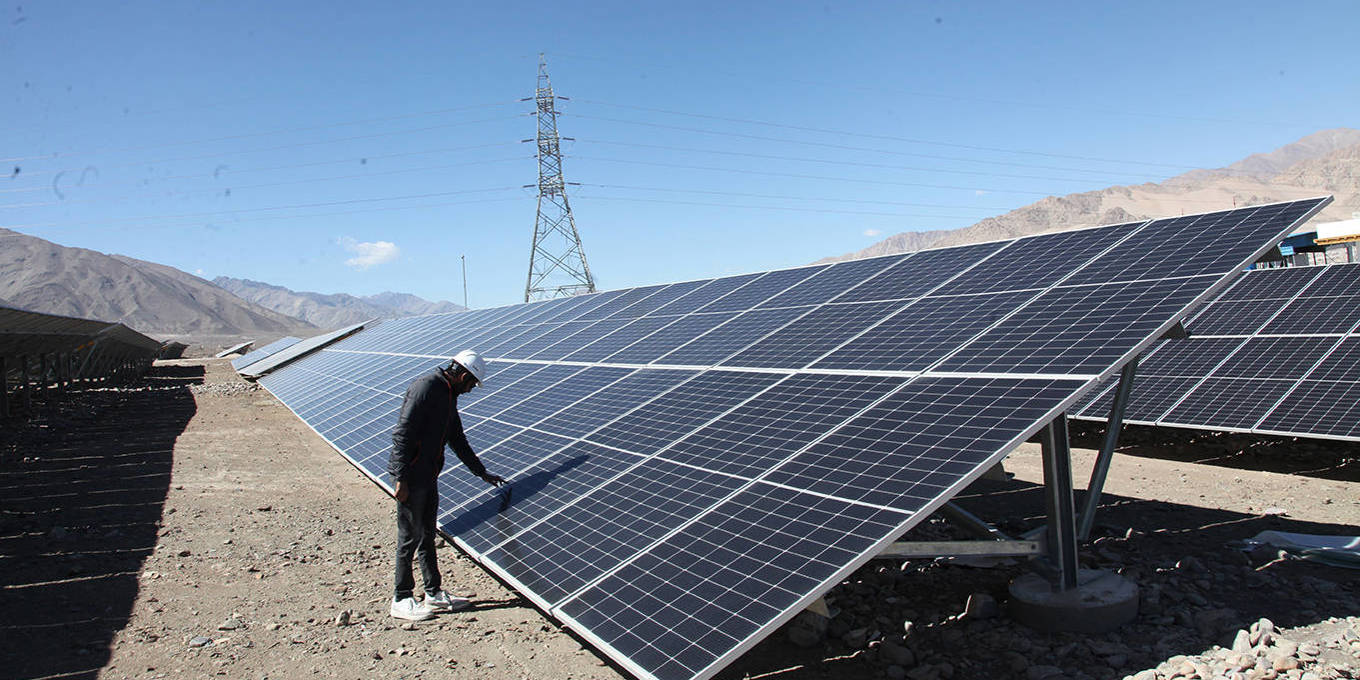
Standard explanations for global capital’s failure to reach developing-economy climate projects emphasize poor project quality, weak institutions, and political risk. But solar parks in India, wind programs in South Africa, and electric-bus fleets in Latin America deploy proven technologies through competitive procurement and reward their domestic investors. The real barrier lies in the structure of price formation.
According to the Independent High-Level Expert Group on Climate Finance, emerging-market and developing economies (EMDEs, excluding China) will have to invest some $2.4 trillion annually in climate action by 2030. Domestic savings cannot meet this target, given the need to finance other priorities, such as housing, factories, highways, and data centers. This is as true for India, which saves about 32% of GDP, as it is for countries with smaller savings pools, such as Mexico, Nigeria, and South Africa. The same expert group estimates that roughly $1 trillion of the annual total must come from external finance.
Because climate infrastructure does not have a unified global market, prices are set on a project-by-project basis, through auctions, regulated tariffs, and long-term concessions. In EMDEs like India, the domestic capital pool is deep enough to price the market, but too shallow to finance the transition. While the marginal investor is domestic, the missing investor is global.
This mismatch creates costs. In a solar auction, for example, the clearing tariff is set according to the cost of equity in the local currency—the same currency in which investors’ returns are denominated. An investor accountable in dollars must then convert their rupee, rand, or rupiah cash flows. Expected depreciation and volatility, or hedging costs, can add 5–6 percentage points to the required equity return.
This wedge often outstrips the true risk: in many markets, hedging costs have persistently exceeded realized depreciation by some two percentage points annually. With a 2:1 debt-to-equity ratio, the weighted average cost of capital rises by 1–2 percentage points. Since financing and construction dominate the lifetime cost of renewables, hard-currency capital often cannot compete in auctions priced by locally funded investors. For global funds that have participated anyway, 15-18% gross rupee returns have been reduced to just 8-9% returns in dollars—well below what international investors require.
After a locally funded developer wins an auction, the discovered price hardens into a benchmark: no distribution company can pay more for power, and no municipality more for electric buses, than the last tender established. Regulators then face political pressure to match this price, and aggressive bids from thinly capitalized developers push the benchmark lower still.
But the aggregate project pipeline can far exceed the domestic financial system’s capacity to supply long-duration equity and debt. The adjustment then comes mainly through delays and underinvestment, rather than price increases, which would draw in global capital. The result is low project prices, insufficient capital, and inadequate climate investment.
While this is privately rational, it is globally suboptimal. Since nearly all emissions growth in the coming decades will come from developing economies, every gigawatt of renewable energy not built in these countries carries costs for everyone. More expensive global capital is worth tapping when a project’s social value exceeds the extra financing cost. The Global North should view the provision of such funding as risk-sharing, rather than aid, with investors bearing the costs of currency depreciation.
Meanwhile, three steps can go a long way toward dismantling the currency wall. The first is to mobilize long-duration domestic equity in EMDEs, with regulators enabling pension funds and insurers to allocate substantially more capital to professionally managed infrastructure investment vehicles. National investment funds along the lines of Singapore’s state-owned investment firm Temasek and sovereign wealth fund GIC can anchor projects and crowd in private co-investors.
The second step is to tackle currency risk directly, as Brazil has done. Eco Invest Brasil, launched in 2024 in partnership with the Inter-American Development Bank, combines blended-finance auctions, foreign-exchange liquidity lines, and hedging facilities. Its first auction used R$7 billion ($1.38 billion) of public funds to catalyze investment worth a projected R$45 billion. The program mobilized more than R$75 billion in its first year alone.
Other major developing economies should adapt this model to their own financial systems. By absorbing part of the hedging cost, such platforms can compress the dollar return gap by 200-300 basis points—enough for institutional capital to clear its hurdle rates.
The third step is lending at scale in local currencies by multilateral development banks. Today, MDBs lend overwhelmingly in dollars and euros, pushing exchange-rate risk onto the borrowers least equipped to bear it. They should instead issue bonds in local markets, thereby deepening those markets, and expand platforms like TCX, which converts hard-currency funding into local-currency loans. This would shift risk onto more robust and diversified balance sheets, which benefit from long tenors and preferred-creditor status.
Most of the world seems to be misunderstanding why global capital is not financing the developing world’s climate transition. Even where projects are fundamentally sound, prices are anchored by locally funded investors, domestic long-duration capital is scarce, and currency mismatches force the market to clear through quantity, rather than price.
The currency wall was built one risk premium at a time. But with well-designed policy responses, governments and multilateral institutions can dismantle it. The result would be a rare triple win for the Global South, the Global North, and the planet.
