


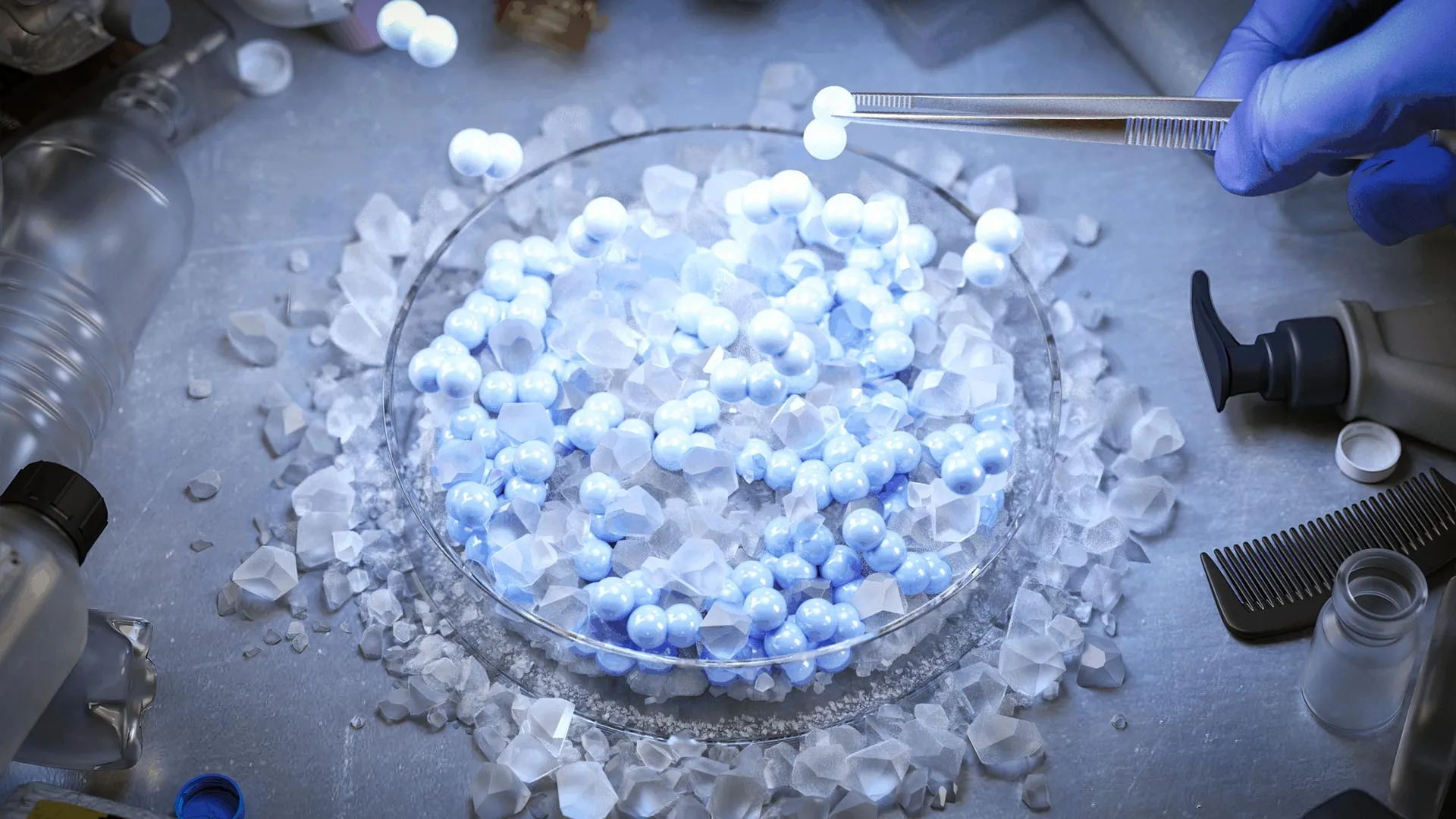
Plastic is found throughout modern life, from water bottles and shopping bags to vehicle dashboards. Once these products are thrown away, however, they become extremely difficult to recycle. Conventional recycling often requires workers or machines to separate plastics by type, adding expense and complexity to the process.
These challenges help explain why only 9% of discarded plastic is recycled. About 79% is sent to landfills, while another 12% is burned, a practice that releases carbon dioxide into the atmosphere.
Turning Mixed Plastic Waste Into Hydrogen
Researchers have now demonstrated a chemical process that can convert a mixture of three widely used plastics directly into high-purity hydrogen fuel. The team, co-led by scientists at the UCLA Samueli School of Engineering and Ewha Womans University in South Korea, accomplished this at temperatures far below those required for conventional gasification.
The method also prevents carbon from escaping into the atmosphere as carbon dioxide. Instead, much of the carbon is captured and stored in solid mineral form.
The findings, published in Proceedings of the National Academy of Sciences, center on a method known as alkaline thermal treatment (ATT). In this process, sodium hydroxide reacts with organic material under heat, triggering chemical reactions that produce hydrogen.
The researchers showed that alkaline thermal treatment (ATT) can process mixed polyethylene terephthalate (PET), polyethylene (PE), and polypropylene (PP) waste together inside a single reactor. The resulting hydrogen was more than 90% pure, and the plastics did not need to be separated beforehand.
“We are solving two urgent global problems at the same time,” said co-corresponding author Ah-Hyung “Alissa” Park, the Ronald and Valerie Sugar Dean of UCLA Samueli and a professor of chemical and biomolecular engineering. “Plastic waste is accumulating at alarming rates, and clean hydrogen is essential for decarbonizing energy. This technology tackles both of these challenges in a creative and scalable way.”
A Process Originally Designed for Biomass
Park and study co-corresponding author Woo-Jae Kim, a professor of chemical engineering and materials science at Ewha Womans University, originally developed the process as a carbon-neutral way to produce hydrogen from biomass such as seaweed.
For the new study, the researchers adapted the method so it could handle plastic waste. Laboratory tests showed that the modified process successfully converted PET, PE and PP into high-purity hydrogen.
The treatment generated significantly more hydrogen from PET while operating at temperatures 300-400 degrees Celsius below those used in traditional steam gasification. Gasification normally relies on intense heat to break materials apart and convert them into gases, making it highly energy intensive.
Making Resistant Plastics More Reactive
PET responded well to the alkaline treatment, but polyethylene and polypropylene initially produced less hydrogen. These two plastics are composed entirely of carbon-hydrogen bonds and are chemically resistant under alkaline conditions.
To overcome that obstacle, the researchers created a thermal oxidation pretreatment. Before entering the main reaction, the plastics are briefly heated in air at relatively mild temperatures.
This preliminary step adds oxygen-containing functional groups to the long polymer chains that make up the plastics. Those groups create chemically reactive sites, allowing the alkaline treatment to break down materials that would otherwise remain largely inert.
After this activation step, all three types of plastic decomposed efficiently.
Trapping Plastic Carbon in Solid Minerals
During the reaction, sodium hydroxide captures carbon released from the plastics and converts it into solid sodium carbonate. This prevents the carbon from leaving the reactor as atmospheric carbon dioxide.
Analysis conducted after the reaction found that more than 75% of the carbon originally present in the plastic ended up in stable carbonate compounds or liquid organic residues. Less than 13% entered the gas phase, and the amount released directly into the atmosphere during the reaction was negligible.
The sodium carbonate can also be transformed into calcium carbonate through a straightforward recovery process. This conversion permanently stores the carbon inside a stable mineral that is commonly used in industries that have traditionally generated substantial carbon emissions.
Addressing Major Limits of Plastic Recycling
Other low-temperature methods for making hydrogen from plastic waste have important limitations. Solar-driven photoreforming and electrochemical conversion, for example, generally work only with oxygen-containing plastics such as PET.
That leaves polyethylene and polypropylene out of the process, even though they are among the most abundant plastics in the global waste stream.
High-temperature gasification can process mixed plastic without sorting, but it releases substantial amounts of carbon dioxide. According to the researchers, this represents the first use of their alkaline thermal treatment method to overcome all three problems at once.
The process can handle mixed plastics, operates at comparatively low temperatures, and captures most of the carbon instead of releasing it into the atmosphere.
“By reducing the sorting costs and process complexity that have been major barriers to commercialization, this technology has the potential to become a next-generation core technology that supports both the hydrogen economy and the circular economy,” Kim said.
More Testing Needed Before Commercial Use
Although the laboratory results are promising, the technology is not yet ready for widespread deployment. The researchers say additional studies are needed to improve the process and determine whether it can produce hydrogen economically on a commercial scale.
The research was supported by the National Research Foundation of Korea. Additional authors include Jieun Park, Hyerin Seo and Jiwon Lee of Ewha Womans University; Hyunah Kim of Korea Aerospace University; Hyung-Kyu Lim of Kangwon National University; and Wonho Jung of Sogang University.
