

Close Menu
NCIJ Network NCIJ Network
    What's Hot

    Online ad firm Adform’s script compromised to steal cryptocurrency

    August 1, 2026

    US Is Banning Foreign Robots—Even Roombas

    August 1, 2026

    Mamdani discount grocery store meme shows unrelated photo, false claim about family

    August 1, 2026
    Facebook X (Twitter) Instagram
    Trending
    • Online ad firm Adform’s script compromised to steal cryptocurrency
    • US Is Banning Foreign Robots—Even Roombas
    • Mamdani discount grocery store meme shows unrelated photo, false claim about family
    • Petrol prices on track to top $2 a litre as Bowen sounds death knell for fuel excise relief | Petrol prices
    • What Worries Democrats as the Midterms Heat Up
    • Chinese AI Researchers Are Finding Their Voice on X
    • HollowFrame Loader Deploys Matryoshka Backdoor in Spear-Phishing Attack on Law Firm
    • Crypto Today: FTX Creditors Receive $900M Payout, Citadel Buys Situational Assets
    • About
      • Our Team
      • Editorial Policy
      • Editorial Independence
      • International Support
    • Trust & Standards
      • AI Usage Policy
      • Conflict of Interest Policy
      • Corrections Policy
      • Ethics Policy
      • Fact-Checking Policy
      • Source Protection
    • Get Involved
      • Guide for Sources
      • Support Independent Journalism
    • Legal
      • Cookie Policy
      • Privacy Policy
      • Terms of Use
    Facebook X (Twitter) Instagram
    NCIJ Network NCIJ Network
    Saturday, August 1
    • Home
    • World
    • Ai
    • Business
    • Politics
    • Health
    • Crypto
    • Science
    • Technology
    • Cybersecurity
    • Defense & Security
    • Economy
    • Energy
    • Europe
    • More
      • Fact Check
      • Investigations
      • Opinion & Analysis
      • Environment
    NCIJ Network NCIJ Network
    Home»Technology

    SpaceX’s Falcon 9 Rocket Is About to Crash Into the Moon—and It Could Be Visible From Earth

    NCIJ NETWNCIJ NETWORKBy NCIJ NETWNCIJ NETWORKAugust 1, 2026 Technology No Comments4 Mins Read
    Share
    Facebook Twitter LinkedIn Pinterest Email

    If you own a strong enough telescope, you might be able to witness history on Wednesday: A dead rocket is going to crash into the moon.

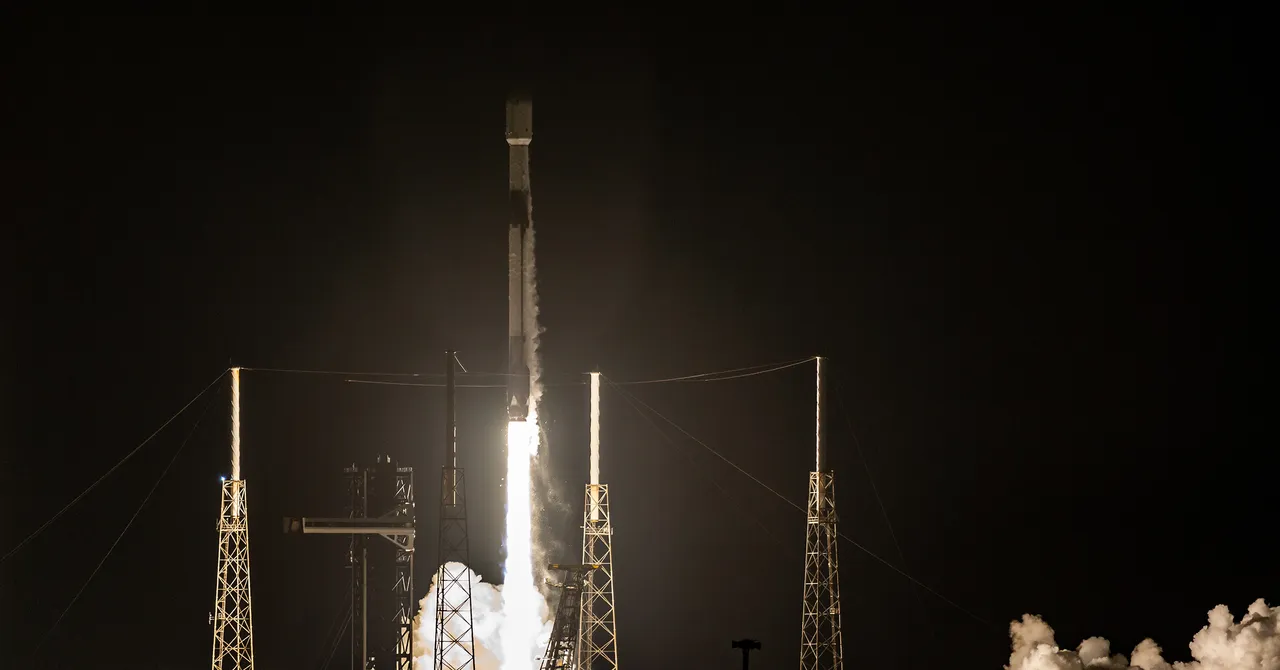
    On August 5, at around 6:34 am UTC, a spent SpaceX Falcon 9 upper stage is expected to hit the moon’s sunlit western limb near Einstein crater at more than 5,400 mph. If it unfolds as predicted, the crash could throw up a plume of debris bright enough to briefly see from Earth with the right equipment.

    That would be a first. No impact flash has ever been recorded on the sunlit face of the moon, and that’s exactly where the Falcon 9 crash is forecast to happen, kicking up plumes of dust that could stand out against the blackness of space. The findings are based in part on two new preprint studies.

    That includes one posted July 27 to arXiv and led by William Jo, a doctoral candidate at the University of Texas at Austin’s Cockrell School of Engineering, that forecasts just how big the impact could be. To predict the plume, Jo ran the crash through a high-resolution physics simulation that allowed him to model what would happen when 3,900 kilograms of hollow metal hit the lunar surface. That’s different from solid meteorites making impact.

    “It’s like an empty eggshell, because it had all the fuel in it, and there is a rocket engine at one end that’s denser,” David Goldstein, an aerospace engineering professor at UT Austin who supervised the work, says of the Falcon 9.

    Rather than burrowing in like a cannonball, the shell will collapse from its edges inward, throwing up a broad, low curtain of soil spreading as far as 183 kilometers wide as well as a thin, faster spike nearly straight up. All told, the crash is forecast to displace about 12,700 kilograms of debris.

    Jo describes the simulation as a “best-case” model. The code is two-dimensional and axisymmetric, so it can only simulate the stage coming straight down, engine-first, basically like dropping a pin on its head. But the real object—the spent stage of a Falcon 9 that carried two landers to the moon in January 2025—is far more likely to arrive at an angle. A glancing strike would throw up a smaller, dimmer plume, possibly without the big spike.

    “I would view our study as the most optimistic in terms of generating sprays,” Goldstein said.

    It’s a detailed guess at the shape of the splash, but whether a plume will actually be visible from Earth is another matter.

    Laurence Trafton, an astronomer at UT Austin, says it’s possible, but hard to know until the moment of impact. Size isn’t the problem: A plume reaching 50 kilometers past the limb would span about 28 arc seconds, astronomer-speak for an angle that’s roughly one‑sixtieth the apparent width of the moon in the sky. At that size, “it can be easily resolved by a small telescope,” Trafton writes in an email.

    The new paper provides an estimate of where exactly to train a telescope. But contrast in the night sky could be a confounding factor. The plume will be something like 30 to 300 times fainter than the blazing moon beside it, and scattered moonlight will only make viewing harder. Catching it will require “a very steady mount,” Trafton says.

    Timing will be on the observer’s side. The plume should peak about 90 seconds after impact, “long enough for an observer to witness,” Trafton says. Geography is not, at least depending on where you live.

    The flash has to be caught at night. For anyone north of a line from Massachusetts to Texas, the moon will hang so low that they’ll be peering through more than three times the usual thickness of atmosphere. That means viewers in those locations will be looking through a murky, turbulent slice of sky that could wash out any signs of the plume generated from the crash.

    crash Earth Falcon Moonand Rocket SpaceXs visible
    NCIJ NETWNCIJ NETWORK
    • Website

    Keep Reading

    Chinese AI Researchers Are Finding Their Voice on X

    Snapchat joins other platforms in the fight against ‘AI slop’

    Amazon is splitting its $600 million tariff refund with customers – here’s who’s eligible

    Rivian spinoff Also to start delivering e-bikes after months of delays

    Did a OneDrive Photos app just appear on your PC? Here’s what it does (and how to get rid of it)

    Google Yanks Google Earth AI Image Tool a Day After Launch Over Deepfake Fears

    Add A Comment
    Leave A Reply Cancel Reply

    Editors Picks

    Online ad firm Adform’s script compromised to steal cryptocurrency

    August 1, 2026

    US Is Banning Foreign Robots—Even Roombas

    August 1, 2026

    Mamdani discount grocery store meme shows unrelated photo, false claim about family

    August 1, 2026

    Petrol prices on track to top $2 a litre as Bowen sounds death knell for fuel excise relief | Petrol prices

    August 1, 2026
    Latest Posts

    New to Linux? This 10-day checklist will help you settle in nice and easy

    July 22, 2026

    Tories ask HMRC to investigate whether Nigel Farage owes tax on £5m gift | Nigel Farage

    July 22, 2026

    Greece derails EU’s Russia sanctions plan – POLITICO

    July 22, 2026

    Subscribe to News

    Get the latest sports news from NewsSite about world, sports and politics.

    NCIJ Network is an independent digital news platform delivering trusted investigative journalism, European and global news, in-depth analysis, and fact-based reporting with accuracy, transparency, and integrity.

    Facebook X (Twitter) Instagram Pinterest YouTube

    Online ad firm Adform’s script compromised to steal cryptocurrency

    August 1, 2026

    US Is Banning Foreign Robots—Even Roombas

    August 1, 2026

    Mamdani discount grocery store meme shows unrelated photo, false claim about family

    August 1, 2026

    Subscribe to Updates

    Get the latest creative news from FooBar about art, design and business.

    Type above and press Enter to search. Press Esc to cancel.